31st anniversary of the Dayton agreement that ended the war in Bosnia and Herzegovina
The text was initialed in Dayton on 21 November 1995 and formally signed in Paris on 14 December 1995; IFOR under NATO monitored the military terms.
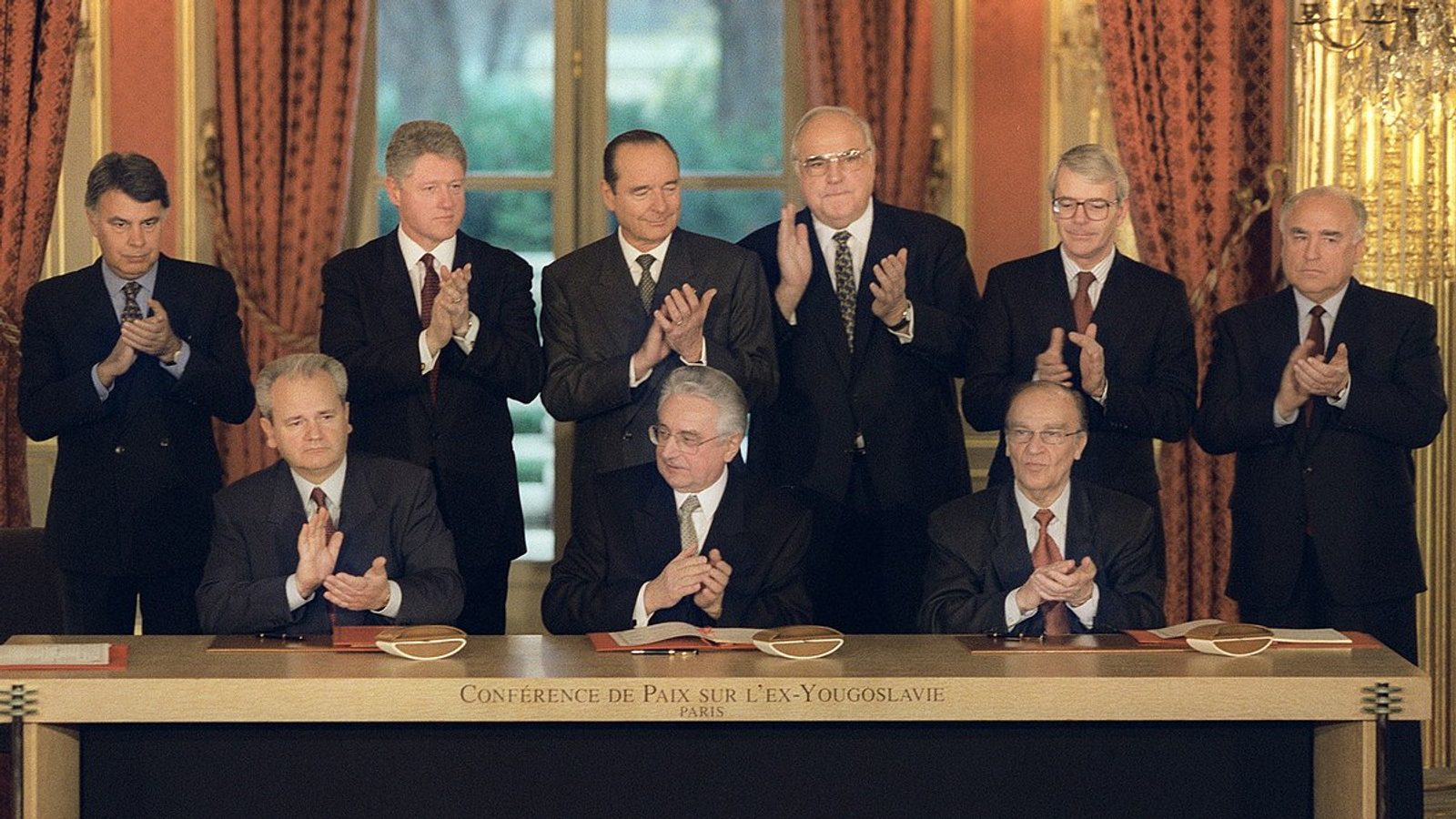
Today marks the 31st anniversary of the preliminary agreement reached at Dayton that set the framework for ending the war in Bosnia and Herzegovina. After years of combat, mass displacement and destruction, talks held in Ohio produced a peace settlement that reshaped the country’s political map.
From Dayton to Paris
The text was initialed in Dayton on 21 November 1995 and was formally signed in Paris on 14 December 1995. Negotiations took place at the Wright-Patterson Air Force Base with strong U.S. mediation and the participation of the presidents Alija Izetbegović, Franjo Tuđman and Slobodan Milošević.
U.S. diplomacy, with Richard Holbrooke among the key mediators, pushed to convert a ceasefire into a broader, lasting peace agreement. The resulting General Framework Agreement established the institutions and territorial arrangements designed to halt the fighting and enable a political settlement.
After the agreement was signed, international forces known as IFOR, led by NATO, were deployed to monitor implementation of the military provisions and to help stabilize the situation on the ground.
Three decades on, the Dayton framework remains the reference point for Bosnia and Herzegovina’s constitutional order and international engagement, even as debates continue about its long‑term viability and the country’s future direction.
Photo: press material from the event