Ajvar is cheap only in the field — farmers protest over low purchase prices
Farmers say they are paid less than their costs; NZM demands a guaranteed price and a ban on dumping imports
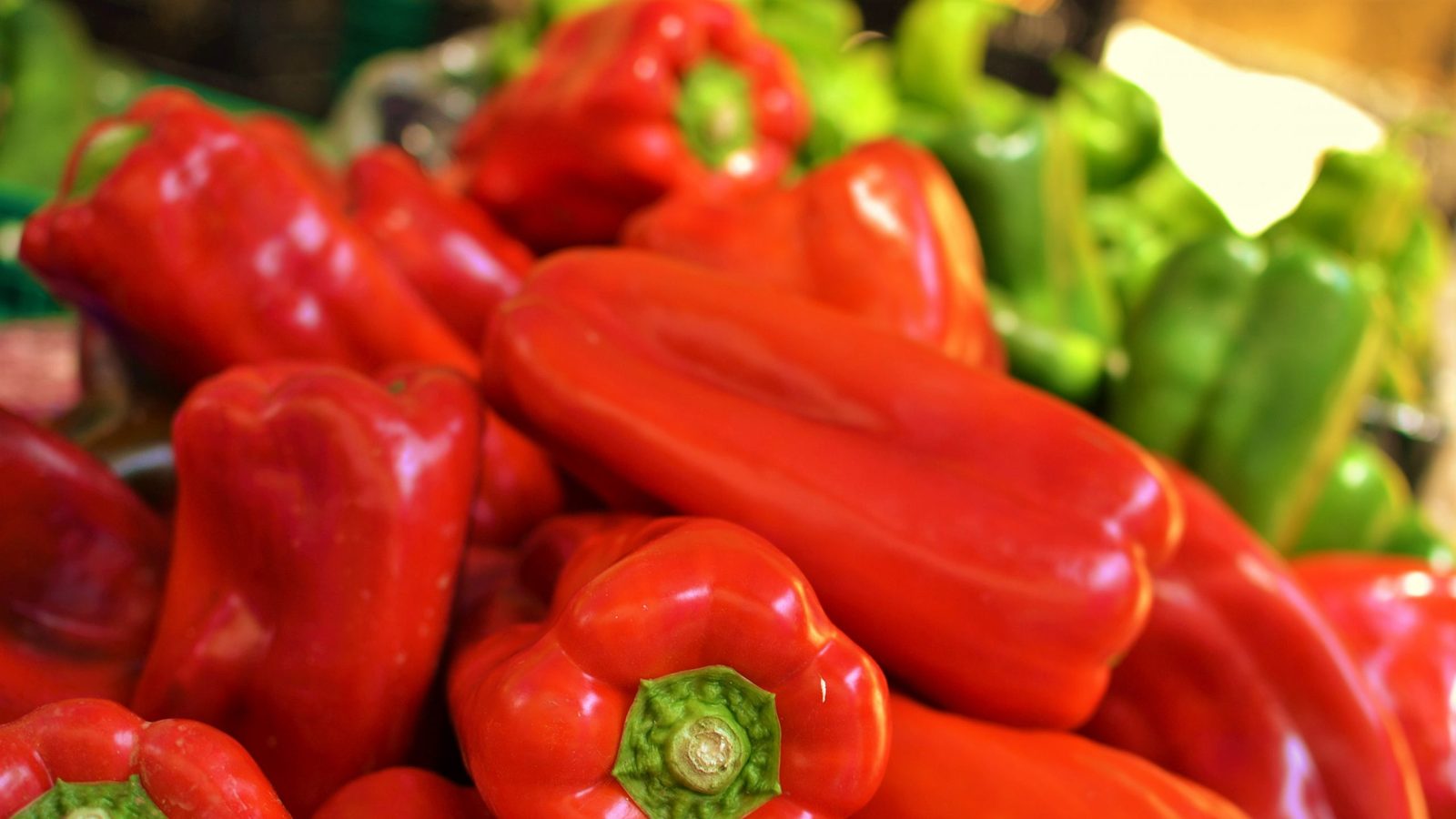
Farmers across the country took to the streets in protests and are using social media to express dissatisfaction with the low purchase prices for red peppers for ajvar. One sentence keeps appearing on forums: “We are forced to give up planting, bit by bit nothing will remain of agriculture.”
Producers claim that peppers are being bought from them for 20 denars per kilogram, while according to their calculation the cost of production is 29 denars per kilogram. On green markets ajvar on promotion reaches 60 denars, and in some supermarkets jars sell for 80 denars. The National Agricultural Network (NZM) warned of, as they put it, an unprecedented robbery by traders and buyers.
“In the absence of a reaction from the state and its institutions, an unprecedented robbery by traders and buyers and the destruction of the agricultural sector, as well as of agricultural producers, is taking place before our eyes. Literally everywhere, in all sectors we have a catastrophe,” NZM said, and through a public statement urged the Assembly, political parties, the academic and scientific community, journalists and the civic sector “to urgently initiate and process legal solutions that will protect hard agricultural labor.”
Proposals: guaranteed price and protection from dumping imports
NZM proposes mandatory determination of realistic production prices for all agricultural products, to be prepared by independent scientific institutions based on scientifically supported methodologies. According to their formula, the guaranteed price should be the production cost plus 50 percent. As an additional measure they propose that imported agricultural products sold at dumping prices and subsidized by their home countries should not be allowed on the market, because this is unfair competition for domestic producers.
Agricultural expert Lenche Nikolovska says that two years ago, through the company “Agrotim,” she tried to organize contract production of red pepper, but buyers backed out because she insisted that contracts include a guaranteed minimum purchase price. She emphasizes that the solution must come from the state: a production plan, support in inputs, education, market monitoring, association, respect for contracts, subsidies and an intervention fund so that production becomes profitable.
Minister of Agriculture Borche Serafimovski, who attended the protest in Strumica, said that the state cannot set the purchase price, but that an agreement has been reached with buyers and it must be respected: first grade 40 denars, second and industrial 30 denars, and shkart (substandard) 15 denars. Farmers, however, ask: “Which buyer is that whom the state cannot control when it gives him subsidies for processing?” Farmer Vasko Kurjacki publicly addressed the minister: "Minister, check the status of the payment of the subsidies for the pepper, as well as the payment for the pepper that was bought last year. The text is intended to help the minister, to prevent the situations, not to go from purchase to purchase and extinguish the little fires that will appear again and again every day."
Analysts and activists warn that a long-term policy is needed, not just temporary measures. Igor Mirchevski assesses that “Farmers are left at the mercy of a limited number of buyers in the country. Knowing that producers do not have many other options where to place their product, buyers can easily coordinate their interests and, driven above all by the desire for their own profit, offer prices that do not fairly value the work, costs and risk of the farmer. It is absurd for a small country with relatively limited agricultural production to be unable in time to secure additional markets and placement of agricultural products outside the country, especially on the European market and on markets outside the EU.” As a solution, he calls for a policy that will allow beforehand to know what, for whom and how much to produce, according to which standards and under which conditions the product will be placed.
NZM compared purchase prices in the region: Serbia 0.6–0.9 euros/kg depending on the class; Bulgaria 0.7–1.0 euros/kg for first class and around 0.4–0.5 euros/kg for industrial class; Croatia 0.8–1.2 euros/kg; Slovenia small quantities, local cooperatives around 1.2–1.5 euros/kg; and Montenegro 0.9–1.3 euros/kg in the autumn period, with part of the raw material provided through imports from our country and from Serbia.
Photo: Unsplash