Amar Mecinovic: Government an 'executioner' of its people — three years without a minimum wage increase
Levica MP says the government protects oligarchs, links migration policy to low wages, emigration and the refusal to introduce progressive taxation.
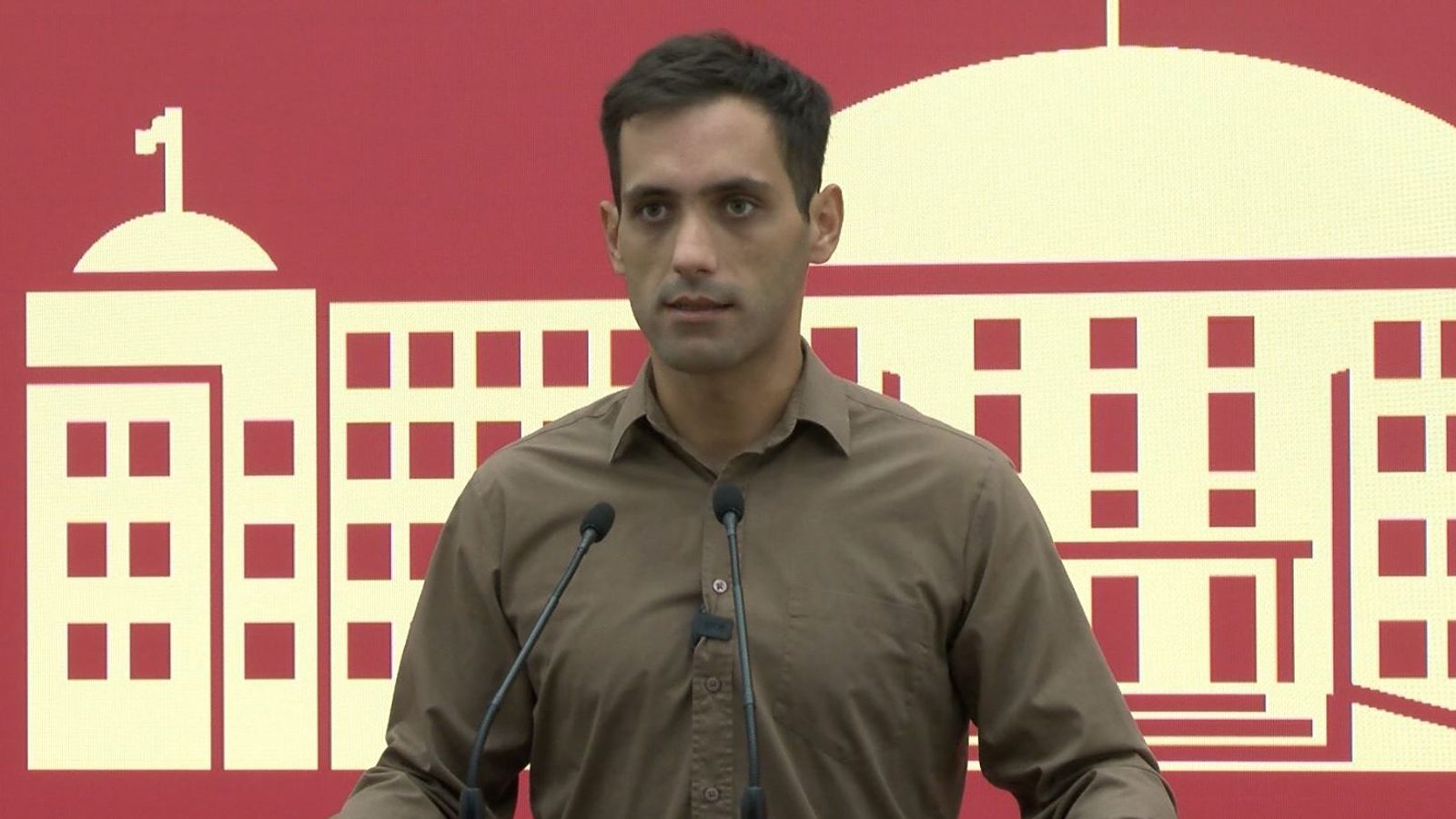
Amar Mecinovic, a member of the Levica party, sharply criticized the Government of North Macedonia after lawmakers approved the Migration Policy Resolution for 2026–2030, arguing that migration cannot be discussed separately from the precarious situation facing domestic workers.
“The Government will do everything except go after the oligarchy that has been sucking the Macedonian people for thirty years,” Mecinovic said, answering a journalist’s question about the new resolution. He warned that low pay, mass emigration and an economic model that protects the richest must be part of any migration debate.
He accused the ruling party, DPMNE, of neglecting workers and unions and singled out the failure to raise the minimum wage as proof of government indifference. “It hasn't raised the minimum wage for three years. A government that is an executioner of its own people!” he said, adding that officials have even argued with union representatives over the contents of the consumer basket — a debate he likened to a supermarket where the government removes basic items from a shopper's cart and insists they are not needed.
Economic model, taxation and imported labour
Mecinovic warned that the Macedonian economy is sliding toward an abyss while domestic oligarchs behave as if the country were Monaco or Silicon Valley. He raised the issue of progressive taxation, saying authorities lack the courage to implement it because they do not want to affect the interests of the wealthiest.
On migration and the import of foreign labour, he flagged European policies known as Third Country Hubs and cautioned that North Macedonia must not become a testing ground for other countries' problems. He said that, unlike the public debate taking place in the EU, in North Macedonia the issues are being hidden behind regulatory and legal changes without meaningful public discussion.
Mecinovic concluded that such policies risk increasing pressure on the domestic workforce and deepening emigration: the state does not create conditions for a dignified life for its own citizens while opening the door to imported labour.
Photo: press material from the event