Andrijana Zafirovska: Volleyball can be a secure, long‑term profession for women
Rabotnichki vice‑president and former national team captain argues mass participation must be turned into quality through coach education and stable financing.
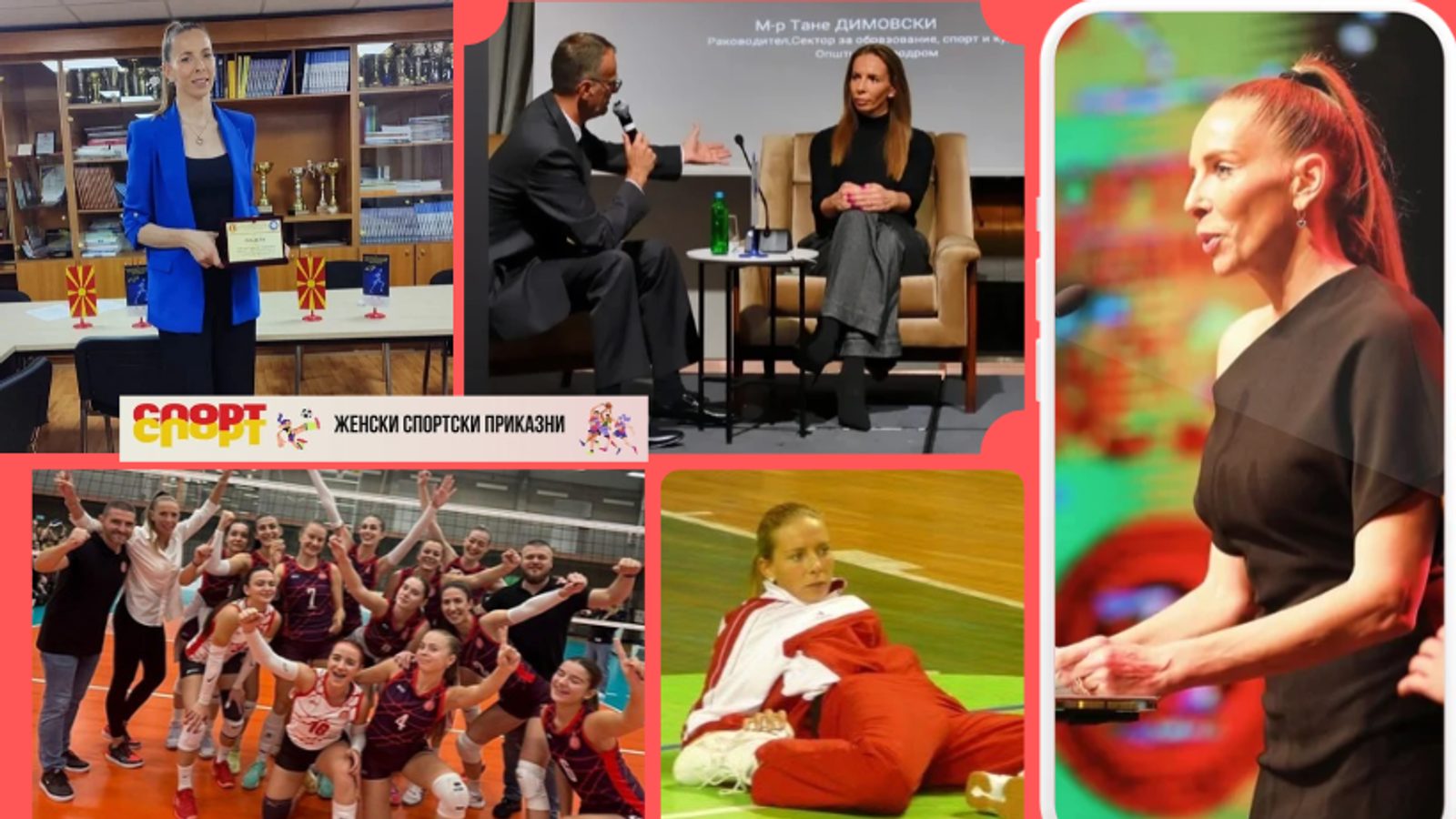
Andrijana Zafirovska says volleyball shaped her life — first as a player and national team member, later as an educator and club executive. In a career that took her through clubs in North Macedonia and abroad, she returned again and again to OK Rabotnichki, where she now serves as vice‑president and sports director while teaching at the Faculty of Physical Education, Sport and Health’s volleyball department.
"My volleyball career was filled with many challenges, successes, experiences and unforgettable moments that built me not only as an athlete, but also as a person. During my career I played for several clubs in Macedonia and abroad, from Olimpic Volley, Vardar Makprimat, Student, Student Cometal, Aris (Greece) to Požarevac (Serbia). But, from 2000 until today, regardless of where my sporting path took me, I always returned to the club that for me represents much more than a sports organization – OK Rabotnichki, the club that has always been my sporting home. Today, in the same club I continue to contribute in a different but equally responsible role, as vice‑president and sports director. I am especially proud of my national team career. At only 15 years old I became a member of the senior national team of Macedonia, and I finished my national team career as its captain. Volleyball gave me much more than a sporting career. It taught me responsibility, teamwork, respect, perseverance and how to cope with defeats, which are sometimes much more important lessons than victories themselves. When I look back on that whole path today, I realize that the greatest lesson sport left me is that talent can open the door, but only discipline, dedication, perseverance and character can keep you at the top. Success does not come overnight and behind every result stand years of work, sacrifice and renunciations."
From mass participation to professional structures
Zafirovska notes clear progress in some areas — increased state funding and more support opportunities — but says many structural challenges remain. She highlights inadequate sports infrastructure, limited training availability, outdated equipment and fragile club finances. Families still bear much of the cost of developing young players, while many clubs survive on the energy of volunteers and devoted staff.
"If I compare the period when I played actively, I must point out that certain things have changed in a positive direction. Today the state allocates more financial resources for sport and there are greater opportunities for support and development, but unfortunately many basic and essential problems have remained unchanged. Despite increased investments, I believe that conditions for the work and development of women's volleyball have not improved to the extent they should. We still face insufficient and inadequate sports infrastructure, limited training times, lack of modern equipment and props, as well as insufficient financial stability of clubs. An additional problem is that a significant part of the financial burden for the development of young athletes is still carried by their families, while clubs often function thanks to the enthusiasm and personal dedication of sports workers. On the other hand, women's volleyball today has real potential. It is the most popular women's sport in Macedonia, with a large number of girls training in different age categories. That is a huge value that must be recognized and supported accordingly.
She argues mass participation must be converted into quality through a long‑term, expert system: continuous coach education, unified programs with clear goals and standards for each age group, and stronger links between schools, universities, clubs and the federation.
"I believe one of the biggest prejudices is that sport cannot be a secure and long‑term profession for a woman. I firmly believe it can, but that requires greater financial and institutional support, social and health security, educational benefits and prospects after the sporting career ends. A woman has the strength and potential to be a successful athlete, a professional and a mother, but she must not constantly be forced to choose between career and family. Women have long proven they can succeed in professional sport. Now it is our duty to create conditions so that their success also means a profession, a livelihood and a secure future."
As sports director of OK Rabotnichki, Zafirovska underlines the difficulty of keeping a top‑level club competitive under tight budgets. She recalls the club’s record: 18 championship titles, 15 cups and one Supercup — 34 domestic trophies in total — and says sustaining that standard needs stable financing, professional conditions and a long‑term strategy. Still, she stresses personal commitment and passion as the driving force behind day‑to‑day work with players and young prospects.
In her teaching role she sees strong interest among girls and calls for well‑organized school and university leagues to serve as talent filters and motivation points. Her appeal is clear: institutions, the business sector and potential sponsors must recognize women's volleyball as an investment in national sport and in the future careers of athletes.
Photo: Arhiva na Andrijana Zafirovska