Bulldozers at the 'Albanian Beach': Kosovo Demolishes 11 Serb-Owned Villas by Lake Ujman — Brussels Warns of 'Serious Rule-of-Law Concerns'
Owners say they learned of the demolition from posted notices, the EU and OSCE demand an immediate halt, while the head of Iber-Lepenc vows: we continue to the end
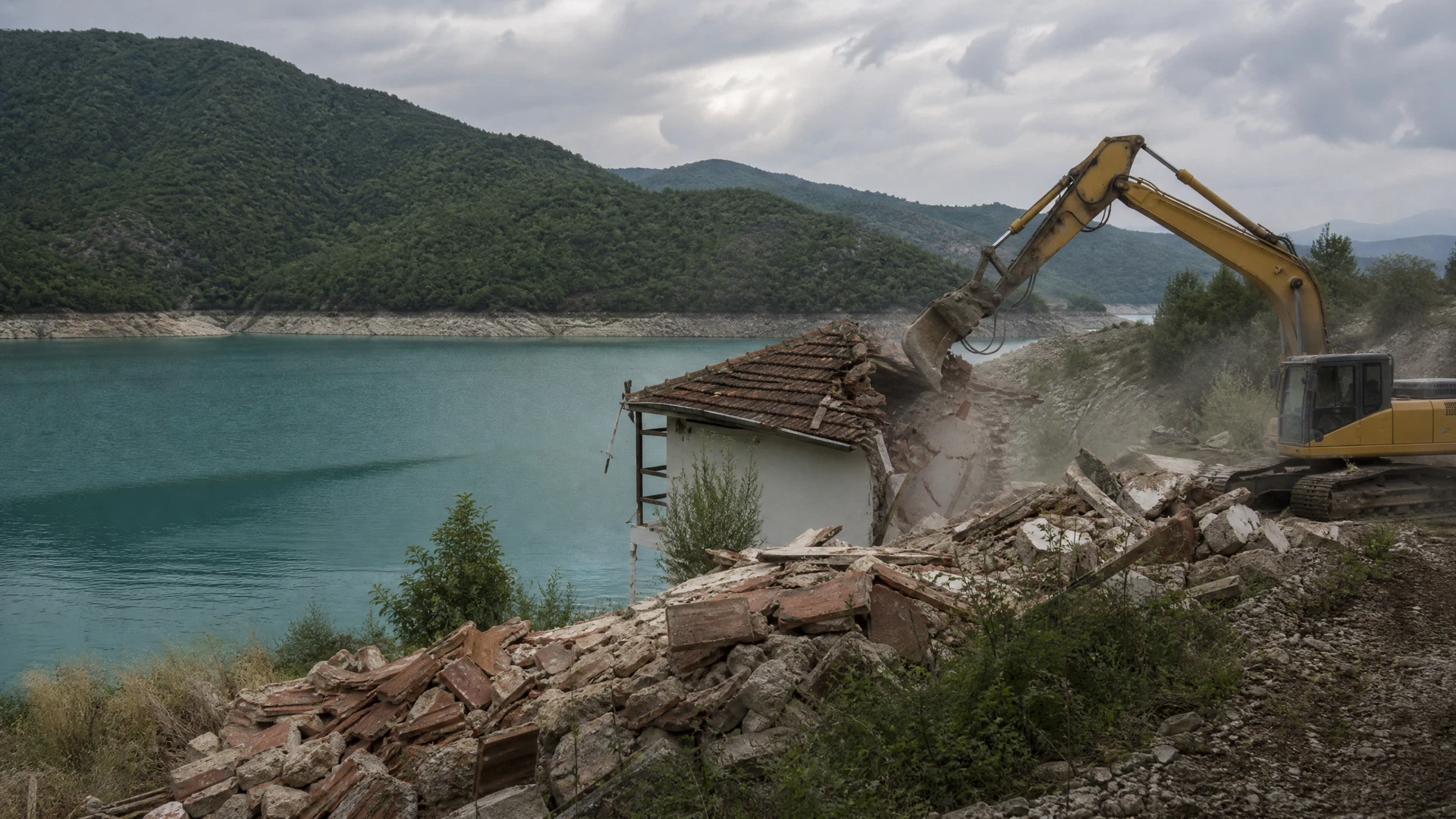
On July 21, Kosovo authorities demolished 11 illegally built holiday homes owned by local Serbs on the shore of Lake Ujman (Gazivoda) in Zubin Potok municipality, at a location known as the 'Albanian Beach'. The operation, carried out by the Ministry of Environment with police assistance, immediately drew sharp reactions from the European Union and the OSCE.
"The deadline expired on July 3"
The demolition was requested by the public water management company Iber-Lepenc, which manages the lake — a strategic reservoir supplying drinking water to some 600,000 residents in nine Kosovo municipalities.
"They haven't vacated the buildings by July 3, so we notified the inspectorate, which went out into the field today," said the company's chief executive Faruk Mujka, recalling that the first five villas had already been demolished a month earlier in the village of Cecevo.
Kosovo Police Deputy Director for the northern region Veton Elshani confirmed the assistance began at 7 a.m. for the planned demolition of 11 buildings.
EU: irreversible measures amid pending court proceedings
The procedure itself is the core of the dispute. Affected residents say they learned about the demolition from notices posted on the buildings, and when they requested court decisions, they did not receive them. The EU Office in Kosovo expressed concern about "the lack of respect for due legal process in this and several other recent cases in the north," stressing that
"irreversible enforcement measures in the context of pending proceedings and contested property claims raise serious rule-of-law concerns."The OSCE said any action affecting property rights "must be carried out strictly within the applicable legal framework, with full respect for due process."
Belgrade's Office for Kosovo assessed that the demolitions "were not carried out to implement any law, but for political reasons." Despite the EU's call for an immediate halt to further demolitions, Iber-Lepenc is adamant: the operation continues until all public properties are vacated. At the most sensitive point between Pristina, the north and Belgrade — water — tensions are rising again.