The Balkans Between Fire and Ice: Lightning Kills an Entire Flock of Sheep in Bosnia, 5 cm Hail in Croatia — While Rooftops in Greece Burn at 75 Degrees
Four supercell storms formed over Istria, fist-sized hail fell in Nevesinje and Stolac, while Athens melts in the first major heatwave.
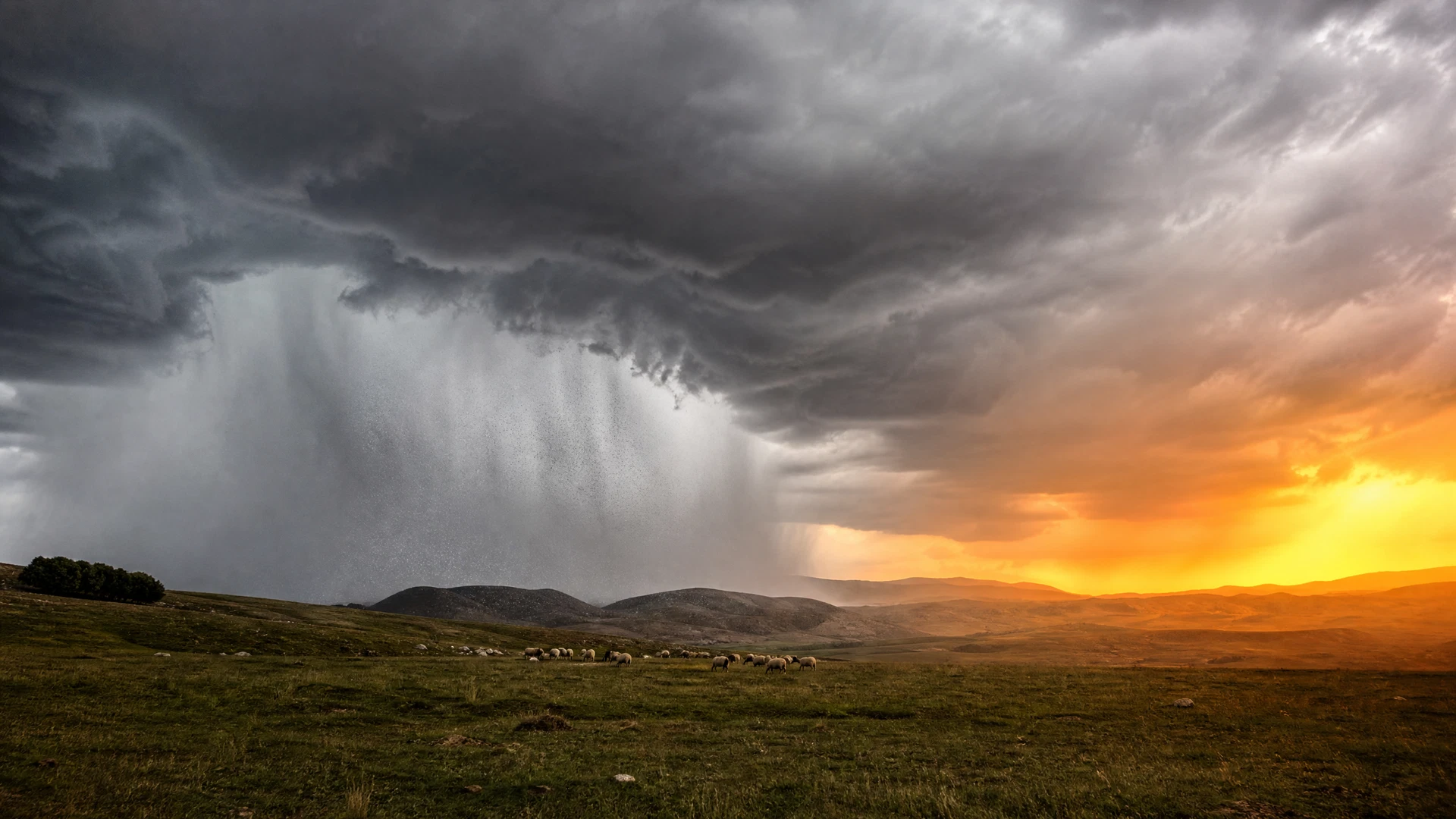
The Balkan peninsula is living through two climate extremes at once: while the north is battered by destructive storms with giant hail, the south is melting in the first major heatwave of the summer.
The most dramatic scene unfolded in Bosnia and Herzegovina, where around 1 p.m. on Monday lightning struck a flock of sheep on Mount Hrbina near Kupres, killing between 30 and 35 animals on the spot. The storm that swept the country brought heavy rain, strong winds and hail, with photos arriving from Nevesinje and Stolac of hailstones the size of a fist.
Things were no calmer on Croatia's Istrian peninsula, where on Monday morning as many as four supercell storms developed over the sea — a phenomenon local meteorologists have not seen in years. Rovinj took the hardest hit, with hailstones up to five centimeters in diameter smashing windshields and damaging facades, and minor injuries were reported.
A completely different but equally dangerous picture comes from Greece. The country is facing its first major heatwave of the year, with air temperatures reaching up to 43 degrees Celsius. On Monday, thermal cameras in Attica recorded surface temperatures that sound impossible: up to 60 degrees on road asphalt and over 75 degrees on building rooftops.
According to data from the network of automatic weather stations of the National Observatory of Athens, the heatwave will keep extreme values for at least several more days, accompanied by high humidity and Saharan dust — a combination authorities describe as particularly risky for the elderly and the chronically ill.
Meteorologists warn that precisely this contrast — an overheated Mediterranean in the south and incursions of colder air from the north — is the recipe for the supercell storms that hit Istria and for the destructive storms that struck North Macedonia, Serbia and Bosnia over the past week.
The forecasts for the coming days bring no relief: instability with local storms and hail persists over the western Balkans, while Greece faces at least two more days above 40 degrees. The region, it seems, will have to get used to summers in which fire and ice arrive in the same weather bulletin.