Lewis Pugh swims Strait of Hormuz to spotlight environmental toll
The 56-year-old UN Patron of the Oceans spent three days covering about 15 km amid attacks on oil and gas vessels in the strategic waterway.
British long-distance swimmer Lewis Pugh swam across the Strait of Hormuz this week to highlight the environmental toll of ongoing attacks on commercial shipping. The 56-year-old, who serves as a UN Patron of the Oceans, spent three days in the water and covered roughly 15 kilometres during the effort.
The Strait of Hormuz — a vital route for oil shipments from the Middle East — has been periodically closed after a series of attacks linked to the wider confrontation involving Iran, the United States and Israel. Those disruptions have raised concerns about both commercial security and environmental risk in the narrow channel.
Pugh set out from the Musandam peninsula at the southern end of the strait and completed his swim after rounding the Cape of Hormuz. Wearing only swim shorts, goggles and a cap bearing the UN logo, he said he believes he is the first person to attempt a long-distance crossing of this stretch since the conflict escalated.
"The war causes enormous human suffering"
On his website Pugh warned of the wider environmental price of the fighting and described the strait's natural value. He wrote that: "The war causes enormous human suffering. Lives are lost, families are torn apart and homes are destroyed. But there is another victim that receives far too little attention: nature itself.
"The Strait of Hormuz is far more than a vital shipping lane. It is one of the most beautiful places I have ever visited. There are high mountains, spectacular fjords, coral reefs and mangrove forests. Dolphins, sea turtles and dugongs live in these waters. It is one of the great natural wonders of the world," he said.
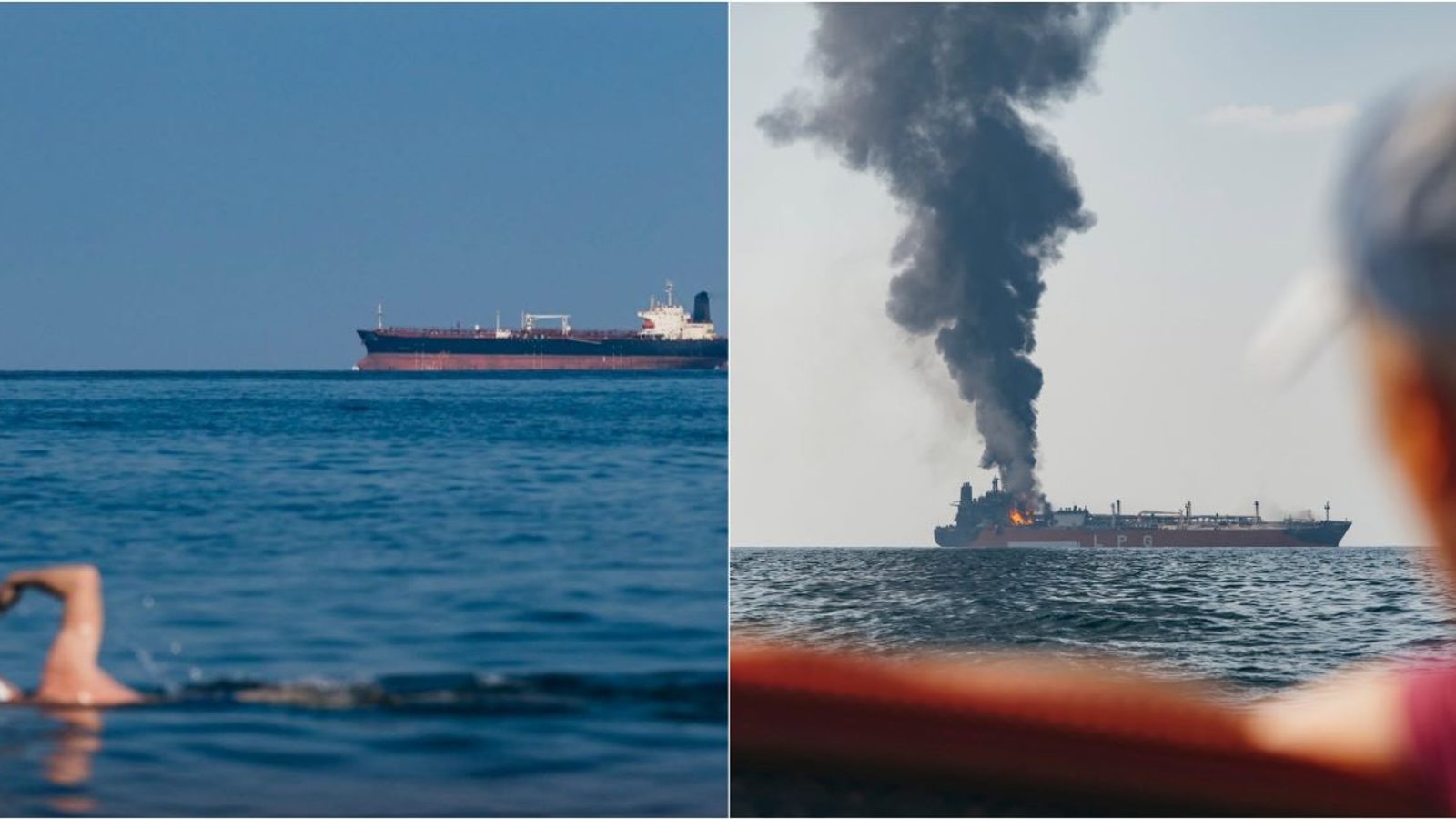
Photographs shared by Pugh on social media show smoke and flames rising from what appears to be an LNG tanker near the Musandam peninsula in Oman's waters. He said: "Only 30 minutes after I began swimming, a tanker carrying oil was struck a few kilometres from me. Explosions rocked the sea around me. Over the following days I witnessed further attacks on merchant vessels and saw boats engulfed by flames. Oil tankers, gas carriers and other merchant ships are being attacked day after day. The environmental consequences of this war will last for generations. My message is simple: Stop the fighting. Open the strait. Clean up the pollution."
Pugh is known for undertaking swims in fragile ecosystems to raise awareness; he was previously the first person to swim long distances in each of the world's oceans. His Hormuz swim adds to a string of high-profile actions intended to focus public attention on environmental damage linked to conflict.
Earlier this month British foreign secretary Ed Miliband warned of the risks of a stalemate he described as "neither war nor peace", saying it causes "deep economic suffering". He urged "comprehensive diplomatic efforts" to end the fighting and fully reopen the strategic waterway, which he said is essential.
Photo: Fejsbuk)