BSW congress backs 'Magdeburg path' rather than a full break with AfD
Delegates in Dresden voted against a proposal to adopt a firmer break with AfD, endorsing selective cooperation instead.
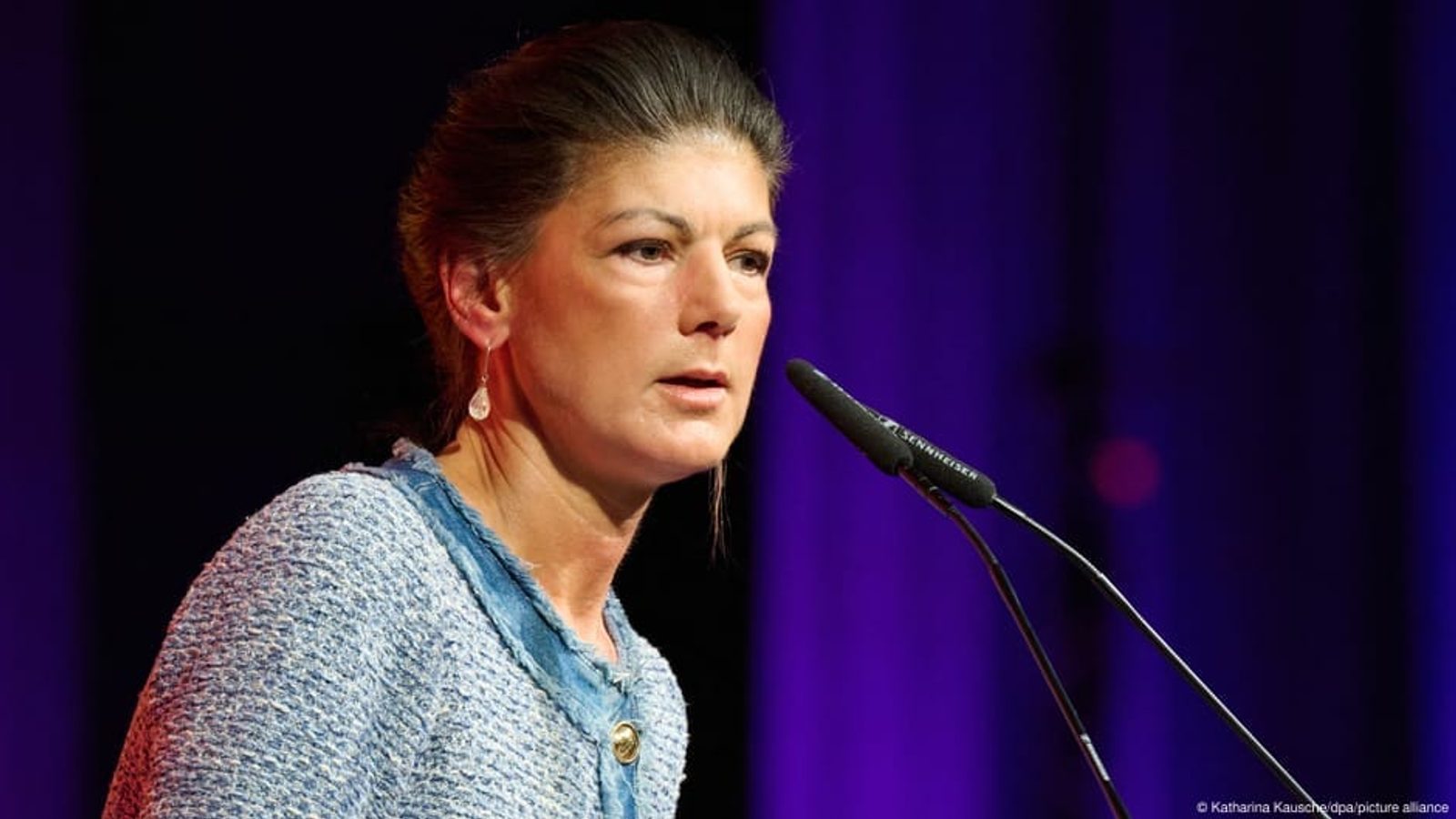
At its federal congress in Dresden on 28 November 2026, the party Alliance for Unity and Solidarity (BSW) rejected a motion from prominent founding members to adopt a firmer break with the right-wing AfD, instead endorsing what it calls the "Magdeburg path" of selective cooperation.
About 600 delegates voted at the congress and the party leadership said the majority opposed the amendment proposed by several founding figures who wanted to rule out not only coalitions but also any form of tolerance or long-term cooperation with the AfD.
Founder Sahra Wagenknecht and BSW chair Fabio De Masi argued in favour of the Magdeburg path, which the party defines as: no coalition with the AfD, no votes for an AfD candidate for minister-president, and no formal tolerance of an AfD-led government — while still allowing joint proposals, coordinated votes and possible written agreements on specific issues.
Wagenknecht acknowledged the presence within AfD of "politicians with ethno-nationalist positions who want mass remigration of millions or support the wars of U.S. President Donald Trump and engage in, as she put it, 'the worst anti-social policies.'" She added, however, that "reality simply is not so black-and-white" and argued that on peace policy the AfD is closer to BSW than any other party. "It is not a long-term strategic partner. But while there is a time window for concrete changes and improvements, we must use it," she said.
Critics inside BSW — including Christian Leye, Amid Rabieh, Ralf Suikat, Jessica Tatti, Sevim Dagdelen and Klaus Ernst — pressed to explicitly ban not just coalitions but also "formal or de facto tolerance, support for an AfD-led government and long-term cooperation agreements." The provincial AfD organisation in Saxony-Anhalt has been classified by the state Office for the Protection of the Constitution as proven right-wing extremist.
During deliberations Christian Leye sharply challenged the idea of partnership with AfD, asking on the floor: "What the fuck? Since when are we partners of the AfD?" Klaus Ernst told delegates he regarded AfD as "a racist party, an ethno-nationalist party, which also has its own problems with democracy. Therefore it cannot be a partner." After the vote several delegates left the party in protest; the initial main proposers did not immediately resign. Delegates from western Germany provided the strongest support for the critics and warned that important state elections, including in North Rhine-Westphalia, take place next year.
Photo: osnovachkata na BSV, Sara Vagenkneht na kongresot vo Drezden)