Civita di Bagnoregio, the cliff-top town facing slow disappearance
A cliff-top village about 120 kilometers north of Rome, Civita di Bagnoregio has fewer than 20 residents and sits on volcanic tuff that has been eroding for centuries.
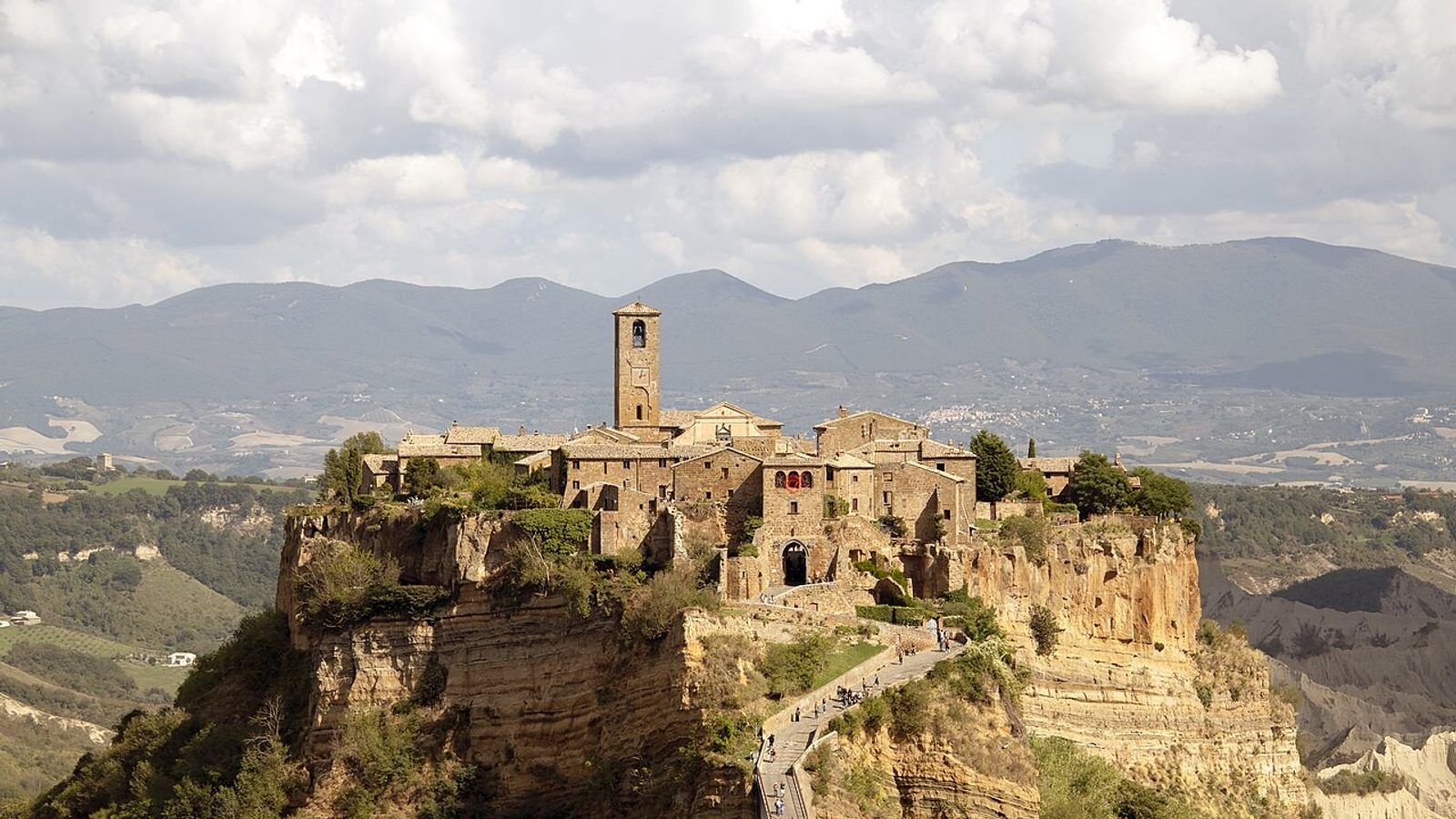
About 120 kilometers north of Rome sits one of Italy’s most singular settlements: Civita di Bagnoregio, a tiny town perched atop a steep rock and linked to the outside world by a single long pedestrian bridge.
Today fewer than 20 people live inside the town’s stone houses, yet its photogenic appearance and long history draw visitors from many countries — a contrast that has earned Civita the nickname "the 'dying town'" in travel and conservation circles.
Founded by the Etruscans more than 2,500 years ago, the settlement once had five gates; only one survives: Porta Santa Maria, also known as Porta Cava. The route to the gate runs through a tunnel cut into the rock and then across the bridge, which provides the town’s only direct pedestrian access.
The reinforced-concrete bridge was built in 1995. For practical reasons the local authorities permit bicycles and motorcycles to cross at specified times of day so residents and workers can reach the town more easily.
Geology and risk
More than isolation, the town’s greatest threat is the very ground beneath it. Civita stands on volcanic tuff — a porous rock formed when volcanic ash solidified — and that tuff has been eroding for centuries. The slow collapse of the supporting slopes makes the settlement’s future precarious.
Preserving Civita requires balancing conservation, tourism and safety: the single access bridge, the dwindling resident population and the fragile tuff all complicate efforts to maintain the medieval village without altering the landscape that makes it unique.
Photo: press material from the event