Partial solar eclipse on August 12, 2026 — how to protect your eyes
European experts say direct viewing can cause permanent retinal damage and explain safe ways to observe the partial eclipse on August 12, 2026.
On August 12, 2026 a partial solar eclipse will cross parts of Europe, drawing many observers — but experts warn that looking directly at the Sun can cause permanent retinal injury.
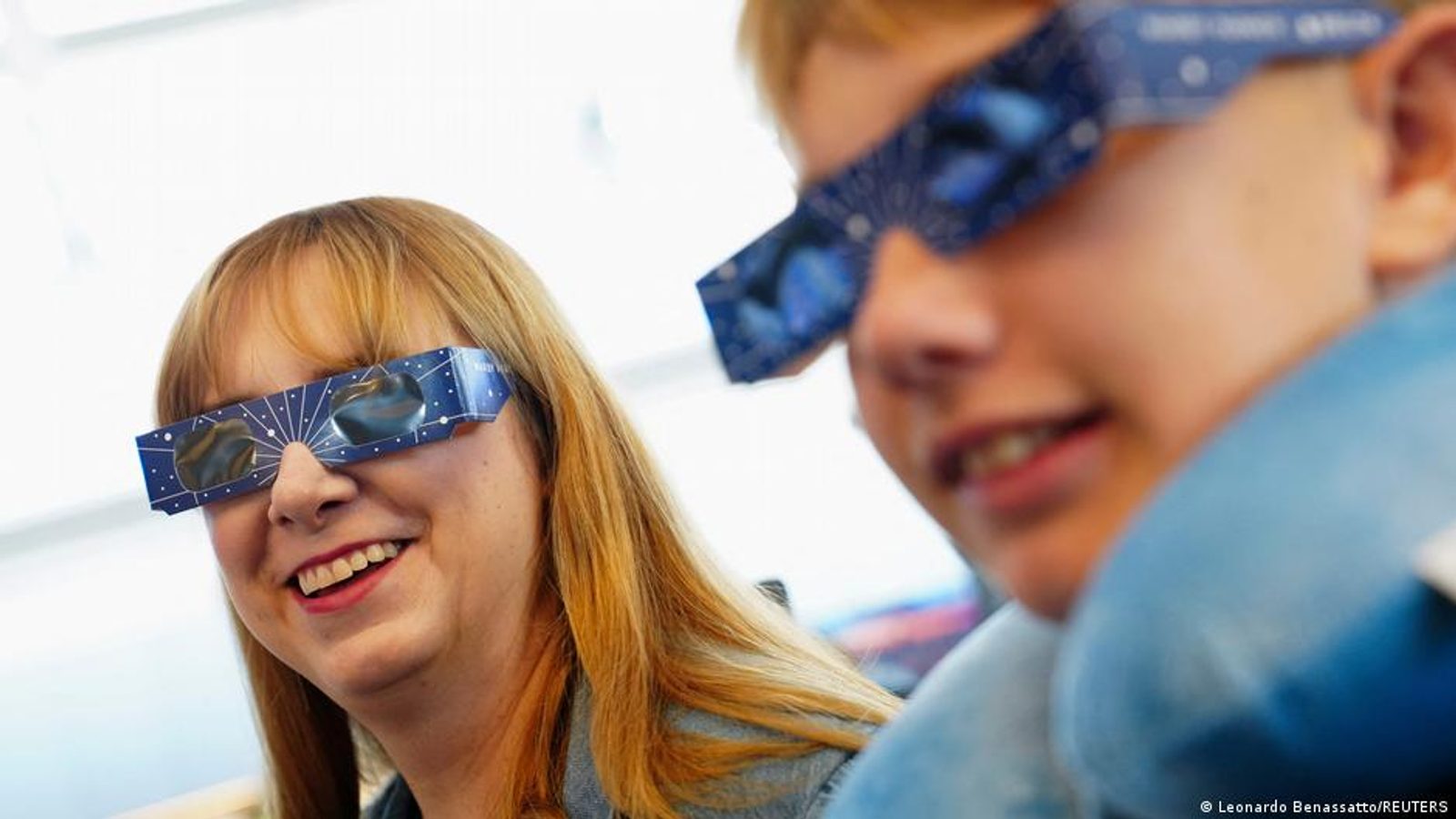
Ketrin Fisher, who helps plan and coordinate solar observations for the European Space Agency's Solar Orbiter mission, said she is eagerly awaiting the event and called it "a true astronomical spectacle." Rather than using specialised technical kit this time, Fisher says she will watch with "ordinary solar eclipse glasses" that contain certified protective foil.
Ophthalmic and radiation specialists stress that even when the Moon covers a large portion of the solar disk, enough energy remains to harm the retina. "It can happen very, very quickly," Fisher warns, noting that retinal tissue has no pain receptors and damage may not be noticed immediately.
Why twilight raises the danger
Daniela Weiskopf, head of the Optical Radiation Division at Germany's Federal Office for Radiation Protection, says the twilight conditions expected during this eclipse increase risk. When sunlight is less intense around dusk, people lose a natural protective reflex and tend to stare longer. "In that way, a natural protective reflex in people is lost," she explains. Dilated pupils in low light also admit more radiation to the retina.
Standard sunglasses are not safe for eclipse viewing, nor are welding goggles or emergency foil blankets. Certified eclipse glasses use a protective foil that transmits only about 0.001 percent of sunlight and should clearly state they are intended for direct solar viewing and carry the CE mark. For extra assurance, check conformity with the current standard DIN EN ISO 12312-2:2015. Experts also warn against using eclipse glasses from 1999 — old filters may be damaged.
Those who plan to photograph the eclipse must fit a proper solar filter to phones or cameras to protect sensitive sensors and to obtain sharp images. "It reduces the amount of light sufficiently so that the photograph can be sharp and clear," Weiskopf says. The same precaution applies to telescopes and camera lenses: never view the Sun through them without a certified solar filter.
If eclipse glasses are unavailable, an indirect method such as a simple pinhole projector made from a cardboard box and tracing paper allows safe public and child-friendly viewing. The German Federal Office for Radiation Protection provides step‑by‑step instructions for such devices. For observers in Germany, the Sun will be low toward the northwest horizon, with the Moon beginning to pass in front of it shortly after 19:00; viewers are urged to choose an unobstructed western or north‑western vantage and keep their eyes protected at all times.
Anyone who inadvertently looks at the eclipse without protection should monitor for symptoms that may appear hours later: persistent dark spots in the field of vision, blurred sight or distortion of straight lines. In such cases Weiskopf advises immediate consultation with an ophthalmologist or a visit to an eye clinic.
Photo: press material from the event