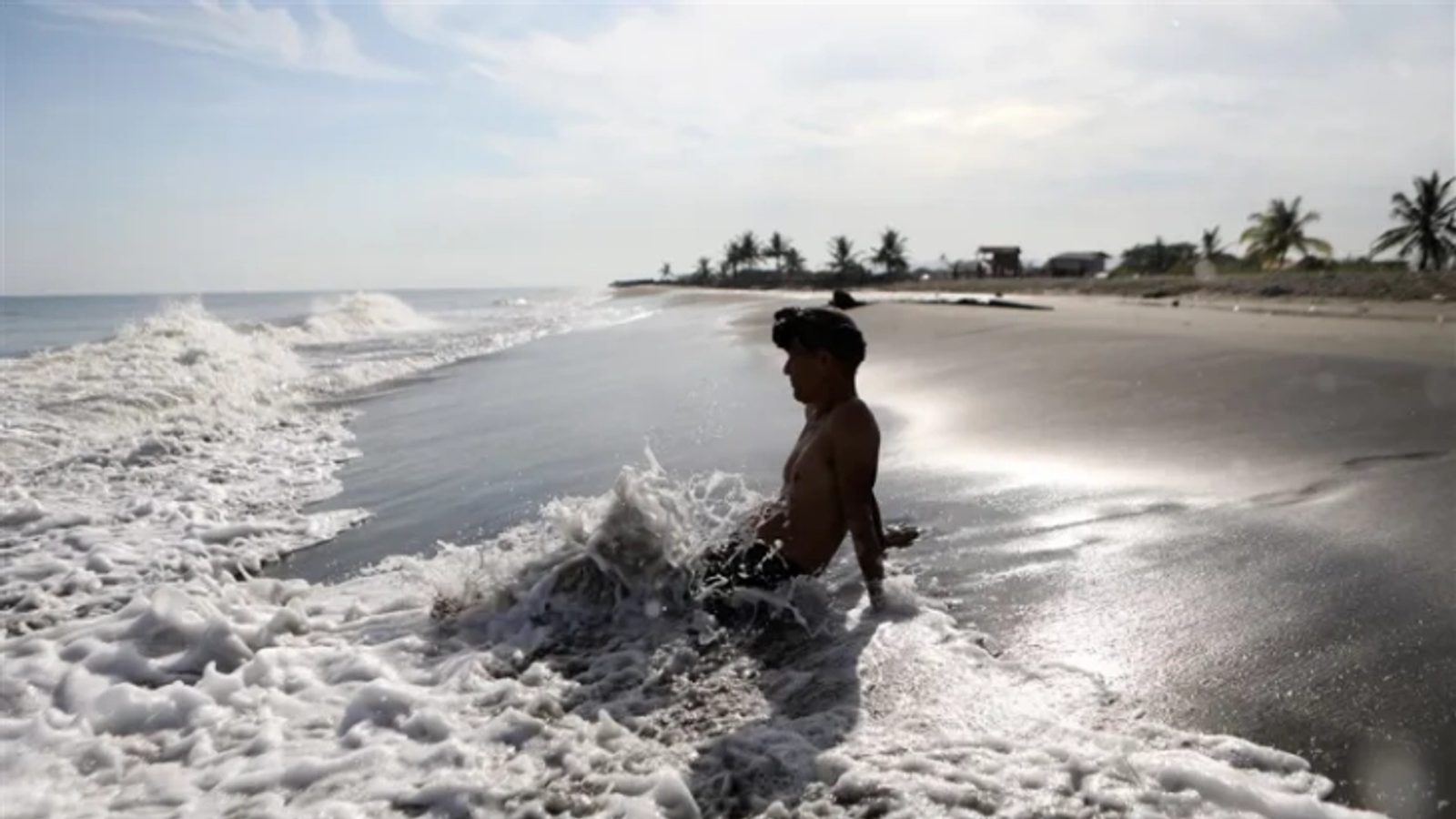
El Niño may become strongest on record and could make 2027 the world’s warmest year
Exceptional Niño 3.4 sea‑surface anomalies and model projections raise the odds that 2027 could become the warmest year on record.

Scientists warn the current El Niño is building toward record strength and could push 2027 to become the warmest year on instrumental record, as temporary Pacific heating layers on top of long-term human-driven warming.
What researchers say and why 2027 is at special risk
Climate analysts monitoring the equatorial Pacific report exceptionally high sea-surface anomalies in the Niño 3.4 region — roughly 2.6°C above the 30-year average at present — and model ensembles collected by the Climate Brink panel show a possible peak anomaly of 3.9°C in November. That would exceed the roughly 3.0°C anomaly recorded during the strong El Niño of 2015 and could lift global averages enough that 2027 “could plausibly” top the list of hottest years.
“That creates rippling effects across the global atmosphere,” explains Emily Becker, a climatologist at the University of Miami, describing how persistent warm surface waters in the tropical Pacific modify storm tracks, rainfall and temperature patterns worldwide.
Michelle L’Orio, head of the ENSO team at the US National Oceanic and Atmospheric Administration’s Climate Prediction Center, warns that stronger events amplify the usual El Niño impacts: “Stronger events mean we can expect more than the typical impacts of El Niño,” she said, while stressing that no single outcome is guaranteed.
Independent calculations by climate researchers Zeke Hausfather and Andrew Dessler estimate that a strong El Niño could temporarily add about 0.3°C to the ongoing warming trend. That boost would put the world’s average temperature in 2027 at roughly 1.76°C above pre‑industrial levels — a level the researchers say would otherwise be expected only around 2037.
“It’s a kind of glimpse into the future,” Dessler, a professor at Texas A&M University, said, pointing out that much of the extra heat will be concentrated in the equatorial Pacific. Mike McPhaden, a senior scientist at NOAA’s Pacific Marine Environmental Laboratory, agrees the numbers are plausible: “It is not unimaginable that 2027 could reach warming of 1.7 degrees above pre‑industrial levels if the model forecasts prove accurate.”
Experts note that while a single El Niño does not create long-term climate change, it can reveal how much hotter and more extreme weather could become when the temporary Pacific warming combines with higher greenhouse gas concentrations. NOAA recently adopted the Relative Oceanic Niño Index (RONI), which compares Niño 3.4 warming to the whole tropical band; under that metric the absolute anomaly values are lower, but the ranking of this event among past ones is unchanged. NOAA places a 69% chance that the current El Niño will be the strongest in its records back to 1950.
Early impacts are already visible: long, intense dry spells in parts of Indonesia have fuelled wildfires that burned hundreds of thousands of hectares, and scientists warn that heavier rainfall in some regions and deeper drought in others are consistent with an intensified El Niño interacting with a warmer, moister atmosphere.
Photo: press material from the event