Experimental 'Detangle' comb produced 97.85% hair regrowth in mice, researchers say human trials necessary
An experimental electronic comb boosted delivery of two genetic treatments and produced almost complete hair regrowth in mice, but researchers say human testing is essential.
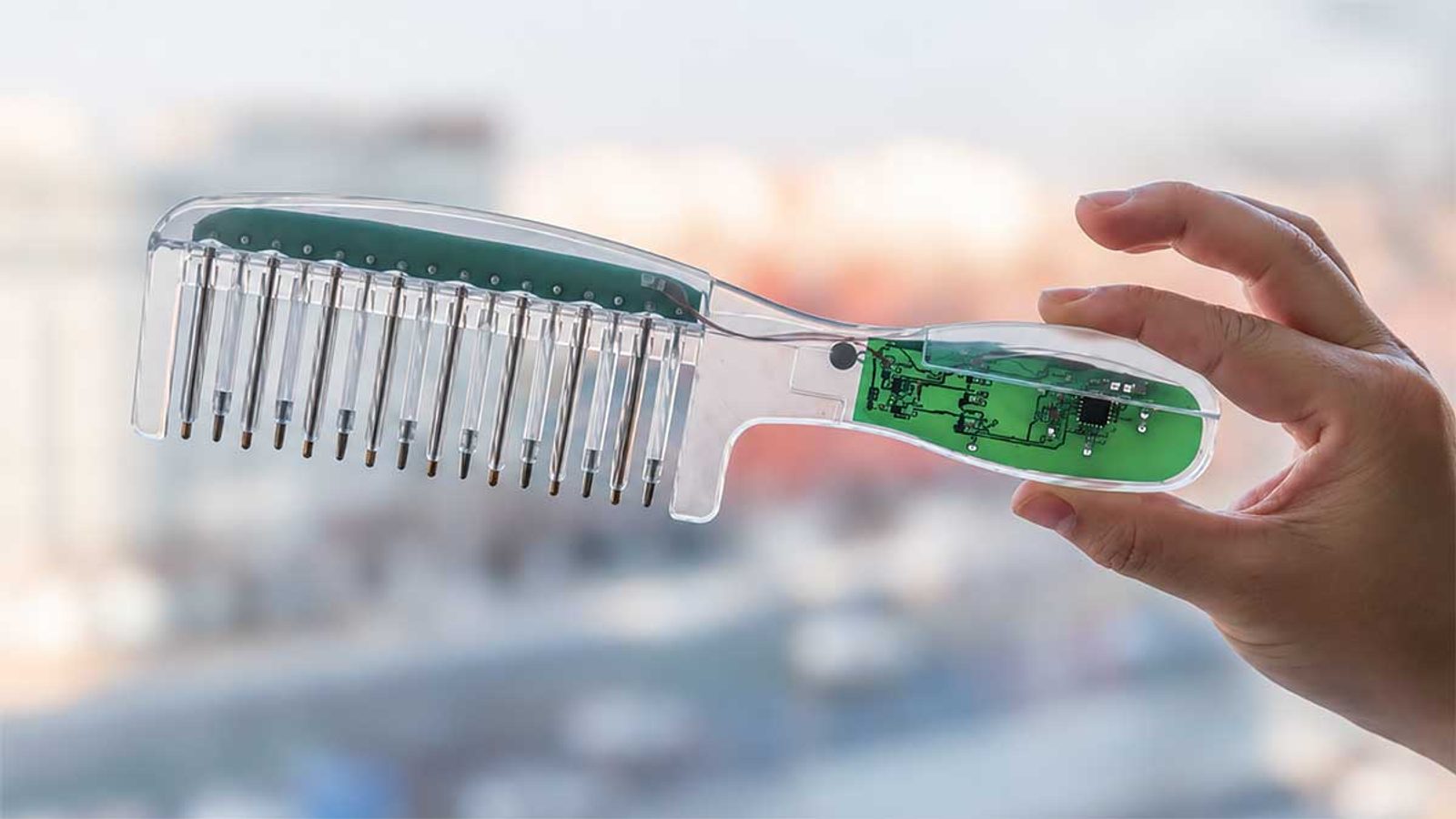
Scientists at Beihang University in Beijing have built an experimental electronic comb called "Detangle" that produced striking hair regrowth in mice — a near-complete recovery of hair when paired with two experimental genetic treatments, the researchers report.
How the device works
The device resembles an oversized plastic comb with a transparent handle exposing an electronic board and electrodes embedded into the teeth. The teeth alternate between long and short, a layout that creates a pulsing electric field reported to be 2.5 times stronger than in combs with uniform teeth.
The shorter teeth release two experimental genetic therapies: the first promotes growth of blood vessels around hair follicles, and the second blocks dihydrotestosterone (DHT), the hormone that causes follicle miniaturization. According to the team, the pulsing electric field temporarily opens skin pores and allows active ingredients to reach follicles up to nine times deeper than ordinary creams and lotions.
In a 28-day study, the researchers simulated male-pattern hair loss in mice by administering testosterone and compared standard treatments with the new system. Mice treated with finasteride restored about 50 percent of hair; those given minoxidil showed roughly 70 percent regrowth. Combining the Detangle comb with the two genetic treatments produced 97.85 percent hair regrowth.
Although the results were published in the journal Nature Communications and described by the team as highly encouraging, the authors warn that human hair loss develops over years and is biologically more complex than laboratory models. They stress that rigorous clinical trials for safety and effectiveness in humans will be required before any commercial use.
Androgenetic alopecia affects roughly 1.5 billion people worldwide — up to 80 percent of men and between 20 and 40 percent of women — and current therapies usually require ongoing use and can carry side effects, which is why safer, more effective solutions are actively sought.
Photo: Liu et al