EU diplomats have doubts about rapid Ukraine accession as public support drops
Diplomatic reservations over the war, corruption, costs and agriculture come as a Bertelsmann poll shows support in the EU slipping sharply.
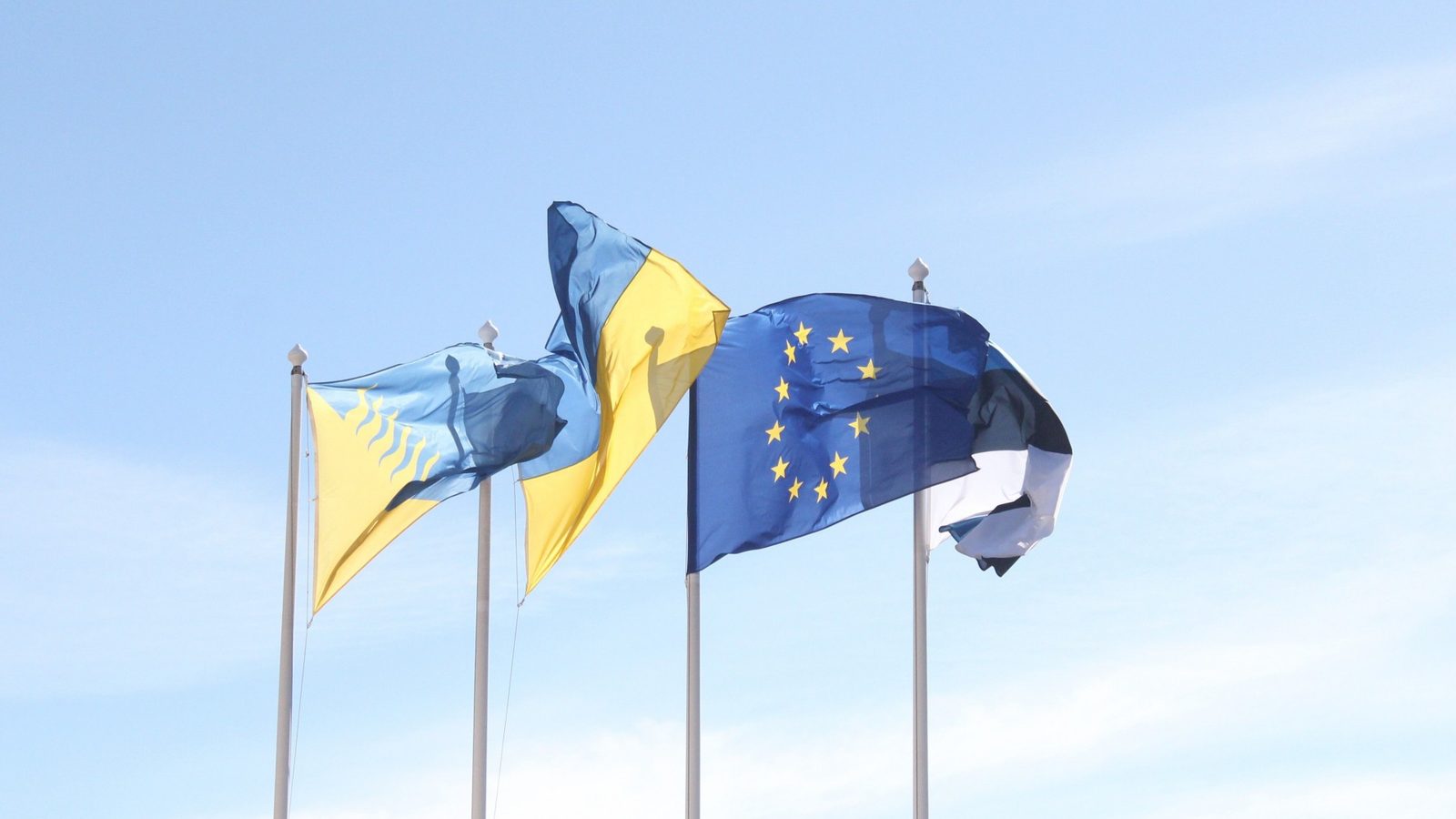
More than a dozen diplomats and EU officials have privately expressed doubts that Ukraine will become a full member of the European Union within the next few years, despite public statements of support from some European leaders. The hesitation stems from the unresolved outcome of the war with Russia, persistent corruption, economic costs, agricultural competition and political resistance in several member states.
Polls show falling public support
A Bertelsmann Foundation survey published in October found that just 47 percent of respondents across the EU support Ukrainian membership in the coming years, down from 69 percent in March 2022. Opposition to a rapid accession stands at 53 percent overall, including 59 percent in Germany and 57 percent in both France and Poland. Support remains strong in Ukraine (83 percent) and is 69 percent in Sweden.
The survey was carried out in June 2026 among 18,948 respondents, of whom 16,795 were in EU countries and 2,153 in parts of Ukraine under government control. In Poland, support fell from 87 percent in 2022 to 43 percent in 2026. General support for EU enlargement declined from 73 percent to 48 percent over the same period. Those opposed to a fast-track accession are not necessarily opposed to Ukraine joining in the more distant future.
Economic concerns are among the main drivers of scepticism: 64 percent of EU respondents expect more economic challenges than opportunities from Ukrainian membership, and 62 percent say they are not willing to accept short-term costs. By contrast, 74 percent of respondents in Ukraine expect economic gains and 67 percent are willing to accept such costs. Views also differ on accession conditions: 37 percent of EU respondents point to a peace agreement with Russia as an important factor, compared with 18 percent in Ukraine, where 50 percent emphasise domestic reforms.
Agriculture is particularly sensitive. Lower production costs in Ukraine could increase competition, affect prices and change the distribution of EU subsidies. Polish farmer Miroslaw Halej — who helped Ukrainian refugees in 2022 and later protested imports of Ukrainian grain — said Polish producers would not be able to compete on a fully open market unless restrictions are introduced; he would reconsider his position if limits were applied. Dolhobyczow mayor Grzegorz Drewnik says Ukrainian membership could strengthen Poland's security but only under certain conditions.
Political voices on the right have warned of economic fallout: Marine Le Pen highlighted agricultural competition and possible subsidy cuts, and Alternative for Germany submitted a parliamentary proposal in September opposing Ukraine's accession. Some member states would likely require a referendum before ratifying accession; France is expected to need nationwide approval.
Despite the doubts, accession talks continue. Ukraine applied in February 2022, received candidate status in June 2022 and opened negotiations in June 2024. In 2026 it opened four negotiating clusters, the last two on 13 October, covering the internal market, competitiveness and inclusive growth, with a total of 17 chapters. A European Commission report of 4 November assessed that Ukraine meets the conditions to open the remaining clusters and that specialised anti-corruption institutions operate independently and effectively, while calling for further reforms in the rule of law, democratic institutions, public administration and minority protection. Kyiv aims to complete negotiations by the end of 2028, but that is not a guaranteed accession date.
On the political front, German Chancellor Friedrich Merz proposed an associate membership that would allow Ukraine to attend certain EU meetings without voting rights, a measure Kyiv called unfair. The European Commission has proposed gradual integration in energy, transport, digital sectors and defence, with possible limits on financial support and market access for sensitive agricultural products. "In many countries politicians do not expect accession even within ten years," said Gerald Knaus, president of the European Stability Initiative, warning that doubts about European promises could demoralise Ukraine.
Ukrainian officials argue that membership would strengthen European security. "Ukraine's accession is beneficial for the European Union," said Heorhii Tykhyi, spokesperson for the Ukrainian Ministry of Foreign Affairs, citing Ukraine's roughly one-million-strong armed forces, their combat experience and drone capabilities.
Photo: press material from the event