Finland opens final nuclear waste repository; Germany still searching (2 Nov 2026)
Finland’s underground facility at Olkiluoto is operational after decades; Germany hopes to pick a site by 2050 amid strict safety demands and high costs.
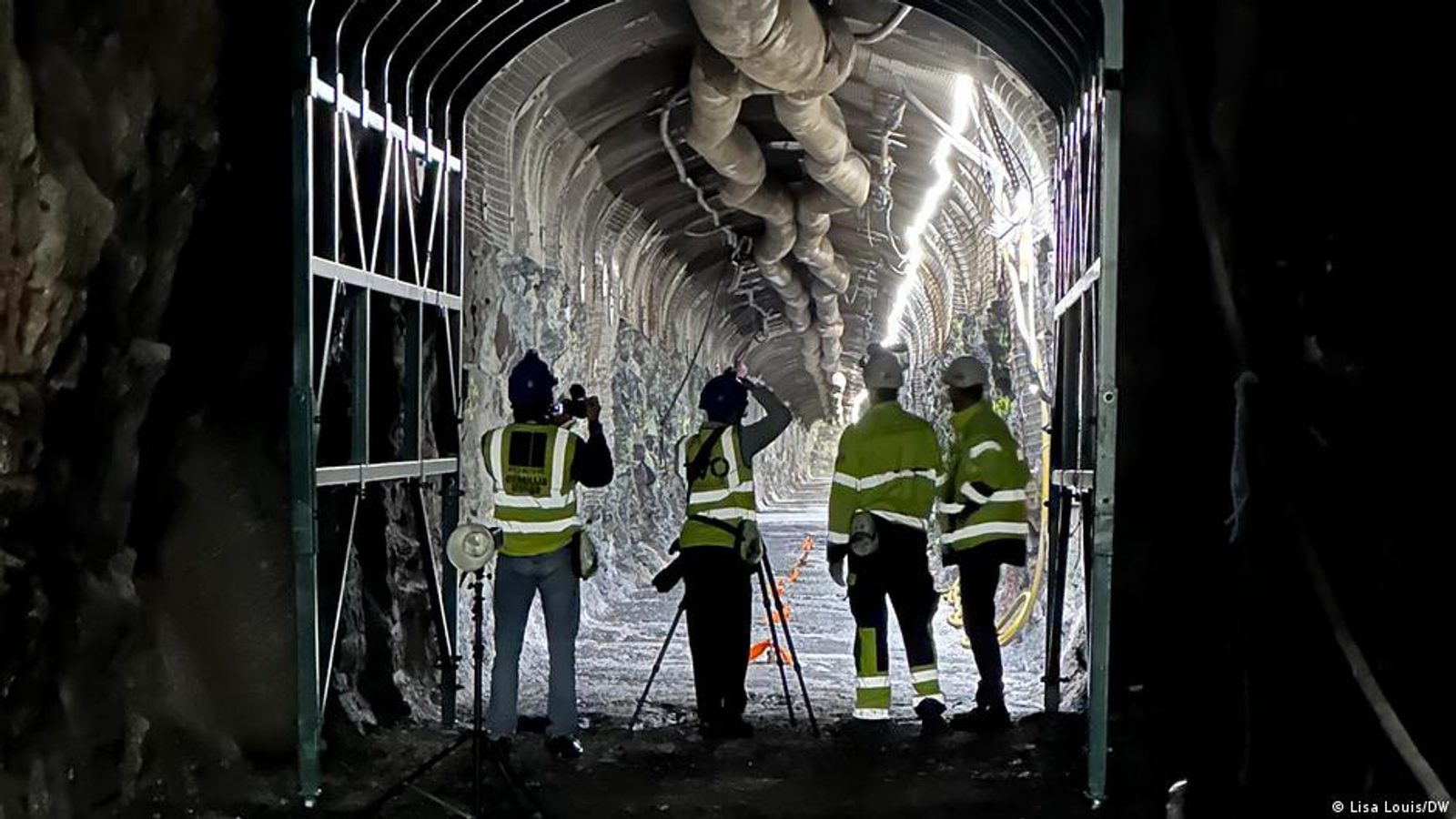
Finland has become the first country in the world to approve a permanent repository for high-level radioactive waste, while Germany continues a difficult, decade-long search for a comparable underground site, experts say. The Finnish facility lies about 400 metres below ground on an island in western Finland beside the Olkiluoto nuclear power plant; completing the project took roughly 40 years.
Why finding a site is so hard
Globally, 31 countries have at some point operated nuclear power plants, and for most of them the question of final disposal remains unresolved. The task is politically and technically complex because spent fuel assemblies will remain hazardous for thousands of years and require proof of safety over geological time scales.
Germany’s federally owned company set up to identify a permanent repository has been searching for nearly a decade. The enterprise says that only around 5 percent of Germany’s territory is potentially suitable for a deep geological repository; those candidate areas lie across 11 of the country’s 16 federal states. Geologists, nuclear experts and physicists work with citizens and politicians as part of the site-selection process, but the company stresses that the waste will stay in Germany and will not be exported abroad.
Environment Minister Karsten Schneider (SPD) has said he wants to explore whether the search can be substantially accelerated; his office spokesman Stefan Gabriel Haufe noted at a press briefing that “Russia, the USA, the UK and Japan still do not have processes as advanced as ours. Finland certainly records the fastest progress globally, but Germany is also among the leading countries.”
Experts examining candidate locations assess geological stability: whether a rock formation some 400 metres down can reliably contain the waste and whether groundwater could be contaminated. The target is a repository surrounded by roughly 100 metres of rock acting as a protective barrier; favourable host rocks include clay, granite or rock salt. As technical and regulatory requirements tighten, the number of acceptable sites shrinks, and proximity to large cities is considered only at later stages.
Dagmar Demer, head of communications at the federal waste company, stresses the scale of the safety challenge: “Safety must be demonstrated over an extremely long time period – 100,000 years in the case of Finland, and one million years in Germany, Switzerland and France. Regardless of the long-term projections, the effort is always immense. Different factors such as geological processes, interactions between geology and engineering, and the decay of radionuclides over time, must be analysed together and assessed from a safety perspective.”
Germany phased out commercial nuclear power after the Fukushima disaster in 2011; the last reactor ceased operations in 2023, but large volumes of radioactive waste remain on site at power plants and research facilities. Nineteen former nuclear plants are in the process of decommissioning and current interim storage and the site-search already cost about €1.4 billion per year. Experts estimate the permanent repository will cost around €14 billion and will require burying roughly 28,000 cubic metres of radioactive material.
Photo: press material from the event