Germany posts modest growth in 2026, experts warn of debt and productivity risks
Modest growth masks structural gaps: forecasts, budget plans and expert warnings on debt and productivity.
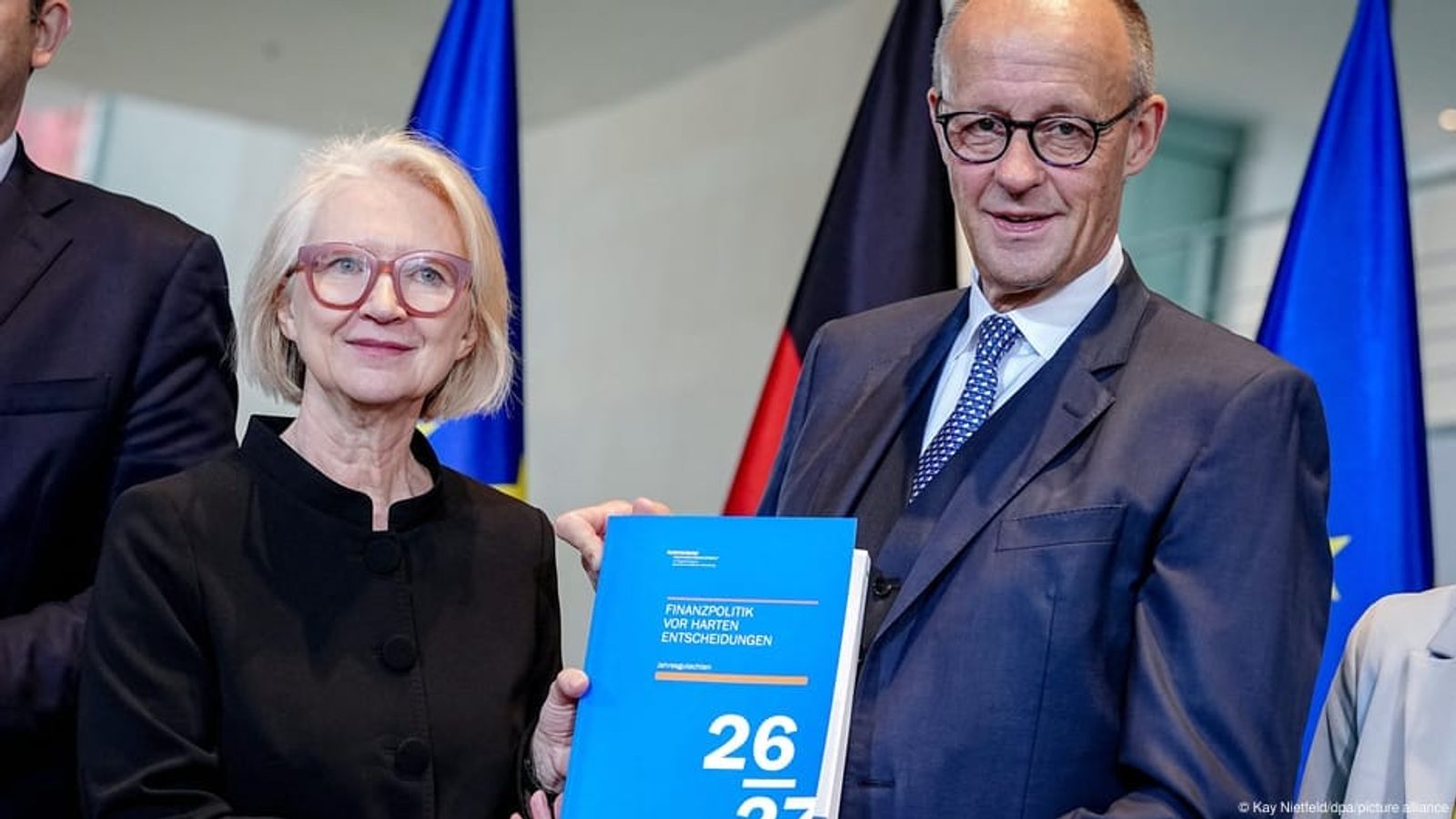
Germany's economy is showing modest growth, but leading analysts warn that high debt, weak productivity and a shortage of structural reforms threaten long-term prosperity, possibly leaving a heavy burden for future generations. The assessment was published on 12 November 2026 and reflects recent government forecasts and expert analysis.
At a recent machinery engineering summit in Berlin industry representatives described a mixed picture: core sectors that once anchored German manufacturing are shrinking. "A year ago I said here that we were angry. Today I must say we are astonished," said Bertram Kawlat at the event, describing monthly losses of about 15,000 jobs and output roughly 20% below 2018 levels in parts of the sector.
Chancellor Friedrich Merz, who turned 71 on 11 November, has framed the current developments as fragile recoveries after multiple shocks. The German Council of Economic Experts now forecasts growth of 1.3% for 2026 and 1.0% for 2027. "Thank you very much for the good news you brought," Merz said when receiving the council's autumn report, while cautioning that even modest improvements come amid unusually strong headwinds.
Debt dynamics and budget choices
Lawmakers are finalising the federal budget for 2027, with projected expenditures of €555 billion. Because revenues fall short, planned new borrowing exceeds €118 billion; adding off‑budget infrastructure and defence funds pushes total new borrowing to nearly €204 billion. The Council warns that, if current trends persist, the debt‑to‑GDP ratio could rise from 63.5% at the end of 2025 to about 100% by 2040. By 2030 social spending, defence and interest payments are expected to absorb roughly 80% of the federal budget.
Monika Schnitzer, chair of the German Council of Economic Experts, said the recovery surprised economists in light of energy price shocks linked to the war in Iran. "The German economy recovered faster than expected after the energy price shock caused by the war in Iran," she said, while warning that projected revenues will not be enough to cover planned spending and that achieving sufficiently high growth rates to close the gap would require expansion Germany has not seen in decades. "To get out of this budgetary difficulty through economic growth, mathematically speaking, we would need growth rates that Germany has not seen in the last 50 years," she added.
Experts recommend a combination of fiscal consolidation and reforms that raise productivity. Proposals include phasing out environmentally harmful tax breaks (for example diesel tax relief), reassessing pension entitlements such as the so‑called "mother's pension," and — in the medium term — possible tax increases including VAT. Analysts also point to shortcomings in the innovation ecosystem: university spin‑offs and venture capital activity lag behind the UK and US. For instance, about 14 founders per 1,000 students near Stanford attract venture capital, 3.5 near Cambridge, but just 0.5 in Munich.
Policymakers face the balancing act of consolidating public finances without suffocating growth. Schnitzer warned that reducing debt will require "a fiscal policy challenge of historic proportions" and hard choices that should not hamper the recovery. Chancellor Merz has stressed fiscal restraint across Europe: "I want it to stay that way," he said, referring to preserving Germany's AAA rating.
Photo: press material from the event