Global markets plunge after AI-linked sell-off
After steep losses on Wall Street and in Asia, European markets slid on November 6, 2026 amid worries about AI-related investments and US political changes.
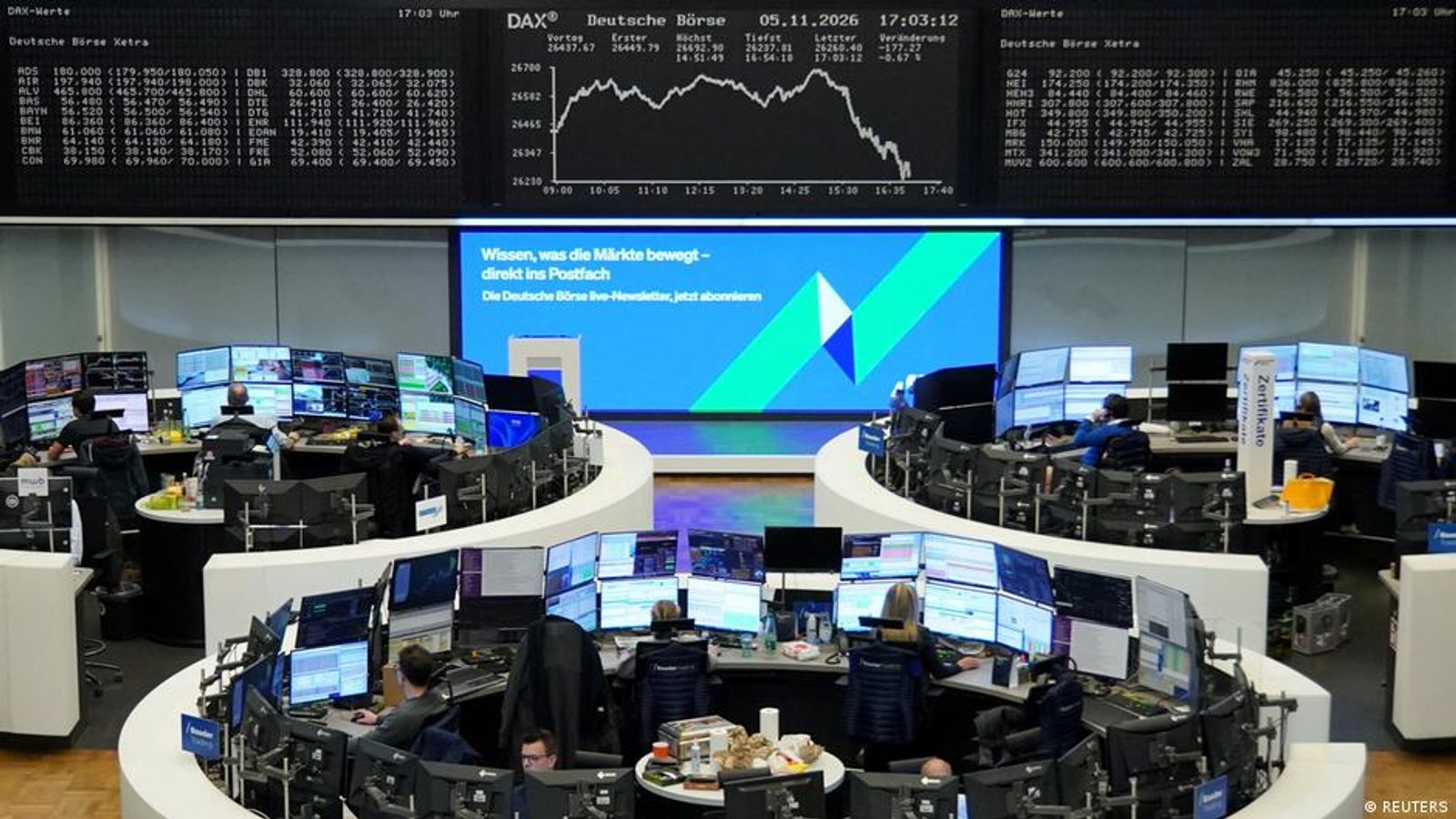
European equities tumbled in early trading on November 6, 2026, after a global sell-off that began on Wall Street and spread across Asia. Investors cited mounting doubts about huge investments tied to artificial intelligence and fresh political risk following Democratic victories in the US midterm elections.
Pan-European index STOXX 600 fell 1.6% in early trade, wiping out gains accumulated earlier in the week. Most major European markets lost more than 1%, with media, healthcare and retail stocks among the worst hit.
US and Asian pressure amplified the rout
The rout followed heavy losses in the United States, where technology names linked to AI infrastructure led declines. The Nasdaq slid 5.52% and shed up to $2.5 trillion (about €2.23 trillion) of market value, while the broader S&P 500 dropped 4.4%.
Asian markets plunged as the sell-off crossed the Pacific. Japan’s Nikkei 225 fell 5.5% in early trade. South Korea’s tech-heavy Kospi lost 8.8%, triggering an automatic trading halt that closed the exchange for 20 minutes, and Taiwan’s TAIEX was down by more than 8%.
Chip and tech groups bore the brunt of the selling. Shares of Samsung fell nearly 10%, SK Hynix lost more than 11%, Tokyo Electron slid around 9%, and Kioxia dropped 13%.
Investors pointed to growing concern that big planned investments in AI — particularly in data centres — may not deliver the expected returns, and to the possibility that new political leaders could impose restrictions. The Democratic Party’s takeover of both chambers of the US Congress added to worries that local officials and newly elected governors might slow or block construction of data centres.
“It is clear that there has been a real change in sentiment,” said Michael McCarthy, chief executive for Australia and New Zealand at online broker Mumu. “Turning points in markets are often accompanied by sharp disagreements, which show up as large swings in both directions. It appears that this is what has happened, and last night's heavy sell-off suggests this is the direction we are now moving.”
Traders said volatility could persist as investors reassess the pace and profitability of AI-related spending and monitor potential policy responses at federal and local levels in the United States.
Photo: press material from the event