Goji berries in North Macedonia: registered producers, organic plots and state support
Registered organic growers and small-scale processing exist, but total planted area and national output remain uncertain.
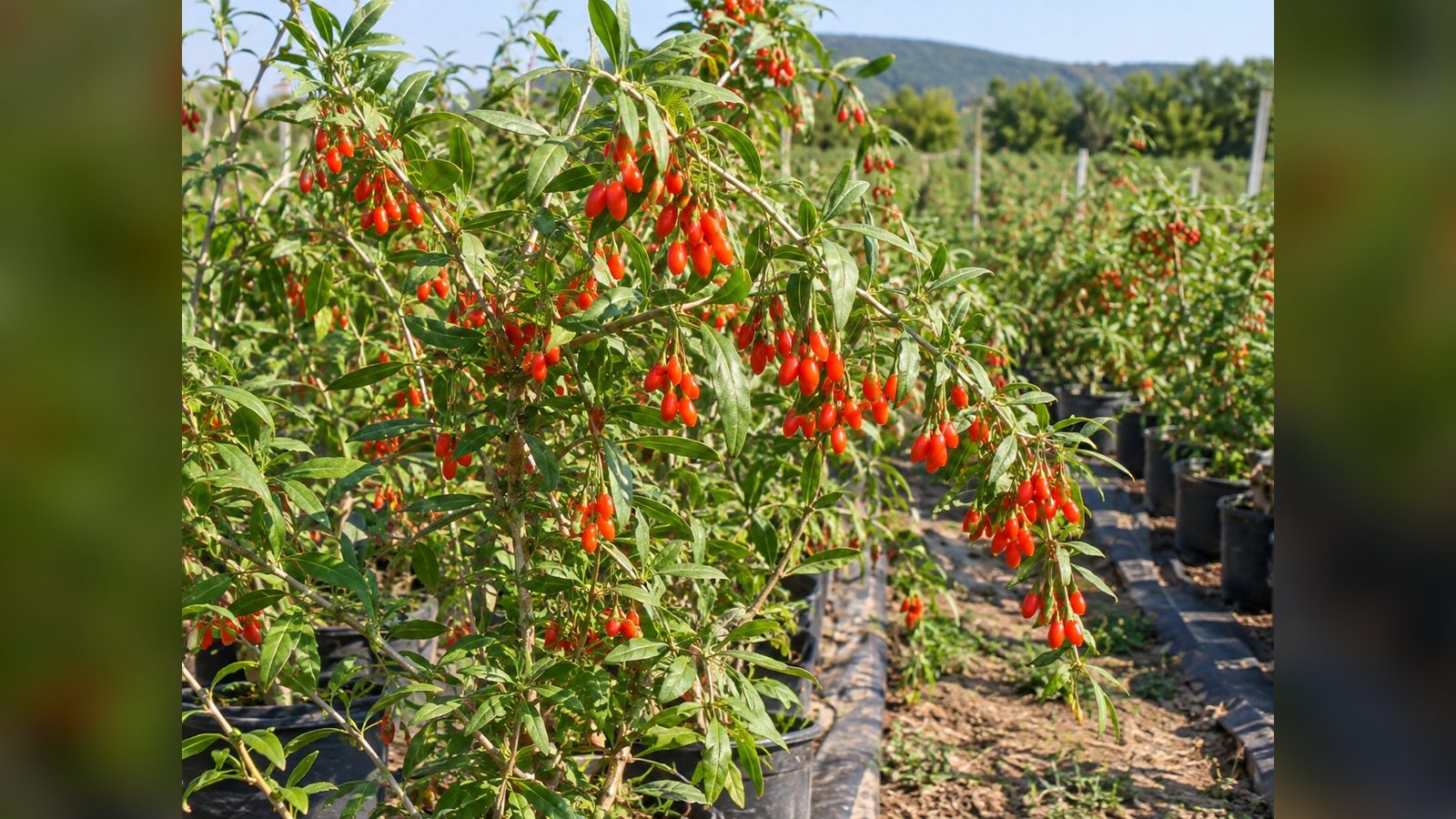
Goji berries have appeared in North Macedonia's agricultural landscape: they are grown by registered producers, found in organic plantings and used in locally made products — but the true scale of cultivation remains unclear.
Originally from the southern Tibetan regions of China, goji plants can reach up to five metres in the wild; growers keep them nearer two metres to simplify harvesting. The berries are small and soft, which makes harvesting a delicate task and requires trained workers.
“Production can only be profitable if you have a rounded business plan, that is, if you sell finished products. The Chinese have huge goji plantations, they dry the berries and export them, so we cannot be competitive with them,” says prof. dr. Nenad Magazin of the Faculty of Agriculture in Serbia.
Registers, support and minimum planting density
Official records show a modest documented presence. The 2022 register of organic agricultural producers lists nine goji growers located in Sveti Nikole, Shtip, Tetovo, Kumanovo, the Skopje Region, Rosoman and Delchevo. Together those nine producers account for about 2.73 hectares of goji plantings in the register — a figure that applies only to the registered organic growers and should not be taken as the total national area under goji.
The Government's 2026 decree on direct payments explicitly includes goji among fruit crops eligible for agricultural support under specified conditions. Earlier rules also listed a minimum planting density for goji: at least 2,500 plants per hectare.
Local processing exists alongside nursery production. One example is the company Bioplant, which started as an organic nursery supplying planting material and later expanded into fruit processing and the production of organic juices. On the domestic market goji is offered not only fresh or dried but blended into juices with apple, sour cherry and raspberry.
“They are also sold frozen, and the fruit can last up to one year in a refrigerator,” says Martić, reflecting how small-scale producers try to extend shelf life and diversify sales channels.
Determining the full extent of goji cultivation in North Macedonia is difficult because national statistics group minor berry crops into broader categories. For example, 2023 data list 37.9 hectares under the category “other berry plantations,” which includes goji along with other small berry species, so that figure cannot be interpreted as goji-only area. While there is clear official evidence that goji is being cultivated and processed domestically, the total planted hectares and annual national production cannot yet be stated with precision.
Photo: press material from the event