Iran fears renewed street unrest if U.S. economic pressure intensifies
Tehran’s leaders warn that new U.S. sanctions could aggravate shortages and rekindle street unrest after months of war and economic damage.
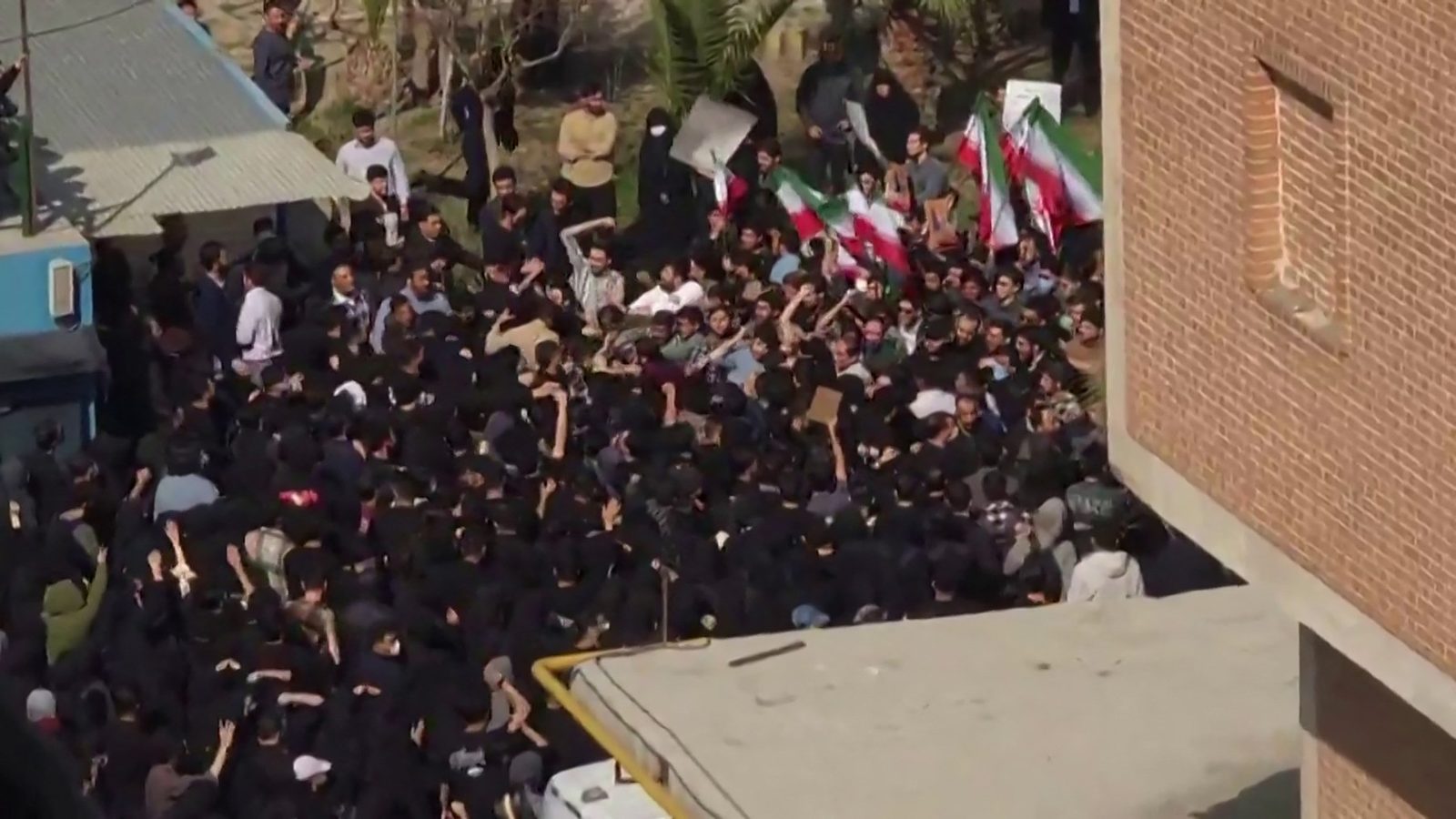
Iranian leaders fear that renewed U.S. economic pressure could deepen the country’s hardship, trigger a new wave of protests and further erode the Islamic Republic’s legitimacy, even as Tehran tries to project resilience amid the war with the United States.
President Donald Trump on Friday vowed to hit Iran hard economically, a day after Treasury official Scott Bessent said Washington could next week impose measures “the likes of which have not been seen before.” U.S. authorities have not detailed what those measures would include.
Economic collapse and damage to infrastructure
Despite public displays of confidence and Tehran’s closure of the Strait of Hormuz after almost six months of conflict, officials say mounting domestic pressure risks spilling into nationwide unrest. Three Iranian officials, two political insiders, a former official and a number of ordinary citizens spoke on condition of anonymity because of fear of reprisals or lack of authorization to speak to the media.
Inflation and shortages are biting households. Iran’s annual inflation rate in July reached 66 percent, while consumer prices were 87.9 percent higher than a year earlier, according to the Statistical Center of Iran; food prices rose 128 percent year‑on‑year. Rents in March were 31 percent higher than a year earlier, and state media reported Tehran apartment prices roughly 50 percent higher than last year. The minimum wage was raised by about 60 percent this year, but the rial’s continued weakening reduced its purchasing power: the dollar value of the minimum wage fell from about $105 at the end of March to $86.
Ordinary Iranians describe the impact in personal terms. Arshia, a civil engineer who said construction projects largely stopped after U.S. and Israeli strikes began on February 28, warned: “I am worried. If Trump imposes more sanctions, how will ordinary people survive? I don't want my country to be punished either militarily or economically. We're already barely surviving.”
Small business owners report sharp losses. Mohsen said he had to close his import‑export firm that traded with Persian Gulf neighbours after Iran retaliated against U.S. strikes by targeting U.S. bases and other regional sites. “I had to lay off ten employees. It was painful, but I had no choice. I could no longer pay wages and now depend on savings to support my family,” he said from the southern port city of Bandar Abbas. Bijan, who once earned about $1,000 a month as an engineer, said he and his wife now struggle to earn roughly $400 a month and have left Tehran for a cheaper province.
Damage from military strikes has hurt factories, power plants and transport links, increasing the costs and time needed to move goods. President Masoud Pezeshkian acknowledged the mounting strain: “Our problems have multiplied several times over, while our revenues have fallen,” he said. Lawmakers and officials also warn of fuel shortages: MP Reza Sepahvand told Iranian news agency ILNA that daily gasoline production has peaked at about 130 million litres while daily consumption is around 137 million litres.
Faced with the risk of unrest, authorities have moved to reinforce internal security. The appointment of Hossein Taeb as commander of the Basij militia — a volunteer paramilitary force linked to the Islamic Revolutionary Guard Corps — is seen by some former reformist officials as an explicit signal that the clerical leadership fears another round of protests. Human rights groups say the state has answered such worries with executions, arrests and long prison terms for journalists, lawyers, activists and students; authorities say these steps are necessary to preserve stability during wartime.
Past economic protests were violently suppressed: in January, demonstrations over economic hardship were quelled by the Revolutionary Guard and Basij, “during which thousands of people were killed,” according to those accounts. The combination of rising prices, damaged infrastructure and tighter routes for imports — including a near halt to oil shipments through some channels — has left many Iranians struggling to plan for the future.
Separate to these developments, U.S. President Donald Trump also threatened legal action against the BBC.
Photo: AFP / AFP / Profimedia