Extreme weather reshapes German farming
Farmers in Germany are switching varieties, testing new crops and using irrigation and technology to cope with heat, drought and late frosts.
Extreme heat, prolonged dry spells and sudden heavy rains are forcing German farmers to change what they plant and how they manage fields and orchards. Producers are responding with new varieties, different crops, irrigation where it pays, and technological safeguards such as shade nets and photovoltaic foils.
Weather-driven changes across fields and vineyards
The late‑June heatwave arrived at a sensitive moment for many crops: while some barley was already ready for harvest, other plants were in critical development stages and suffered from drought stress. “This year again is difficult for agricultural holdings,” said Horst Geman of the Chamber of Agriculture of North Rhine‑Westphalia.
Maize has been particularly affected where extreme temperatures coincided with flowering. “We are already seeing in places that maize does not form ears. That practically means a complete crop failure,” Geman warned. Grain crops have also been pushed to mature prematurely: in some areas barley was harvested several weeks earlier than usual.
At the European level, Coceral estimates that the value of the cereal harvest fell by more than two billion euros, and it cut expected grain production for the EU and the United Kingdom by nearly nine million tonnes—roughly a three percent decline. A London analysis from the Energy and Climate Intelligence Unit projected an even larger fall of about five percent.
Farmers are adopting several risk‑sharing strategies. Many now plant multiple varieties with staggered maturities so that a single heatwave or dry spell does not wipe out an entire holding. “You never know when an extreme heatwave will hit,” Geman explained. Barley often has an advantage because it matures earlier than wheat and can finish grain filling before the worst summer droughts.
Fruit growers face different threats: a combination of milder winters and earlier bud formation increases the risk that a late spring frost will strike fragile blossoms. To protect flowers, many orchards use anti‑frost irrigation systems that spray water over blooms to create a protective ice layer. “Inside the ice a little heat is retained so temperatures do not fall as low as without anti‑frost protection,” Geman said. The same systems can supply irrigation during extended dry periods.
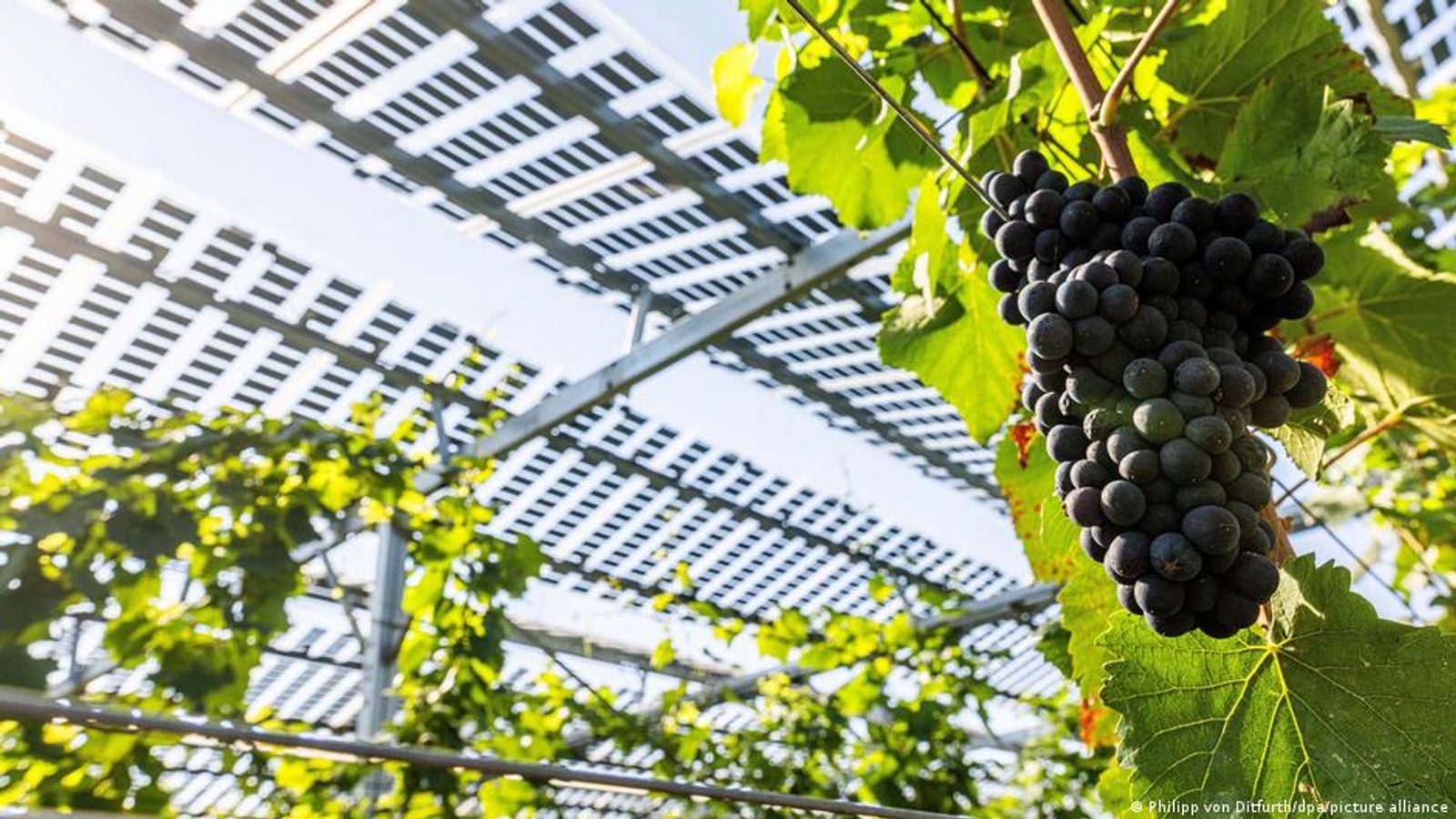
Technical measures are multiplying: hail nets now provide shade to reduce sunburn on fruit, and semi‑transparent photovoltaic foils are being trialled in vineyards and orchards to both generate electricity and mitigate excessive solar radiation while allowing enough light for growth. But irrigation is not always economically feasible—while vegetables, potatoes and fruit can justify the investment, irrigation for cereals and maize often does not pay off. “The costs are simply too high,” he said.
Plant breeding is central to adaptation. In parts of North Rhine‑Westphalia farmers are already using wheat genetics sourced from warmer regions of Europe. “For wheat we already use a lot of genetic material from France,” Geman noted. Researchers at the state Julius Kühn Institute are working on wheat varieties with root systems that respond dynamically to drought—deepening roots only when surface moisture becomes insufficient.
Despite the challenges, Germany remains among the world’s more productive cereal regions. Yields in good soils of the Rhine area reach around ten tonnes of wheat per hectare and in favourable seasons sometimes eleven to twelve tonnes; by contrast, U.S. figures from the U.S. Department of Agriculture average only about three to 3.5 tonnes per hectare, Geman said. But the pace of change is rapid: drought years in 2018 and 2019 and the recent heatwaves fit a broader trend that “can certainly be linked to climate change,” he concluded.
Photo: press material from the event