China accelerating development of humanoid robots for military use
Researchers model urban-clearing, reconnaissance and behind‑lines missions; industry leads to fast hardware growth but technical limits remain.
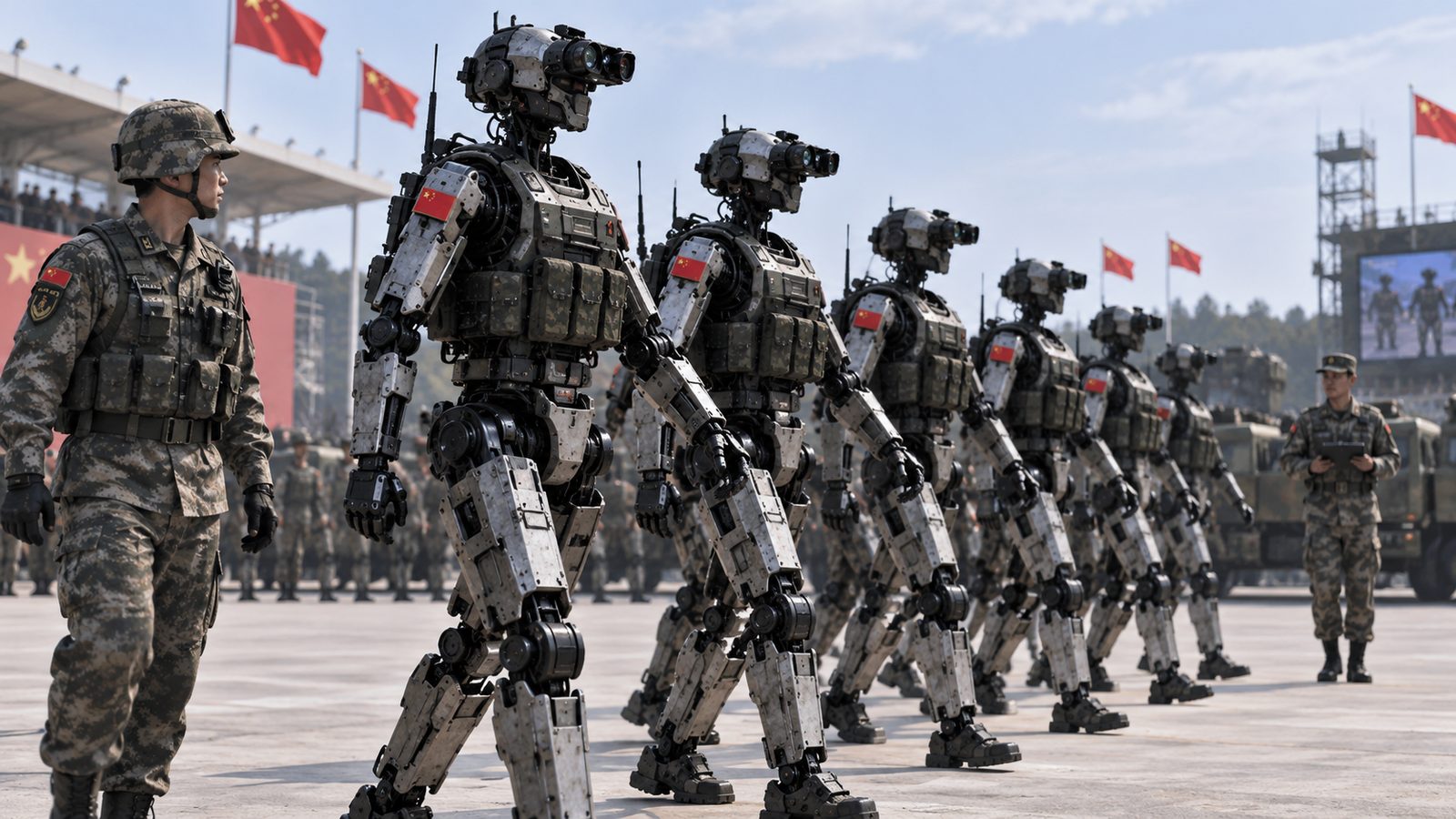
Chinese military institutions have stepped up work on humanoid robots with potential combat applications, according to an extensive review of more than 100 military tenders, scientific papers, patents, official publications and defence-industry documents. Interest in the technology rose markedly during 2025 and 2026.
Planned roles and tested scenarios
Researchers have modelled a range of battlefield tasks for humanoid platforms: urban building-clearing alongside soldiers, reconnaissance, patrolling, guarding military facilities and penetrating behind enemy lines to map terrain and locate targets. In one exercise, humanoid machines were assigned to infiltrate rear areas and perform mapping and target-finding.
A scenario developed by researchers at the National University of Defense Technology sketches robots moving through buildings floor by floor and room by room during assaults. The researchers estimate the equipment needed for such operations could become available within five to ten years.
China also has a strong industrial base for these machines: data from BofA Global Research indicate Chinese manufacturers accounted for roughly 95 percent of global shipments of humanoid robots in 2025.
Despite the push, the technology still faces major hurdles — high energy consumption, safety and security concerns, and limitations operating in unpredictable or complex environments. There is currently no evidence that Chinese armed forces have deployed armed humanoid robots in operational units.
The Chinese Ministry of National Defense has previously said that “weapons controlled by artificial intelligence should remain under human control.”
Photo: press material from the event