Sweden election 2026: Sweden Democrats poised to enter government
A vote on 13 September 2026 has turned into a referendum on whether the Sweden Democrats will join Ulf Kristersson’s next government.
Sweden goes to the polls on Sunday, 13 September 2026, in a parliamentary contest that has effectively become a referendum on whether the Sweden Democrats will join the next government. Once politically isolated, the party now polls at about 19 percent and is positioned to enter the governing bloc that would give Ulf Kristersson a second term as prime minister.
Kristersson has already signalled a closer partnership with the Sweden Democrats after years of parliamentary cooperation. He argues that working with the party since 2022 has brought tangible results: economic growth, lower energy and food prices, reductions in gang crime and gun violence, and record-low levels of asylum applications. He told the press during the campaign: "We have agreed to run a campaign aimed at forming a joint government with a parliamentary majority and for me to lead that government."
Policies and public concern
In government over the past four years, policy shifts have included ending permanent residence for some refugees, tightening eligibility for social assistance and increasing deportations of people without a right to stay. Asylum applications have fallen to their lowest level in 40 years. The Sweden Democrats are pressing for even tougher measures on immigration, integration and border control.
Jimmie Åkesson’s party has roots in neo‑Nazi circles, a legacy it publicly addressed with an apology in 2025. Some of the Sweden Democrats’ leading figures have used uncompromising language about cultural assimilation. Mattias Karlsson, a close ally of Åkesson, said: "In Sweden the Swedish culture, Swedish language, Swedish laws, Swedish norms, Swedish morals and Swedish traditions apply. If you cannot accept that, then you should find somewhere else to live."
Opponents warn the party’s entry into government could erode liberal values. "If the Sweden Democrats enter government, it will have a hugely negative impact on the liberal ideals of our country," said Birgitta Ohlsson, a former minister and currently a member of the Centre Party. "We have already seen the consequences while they were outside government, and it would be ten times worse."
Analysts see the vote as part of a broader European shift in which far‑right parties have moved from the fringes into governing roles in several countries. "These elections are a referendum on the Sweden Democrats and on whether we will continue down a far‑right path," wrote commentator Jan Guillou. Others argue the party has been normalised: "You will see further normalization of the Sweden Democrats," said historian Lars Tregord. "It's time to dial down the hysteria."
Campaigning has underlined deep societal anxieties. Activists and writers warn of tougher expulsions and threats to media freedom and protest rights. "I fear that more people will be expelled. I am worried about the media, freedom of speech and freedom to protest," said Kurdo Baksi during a demonstration in Stockholm. Prime Minister contender Magdalena Andersson has framed the choice as wider than the premiership: "That would be a completely different Sweden," she said, urging voters to consider the implications for defence, education, culture and finance.
The result will determine whether Sweden accepts the Sweden Democrats as full partners in government or rejects further right‑wing shifts. Even if the opposition maintains a narrow lead in some polls, forming a stable alternative coalition is complicated: the four opposition parties agree on higher social spending and support for Ukraine, but they disagree on taxes, nuclear power and other key issues, and the Centre Party refuses to join a coalition that includes the Left Party.
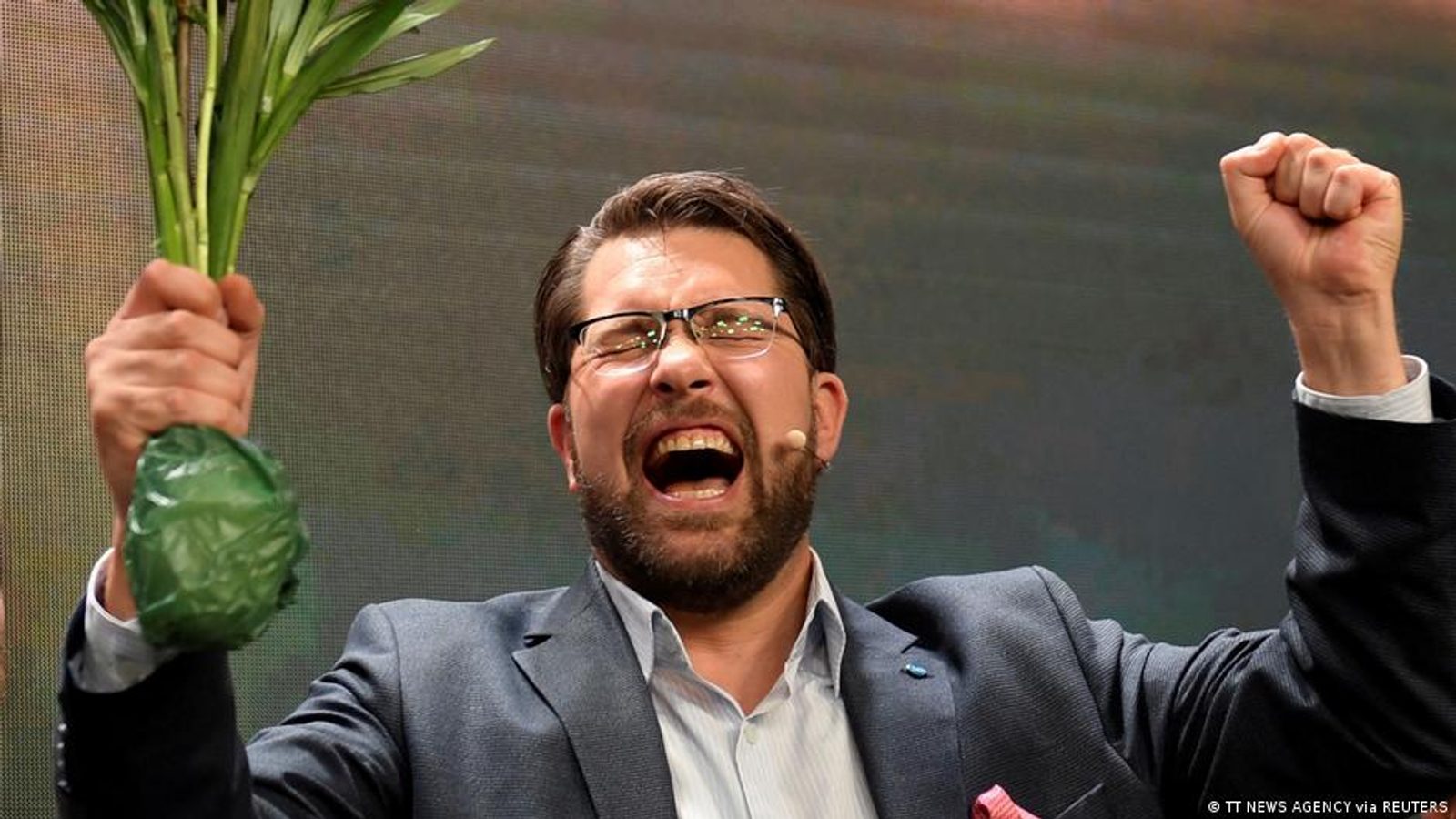
Photo: liderot na Shvedskite demokrati, Djimi Akeson)