Germany considers 40‑hour week as carmakers confront deep crisis
Manufacturers propose moving from a 35‑ to 40‑hour week to lower labour costs as VW, BMW and suppliers announce job cuts.
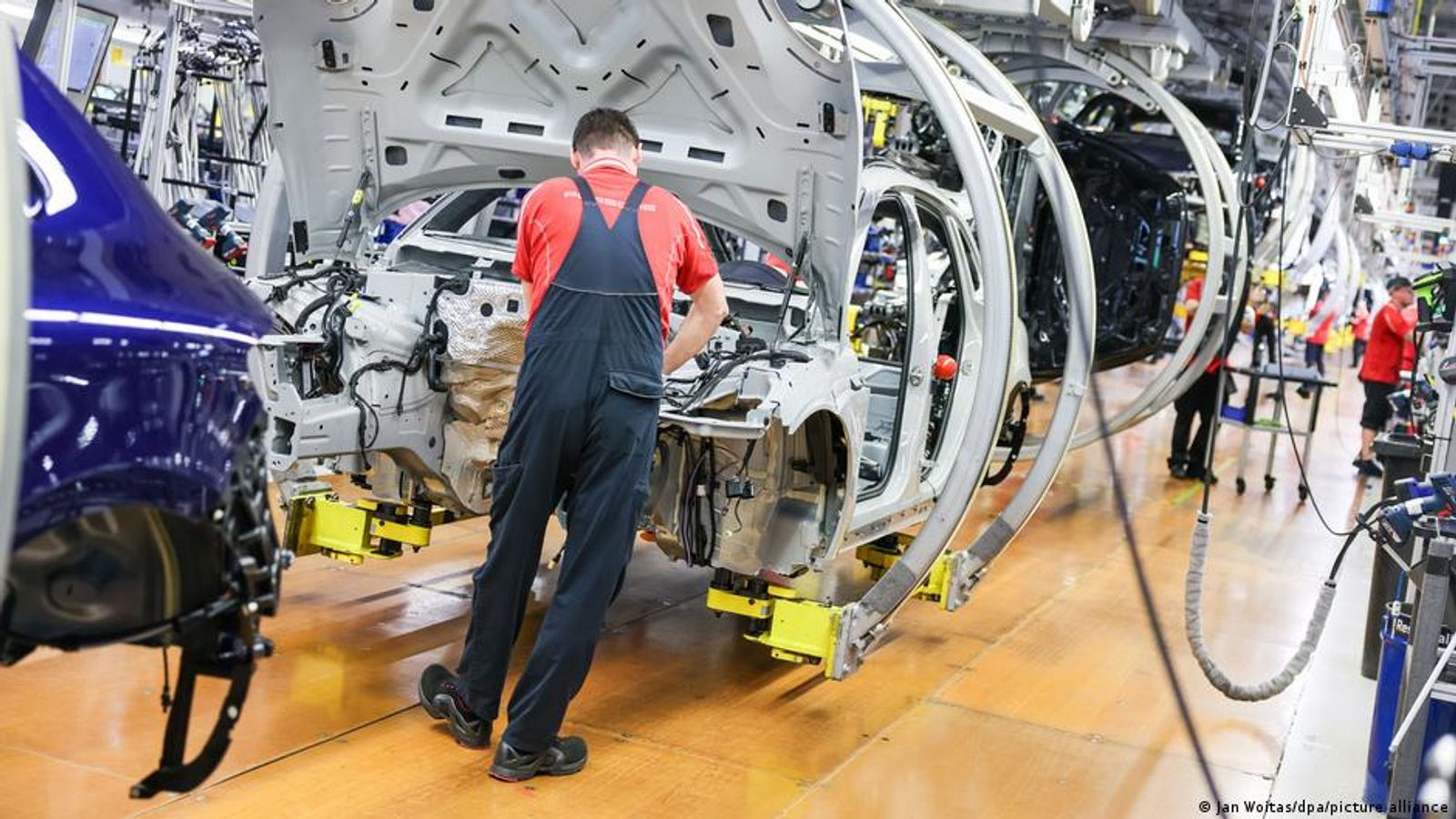
Germany's car industry is confronting a deep crisis as rising production costs, US tariffs, stronger competition from China and the complex shift to electric vehicles force major manufacturers to consider drastic measures.
Automakers including Volkswagen, Mercedes‑Benz and BMW have announced production cuts and cost‑saving plans. Volkswagen says it intends to cut roughly 15 percent of its global workforce — about 100,000 jobs — by the end of the decade, while BMW has announced plans to eliminate up to 8,000 jobs by the end of 2027, roughly five percent of its total staff. Suppliers such as Bosch and ZF Friedrichshafen have also announced the elimination of several thousand posts amid weak market conditions.
Ferdinand Dudenhöffer, director of the Center for Automotive Research (CAR) in Bochum, warned that the German industry has already lost competitiveness. "In 2018 the industry employed about 830,000 people. Currently that number is under 700,000," he said. He projects the workforce could fall to around 500,000 by 2030 unless competitiveness is restored.
Longer working week on the table
Consultants at Oliver Wyman calculate that labour costs per vehicle in Germany average $3,307 (€2,882), compared with $769 in Japan and $597 in China. To reduce those costs, manufacturers are proposing a shift from the long‑established 35‑hour week in the German car sector to a 40‑hour week without additional pay.
Trade unions strongly reject the proposal. Christiane Benner, chair of the influential union IG Metall, emphasised that workers have already accepted pay cuts and other concessions worth billions of euros and that manufacturers face weak demand and underutilised capacity rather than a shortage of working hours. "No extra car will be sold just because workers work longer," IG Metall said. The union organised protests at more than 200 locations across Germany on September 21 against job cuts and measures affecting working conditions in the sector.
Dudenhöffer argues unions are clinging to the past and says increasing the working week could cut personnel costs by about 13 percent. "We will not take money away from employees, but will create conditions that will allow jobs in the German car industry to survive in the future," he stressed. Stefan Bratzel, director of the Center for Automotive Management (CAM) in Bergisch Gladbach, acknowledged the 35‑hour week is a major union achievement but warned that simply adding five hours a week will not solve structural challenges. "Simply increasing working time by five hours a week will not win the technological race with China," Bratzel emphasized.
Experts say lower labour costs are necessary but insufficient on their own. German manufacturers must deliver attractive, affordable electric vehicles, invest heavily in software and artificial intelligence, improve development and production efficiency, and benefit from more competitive energy, tax and infrastructure conditions. "But the next years will be very hard," Dudenhöffer warned. "They will become even harder if we remain on the current course and believe we can live off the prosperity we had 20 years ago."
Photo: press material from the event