Mark Rutte's warning and an AI assessment: what a NATO–Russia war would mean for North Macedonia
AI assessment: direct NATO–Russia clash remains unlikely, but North Macedonia would face economic pressure, hybrid threats and possible limited mobilisation.
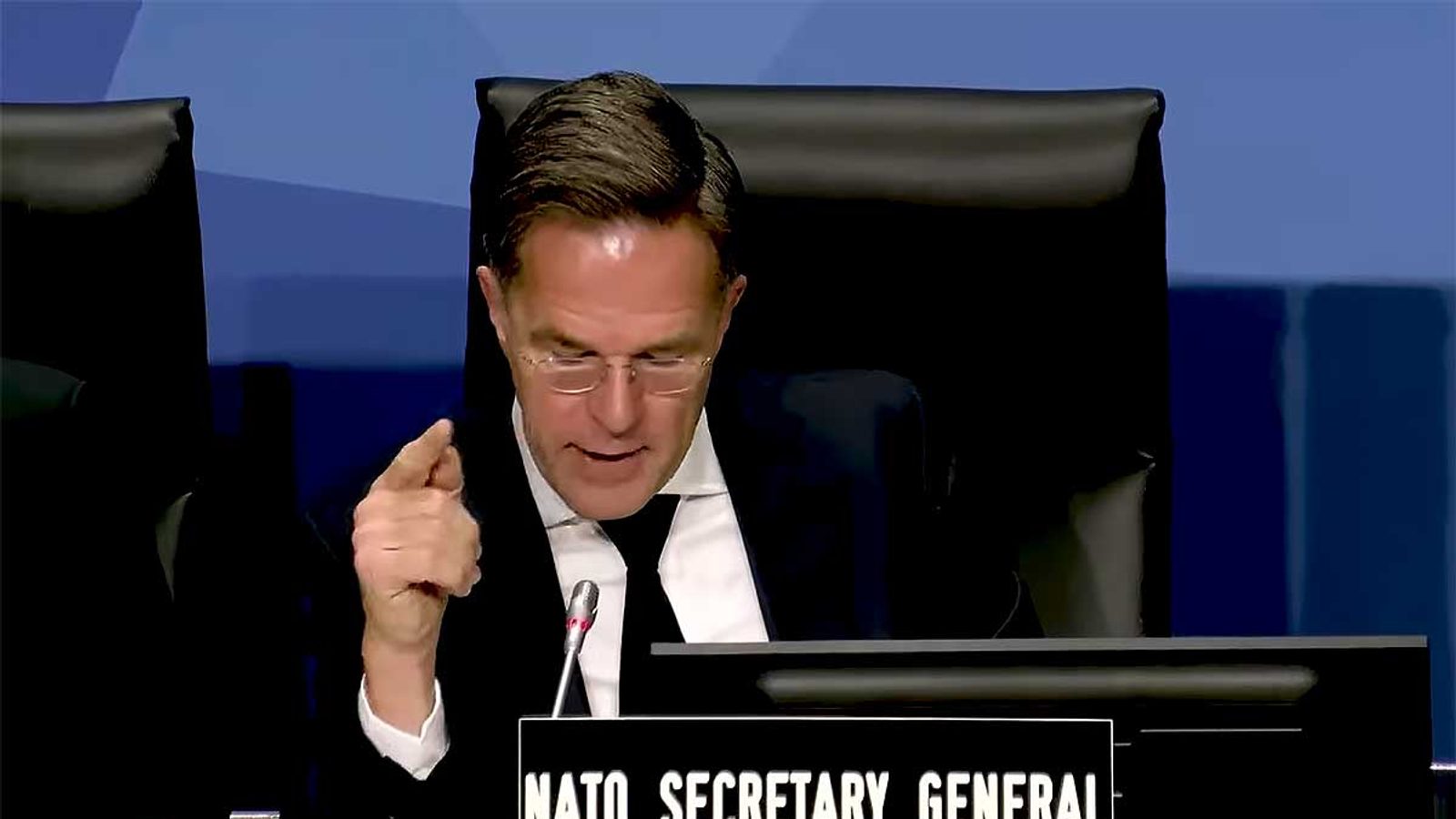
NATO Secretary General Mark Rutte has urged European societies to prepare for crisis scenarios — a message echoed by an artificial intelligence analysis commissioned to assess the realistic risk of a direct NATO–Russia clash and the likely consequences for North Macedonia.
Rutte spoke at the Parliamentary Assembly of the Alliance in Berlin and asked member states to ready not only their armed forces but also citizens, institutions, businesses and public services for the possibility of armed conflict with Russia. He warned that Russia's military industry is operating at full capacity and that the security threat will not disappear even after the war in Ukraine ends, citing Norway, Sweden, Denmark and Finland as examples of states already educating their populations on crisis behaviour.
How likely is an outright war between NATO and Russia?
The AI assessment consulted for this piece finds that, despite high tensions, increased armaments and sharp rhetoric, a direct armed clash between NATO and Russia remains a scenario both sides seek to avoid because of the potentially catastrophic — and possibly nuclear — global consequences. The analysis treats official NATO messages as primarily deterrence strategy and resilience-building rather than predictions of an inevitable war.
Open confrontation is considered theoretically possible only in the event of severe escalation, a border incident or a grave miscalculation. While NATO is expanding its defensive capacities and munitions production, the AI notes that diplomacy and deterrence remain the principal barriers against a wider conflict.
For North Macedonia, a NATO member since 2020, activation of Article 5 — whereby an attack on one ally is treated as an attack on all — remains the legal framework. However, the AI judges that geography makes the country unlikely to be on the frontline; instead, North Macedonia would mostly experience economic, security and logistical effects.
The most immediate impact would be economic: rising energy, fuel and food prices, disrupted supply chains and slower investment. Security threats would include intensified hybrid activity such as cyberattacks on institutions, banks and energy systems, and amplified disinformation campaigns online aimed at sowing panic. The country could also play a logistical and humanitarian role supporting transport, communications and the reception of refugees should a broader European crisis unfold.
Regarding mobilisation, the assessment says that in a serious crisis North Macedonia could institute partial or limited mobilisation under the Law on Defence. Reservists and those with prior military training and professional personnel would be called first, and civil mobilisation could be used to recruit specialists such as doctors, engineers, drivers, technicians and IT experts. The AI stresses that mobilisation would primarily strengthen domestic security, logistics, communications and health support — not mean sending all citizens to the front.
Photo: press material from the event