MASIT conference in Skopje focuses on agentic AI and national ICT capacity
MASIT’s annual conference in Skopje examined agentic AI, infrastructure and the Macedonian ICT sector’s 2025 results.
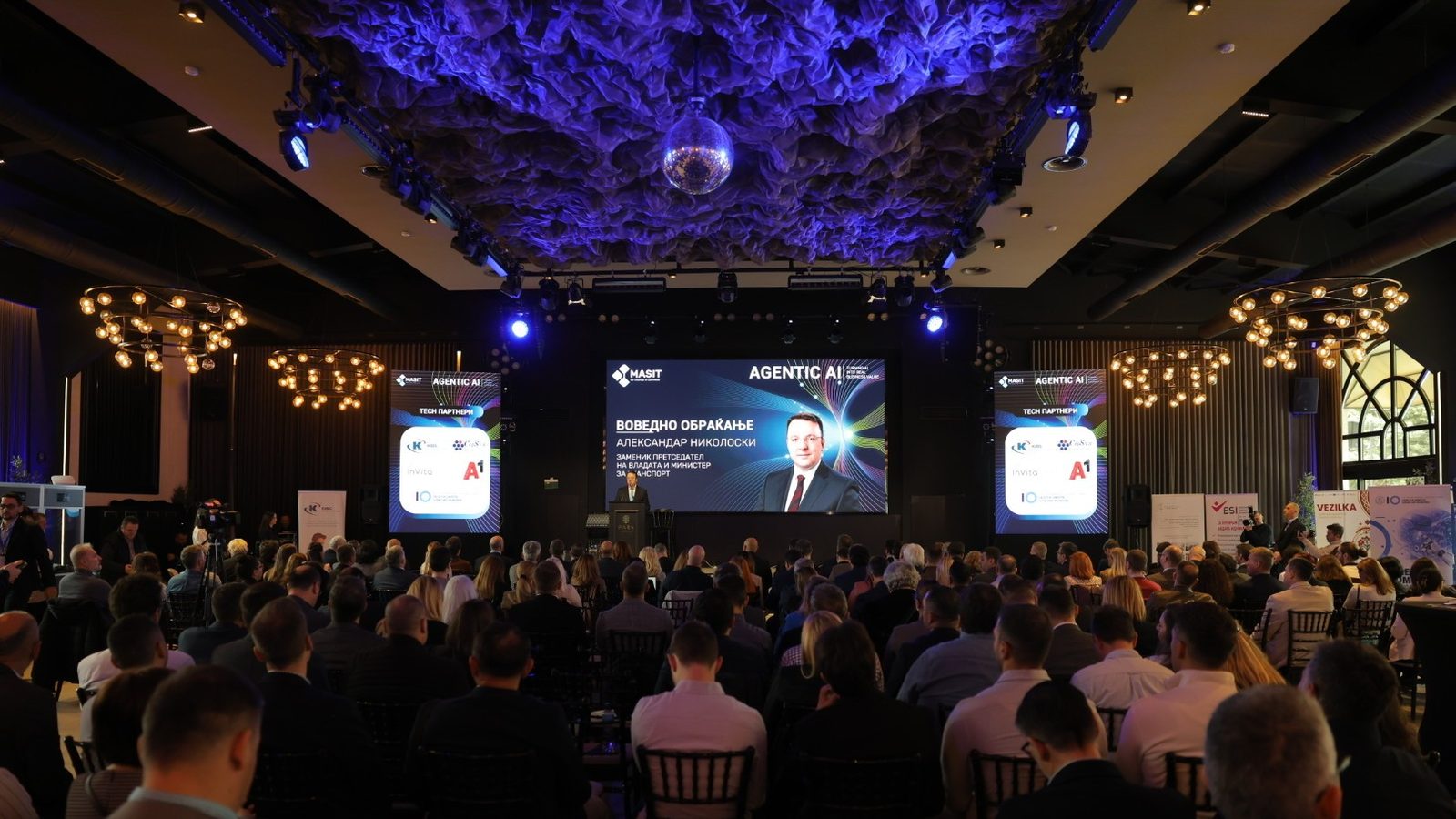
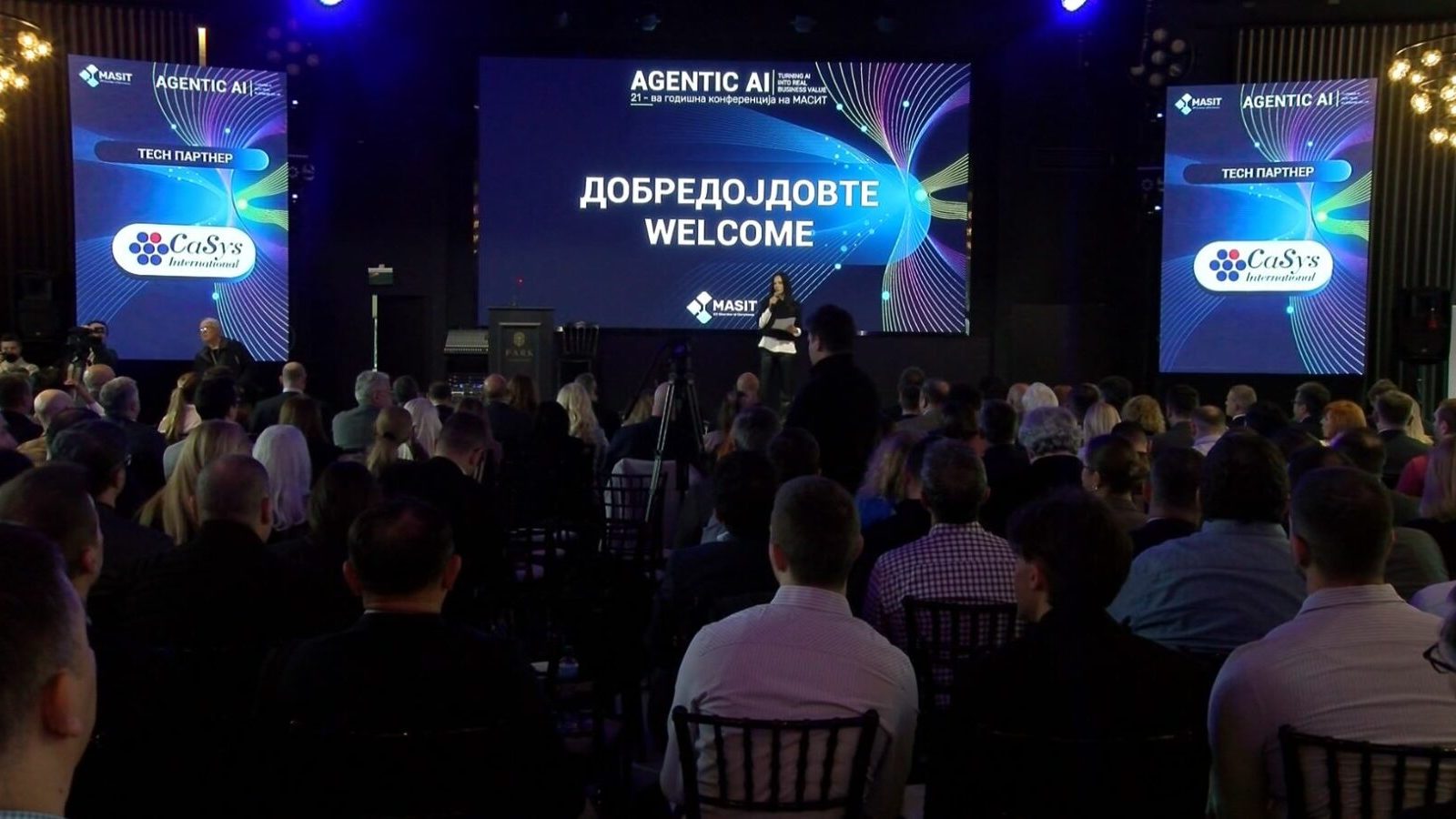
18 November 2026 — Skopje hosted today the annual conference of the Chamber of Information and Communication Technologies (MASIT), which this year focused on agentic artificial intelligence and its implications for business and for North Macedonia’s ICT industry. Domestic and international experts, leaders from global tech companies and representatives of the business community opened a programme of talks, panels and demonstrations.
Autonomy, infrastructure and skills at the centre of the debate
The organisers emphasised a new phase of AI development in which systems can independently plan and execute complex tasks, combine multiple digital tools and take on roles inside business processes with a far greater degree of autonomy than before. Presentations and panel discussions examined practical use cases, the readiness of national infrastructure and the governance challenges that emerge when decision-making shifts toward autonomous agents.
The conference opened with a staged performance titled “Protocol 2031”, an original artistic concept that projected the audience into a near future in which autonomous intelligent systems increasingly shape human choices. The performance framed the ethical and operational dilemma over how much autonomy technology should have and what continued human control must look like.
In his opening remarks, MASIT president Jordan Dimitrovski warned that technological change demands continuous adaptation and investment in skills. He provided MASIT’s latest figures for the sector: "One thing is certain: in our industry, if you stop changing, you very quickly become part of the past. According to MASIT's analysis for 2025, the Macedonian ICT sector counts 3,367 active companies and more than 24,000 employees. Total revenues reached €1.77 billion, and exports €676 million. Compared to 2020, exports have increased by almost 193 percent. Additionally, the 'Information and communication' activity contributes about 5.1 percent to the country's gross domestic product. These are serious results," said Dimitrovski.
The first session focused on national capacities for AI development and concrete business applications. Participants on the panel “The national AI factory and what it means for business” included Minister of Digital Transformation Stefan Andonovski and Petre Lameski, dean of the Faculty of Computer Science and Engineering (FINKI); the discussion was moderated by Filip Petrovski, vice-president of MASIT’s board.
Later, Marijan Korjenek, Corporate Business Director for Central & Eastern Europe and Central Asia at Lenovo Infrastructure Solutions Group, delivered the keynote “AI Enterprise: From Compute to Data”, emphasising the infrastructure and data prerequisites for enterprise AI adoption. A subsequent panel, titled “The next generation of business: humans, technology and the new AI era”, brought together cardiovascular surgeon Prof. Dr. Zhan Mitrev, Darko Pejchinov, general manager of InVita Healthcare Technologies Balkan, and Nedzat Kurt, CEO of TAV Macedonia; it was moderated by Zharko Dimitrioski, partner and creative director at BDG.
The conference continues with additional sessions on technological innovation, business model shifts and the socioeconomic effects of agentic AI, while organisers say the event aims to link local industry capacity with international providers and investors.
Photo: press material from the event