Greek farmers claimed EU subsidies for tens of thousands of animals that do not appear in national registers
Government data show large mismatches between EU subsidy payments and official livestock registers, raising concerns about widespread misuse.
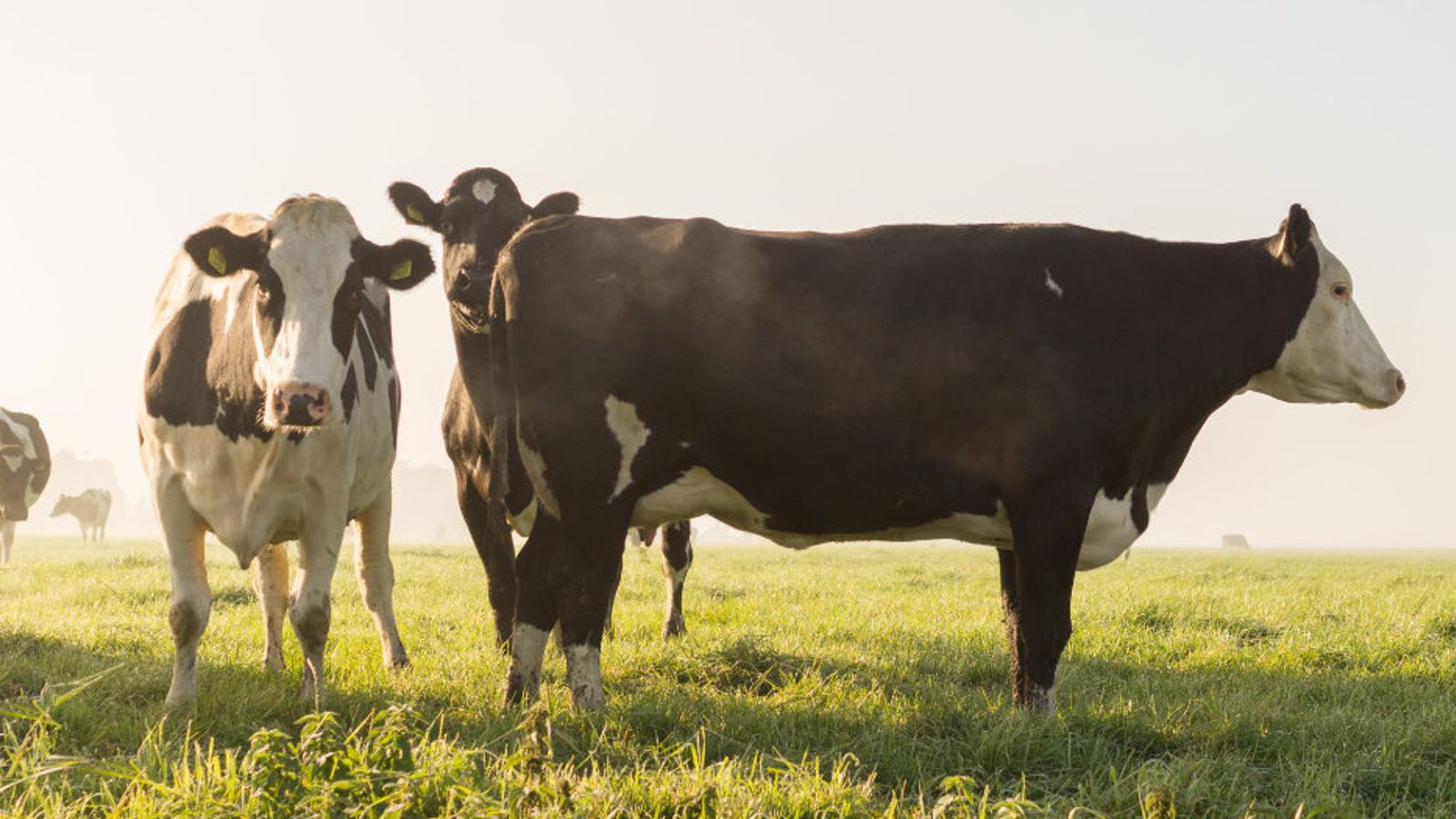
An analysis of government data shows that in 2024 Greek livestock farmers applied for and received European Union subsidies for tens of thousands more animals than official national records indicate, a discrepancy that threatens to widen an existing scandal over misuse of agricultural funds.
Big gaps between payments and registries
According to figures from the ministry, roughly 260,000 dairy cows received EU payments in 2024. Because a cow normally gives birth to one calf per year, the national herd should have grown by a similar number of young animals. In the same year about 70,000 head of cattle were slaughtered — animals that also qualify for aid — and breeders estimate that roughly 20 percent of the herd (around 120,000 animals) are removed annually due to disease or age.
Those calculations point to a net increase on the order of 70,000 head. Instead of growth, data from the national statistical authority ELSTAT record a steady decline in total cattle numbers: 640,000 in 2023, 600,000 in 2024 and 520,000 in 2025.
Large discrepancies also appear in sheep and goat counts. ELSTAT reported a population of about 8.8 million animals in 2025, while the government's veterinary information system lists as many as 15.7 million head.
Nikos Dimopulos, president of the Livestock Association of Kavala, says there is insufficient oversight in the country and that the true picture will be known only if a full livestock census is carried out. Officials at the agriculture ministry admit there is no reliable registry and that payments have been made on the basis of uncertain data provided by municipalities.
The mismatches raise the prospect that misuse of EU agricultural funds is bigger than previously disclosed. The European Public Prosecutor's Office (EPPO) is investigating potential large‑scale fraud connected to the subsidies.
Photo: Peksels)