EU civil protection under strain as major wildfires ravage France and Spain
Simultaneous extreme fires have forced Brussels to mobilise multiple European air and ground resources; officials warn reserves may not be sufficient for this season.
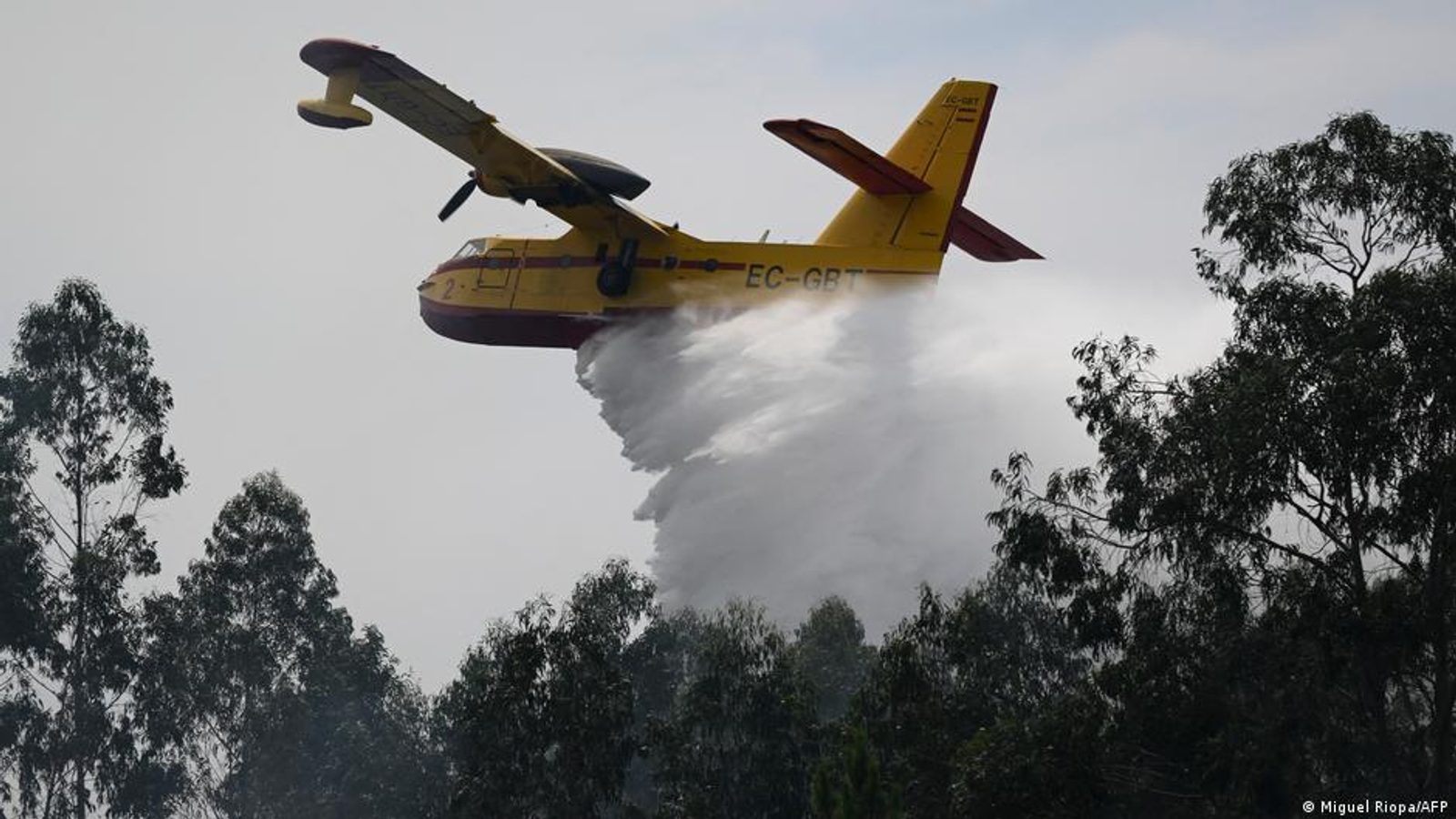
European firefighting resources are being stretched to their limits as simultaneous blazes in France and Spain force Brussels’ civil protection system into intensive operations. French authorities, facing weeks of drought and heat waves with temperatures that sometimes top 40 degrees Celsius, have battled a major fire near Bordeaux that has already consumed more than 42,000 hectares of forest and vegetation and led to the evacuation of more than 220,000 people.
Paris maintains a sizeable aerial firefighting capacity — twelve Canadair water-bombers and eight Dash aircraft, supplemented by leased planes and helicopters — but the fleet is needed in many different locations at once. In response to the scale of this summer’s fires, President Emmanuel Macron activated the EU Civil Protection Mechanism and requested help from other European countries. For the first time France has also used a military transport A400M in firefighting operations; the plane can drop approximately 20 tons and has three times the capacity of the Canadairs.
How the EU mechanism is mobilised
When a country requests aid, its needs are registered with the coordination centre in Brussels, which operates 24 hours a day. Experts there evaluate which of the 37 participating countries can supply assistance and then organise rapid deployments. Initial help reached France within hours and has since been considerably expanded: firefighting planes and helicopters from Portugal, Croatia, the Czech Republic, Germany, Turkey, Sweden and Slovakia have been sent to support operations, mainly around Bordeaux. At the same time the EU sent six additional firefighting aircraft from Greece, Turkey and Italy to Spain.
Those deployments mean that, across the two hardest-hit countries, 13 of the 22 firefighting aircraft available for this summer have already been mobilised. The European Commission warns that available resources are probably not enough to keep pace with the scale of the fires.
The EU Civil Protection Mechanism dates back to 2001 and was expanded in 2019 to include a strategic reserve of aerial firefighting capacity, medical supplies, field hospitals and specialised equipment for chemical or nuclear incidents. Participation covers the 27 EU member states plus ten other countries, including Norway, Turkey and several Western Balkan states. For summer 2026 Brussels pre-positioned 777 firefighters from 14 countries in particularly exposed regions of France, Spain, Portugal, Italy, Greece and Cyprus.
EU satellites from the Copernicus programme are also being used to provide high-resolution imagery in support of firefighting efforts. Still, the principle of European solidarity is strained when several countries face extreme weather at once: governments must weigh how much assistance they can send abroad without jeopardising their own operational readiness. Italy, for example, is simultaneously fighting fires on its territory and has not (so far) activated the mechanism itself.
To reduce future pressure on the system the European Commission and member states are emphasising prevention: creating firebreaks, stricter building rules in vulnerable areas and other landscape measures. Officials also note that aerial firefighting is most effective when fires are detected and attacked early; once kilometre-long fronts have formed under hot weather and strong winds, even extra aircraft often can only limit the flames rather than stop them.
Photo: press material from the event