Mickoski: Pension system stable, pensioners should not worry
Prime Minister Hristijan Mickoski says reforms and anti‑abuse measures secure pensions despite Fiscal Council criticism of a budgetary impact.

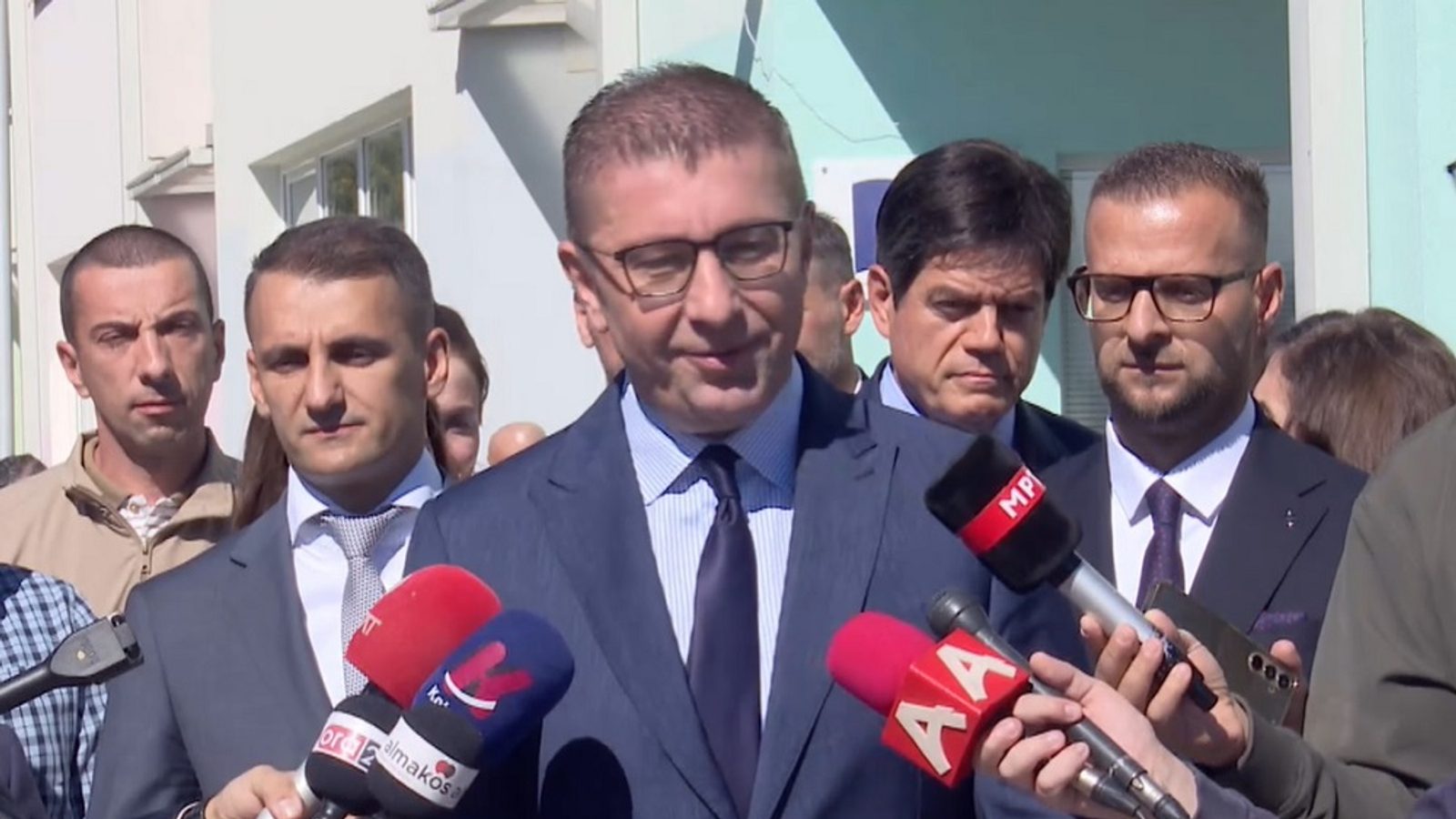
Prime Minister Hristijan Mickoski told reporters that the country's pension system is stable and that pensioners should not be worried about their benefits. He said the government considers proposals for reform but reserves the final decision-making power.
Mickoski defended the recent linear pension increases against criticism from the Fiscal Council that the measure created an additional deficit in PIOM, arguing that every political decision brings both costs and benefits and that, in this case, the gains outweigh the fiscal impact.
He also described efforts to redirect funds from abuses toward legitimate needs rather than cutting citizens' rights. As an example, Mickoski pointed to ongoing reforms in the social protection sector where, he said, serious anomalies have been detected.
“We have phantom beneficiaries or beneficiaries who by every parameter should not be recipients of guaranteed minimum assistance or social security. That is not a small amount of money; if you analyze it on an annual level you will arrive at a figure between one billion and one and a half billion denars,” Mickoski said, responding to a question about pension reform.
Labour market, state companies and fiscal choices
Mickoski cited the state-owned company AD ESM as an example of reform results, saying the firm, which had previously recorded a loss of 180 million euros, posted a profit of about 6.5 million euros in the first three quarters of this year.
On workforce trends, he noted that North Macedonia currently has around 709,000 employed people and that an optimal economic development would require roughly 800,000. He warned that without new workers the number could fall below 500,000 in 15–20 years, creating severe problems for pension and health systems and for the wider economy.
“That is why we changed the Labour Relations Law and enabled anyone who feels able to extend their working life to 67, 68, and in certain fields up to 70 years. Naturally, if the employment contract is renewed with the employer every year,” Mickoski added. He also cautioned that uncontrolled import of labour carries challenges tied to different mentality and culture.
Photo: press material from the event