Dead southern right whale calves wash ashore on Argentina's Valdés Peninsula
Teams are collecting tissue samples while scientists probe bacterial infection and environmental factors behind the spike in calf deaths.
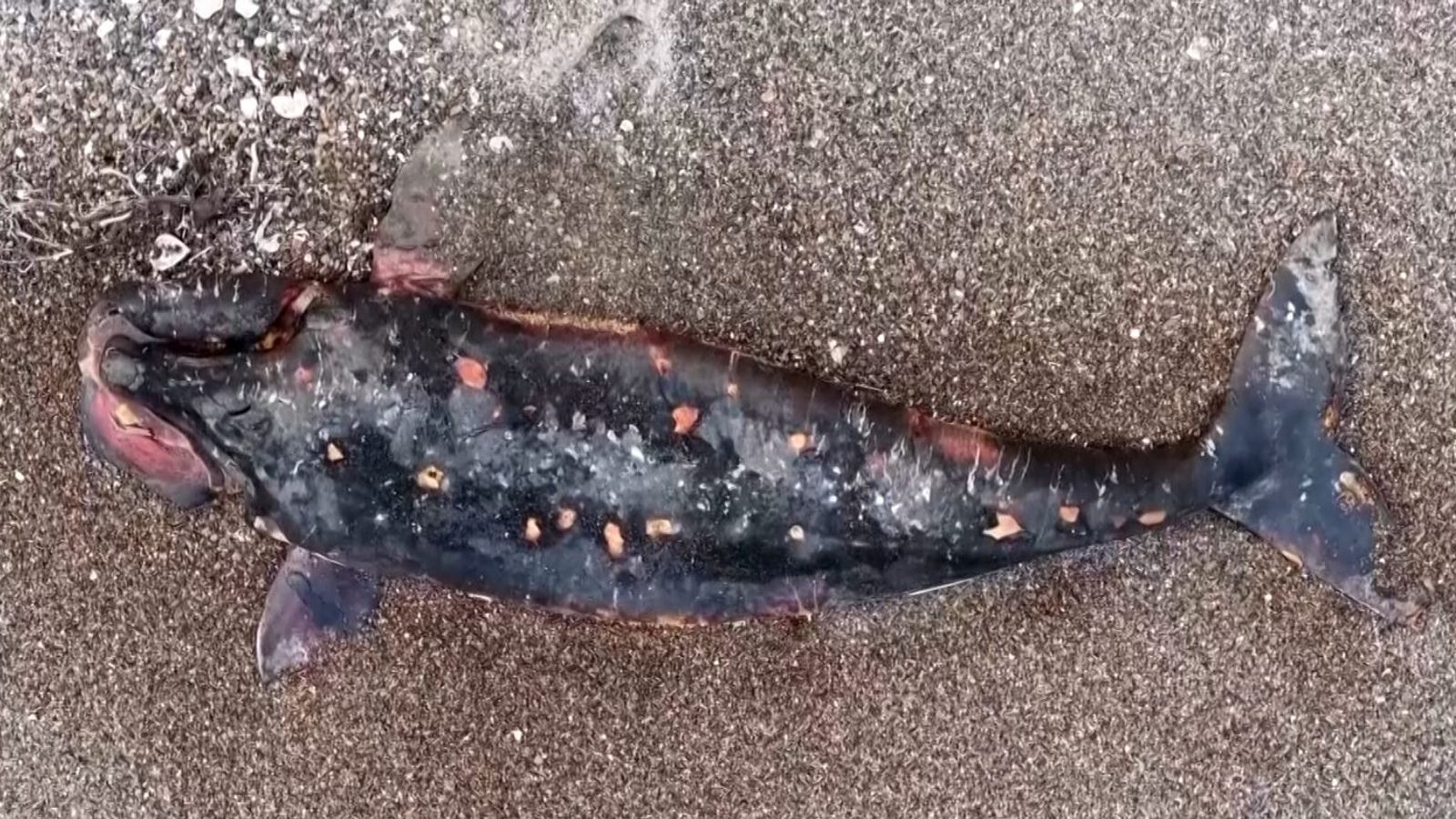
Researchers in Argentina are investigating an unusual surge of dead whale calves washing ashore along the Patagonian coast, concentrated around the Valdés Peninsula in Chubut province, a key breeding ground for southern right whales.
Field teams racing to collect samples
Teams of biologists, veterinarians and park rangers are combing beaches and using boats, planes and drones to find and document carcasses near Puerto Madryn and along central stretches of the coastline. They photograph and examine the bodies quickly before decomposition advances, and collect skin and internal organs for laboratory testing at the veterinary faculty in Tandil.
“Our main hypothesis at the moment, based on the evidence we see in the animals — including some very characteristic square-shaped lesions on their skin, especially on the back — is that it's a bacterial infection,” said Marcela Uhart, a veterinarian at the One Health Institute at the University of California. Laboratory analyses have already detected bacteria in tissue samples, and researchers are culturing specimens to identify the microbes and determine whether infection was the cause of death.
Residents have reported hundreds of cases, but investigators declined to give an exact tally, saying the full number will be clearer when the season ends toward the end of November. The work is described as unpleasant and time-sensitive: teams hurry to gather samples before the bodies break down.
Scientists note a behavioural reason calves are especially vulnerable. Adult southern right whales surface so only their heads are exposed while keeping their backs submerged, a tactic that reduces attacks by scavenging seabirds. Calves cannot perform the same manoeuvre and therefore suffer more severe pecking by birds, which can open wounds.
Even if bacteria are confirmed as the immediate agent, researchers say they must establish why the infections have become so lethal this year. Changes in ocean conditions — including rising sea temperatures potentially linked to climate change or an El Niño event — could have contributed to “this perfect storm in which the bacterium is strong enough to overwhelm calves' immune defences,” Uhart added.
Southern right whales were hunted nearly to extinction in the 19th and 20th centuries but began recovering after international protection in 1935; illegal hunting persisted into the 1970s. Their rebound, however, remains threatened by the same pressures faced by whales worldwide: reduced food supplies, entanglement in fishing gear, oil spills and ship strikes.
Photo: press material from the event