MoI says rapid saliva drug tests will detect codeine from common pain tablets
Ministry says the kits will detect codeine at 12 ng/ml; positives must be confirmed in laboratory analyses.
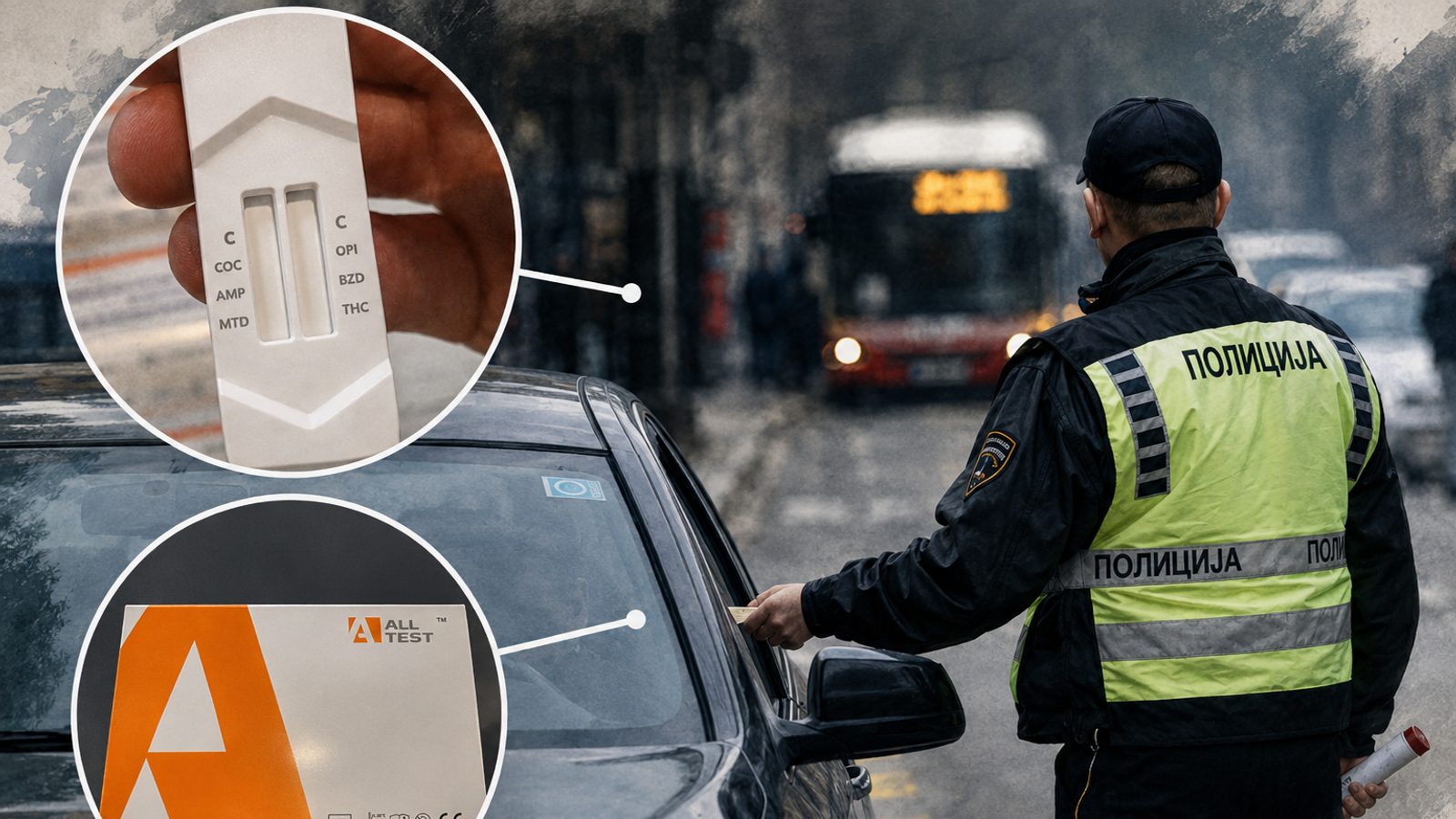
North Macedonia’s Ministry of Interior (MoI) says the saliva screening tests it purchased for roadside drug checks will pick up codeine — the opioid compound found in some over‑the‑counter pain tablets.
“Considering that codeine by its chemical structure and pharmacological group is an opiate, these screening tests according to the manufacturer's specification will detect codeine with a detection threshold of 12 nanograms per milliliter,” the ministry told our reporters.
Operational details and limits
The rapid saliva tests are described by the ministry as highly sensitive. Officers will carry them on patrol and may use them on drivers they judge suspicious. Each unit costs 218 denars and the MoI ordered 10,000 pieces, which are expected to arrive in the first half of August. The tests screen for amphetamine, methamphetamine, opiates (morphine, heroin), MDMA (ecstasy), sedatives and THC from cannabis.
The ministry emphasised that any positive screening result must be confirmed with a laboratory (confirmatory) method. After a positive rapid test, biological samples such as blood or urine are required for confirmatory analysis, and the public prosecutor may become involved and determine the next steps and the institution that will carry out testing. The ministry also said it is actively working on possibilities to perform confirmatory analyses with its own capacities.
Professor Andon Chibishev of the Clinic for Toxicology said a confirmatory result can be obtained in only 30 minutes, but a colleague at the same clinic told reporters that the clinic’s laboratory is not accredited — a fact that could open the door to legal disputes over results.
Defence lawyer Janaki Mitrovski warned that previous attempts to introduce rapid psychotropic screening were abandoned because the tests do not reliably prove whether a person was impaired at the moment of driving or had consumed drugs at some earlier time. “This is not a spit‑and‑stick. You cannot work according to a template, but must prove whether the person was under the influence at the moment while driving, and that depends on many factors — body weight, frequency of use, whether the person is tired — many factors that a rapid test cannot determine. As a lawyer, I will challenge such tests,” he said, adding that the lower threshold for tetrahydrocannabinol for these tests is very low.
The MoI provided the following cut‑off values built into the purchased tests: THC 15 nanograms per milliliter, cocaine 20 nanograms per milliliter, amphetamine 50 nanograms per milliliter, methamphetamine 50 nanograms per milliliter, opiates 10 nanograms per milliliter, benzodiazepines 10 milligrams per milliliter and MDMA 50 nanograms per milliliter.
Court expert testimony from 2022 reviewed by reporters indicates that at that time there was no method in North Macedonia able to determine with certainty whether a person was impaired by THC at a given moment; such capability existed in Athens and Niš. The testimony also said there was no laboratory able to measure urinary metabolite concentrations that would prove same‑day THC use. The company that won the MoI tender, Viziomed, said last week that the tests have not yet been delivered and redirected questions to the ministry.
Photo: press material from the event