Czech Republic increasingly relies on foreign workers
Foreign workers now form a growing share of the Czech population as Kyiv-linked migration and targeted recruitment keep vacancies filled.
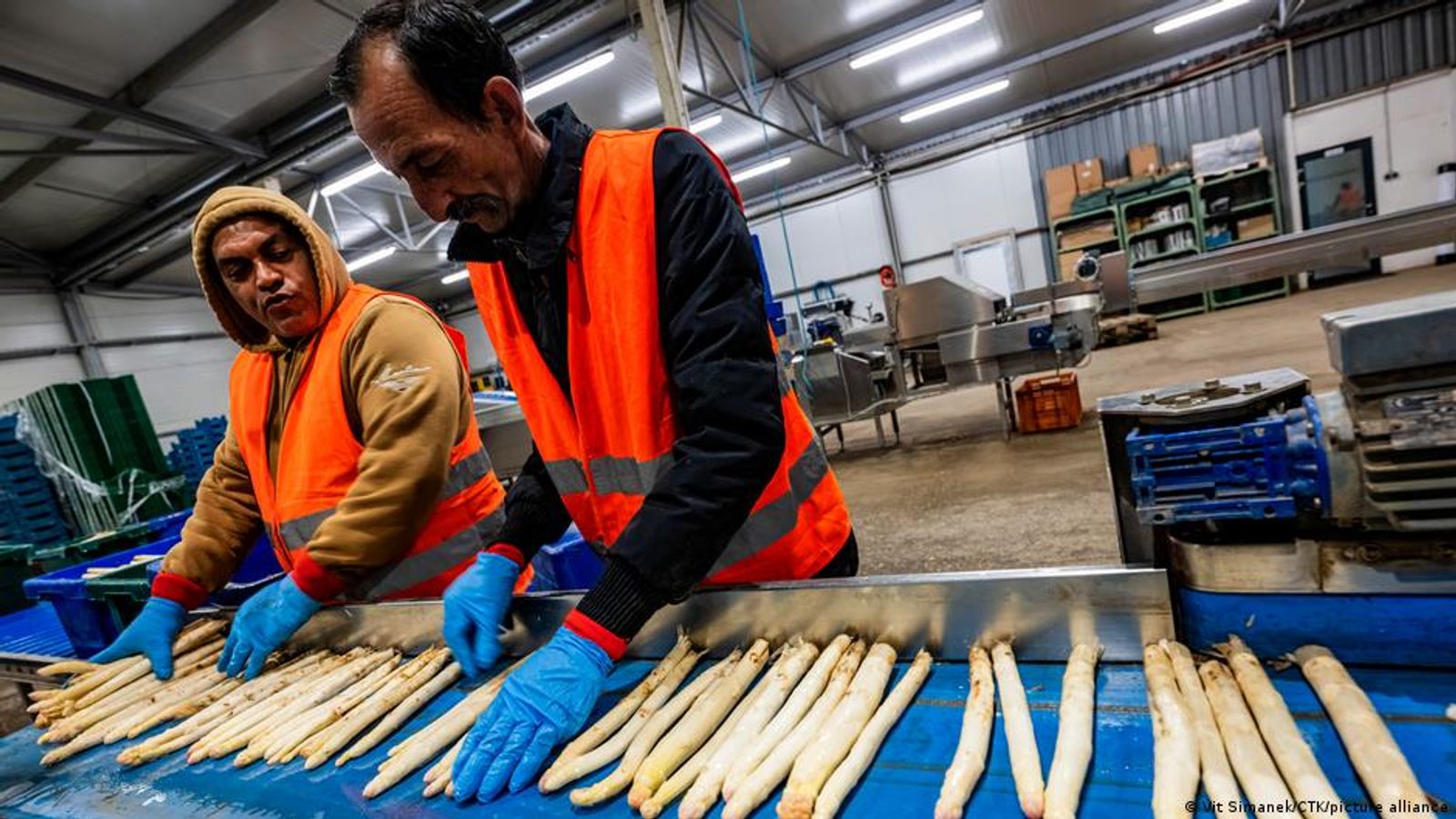
Prague's workforce increasingly depends on foreign labour: foreigners now approach twelve percent of the Czech population, even as Prague maintains strict asylum rules with an exception for Ukrainians, according to recent national data. Employers and government ministers say the inflow is essential to cover vacancies across construction, industry, health care and care work.
Numbers and causes
Data from the Czech Statistical Office show that, alongside roughly ten million local residents, more than 1.1 million foreigners were registered in the country by the end of 2025 — equal to 10.4 percent of the total population. "As early as 2015, for every 100 inhabitants there were about four economically resident foreigners," explains Vladimir Karmiet, head of the National Accounts Department at the Czech Statistical Office.
The most important driver of the recent rise was the Russian attack on Ukraine. More than half a million Ukrainians fled to the Czech Republic after the full-scale invasion began in February 2022; today some 613,000 Ukrainians form the largest foreign community in the country. Around 126,000 Ukrainian children attend Czech kindergartens and schools, and more than 80 percent of adults are employed in the Czech labour market.
Slovaks are the second-largest group: 125,000 Slovaks were officially registered at the end of 2025, though the real number of workers from Slovakia is estimated to be roughly twice as high because EU citizens do not always immediately register their residence. Most foreign residents and employees are concentrated in Prague — a city of about 1.4 million people — where 366,000 foreigners are officially registered, representing over 20 percent of the city's population.
Vacancies remain plentiful despite the migration. The Czech Labour Office logged about 100,000 open positions last year while the unemployment rate stood at roughly five percent. "The Czech Republic needs workers from Ukraine in construction, industry, health care and the care sector," said Karel Havlicek, Deputy Prime Minister and member of ANO.
Havlicek told officials that those who work in the country under lawful conditions, pay taxes, learn the Czech language and integrate successfully should be able to obtain long-term residence permits. In recent years the state has also supported recruitment from outside Europe: more than 15,000 citizens of the Philippines have been brought to work in the Czech Republic, particularly in industry, logistics, health and care.
Beyond the Philippines, Prague's recruitment efforts target countries including India, Indonesia, Mongolia, Moldova, Georgia, Kazakhstan, Armenia, Serbia and North Macedonia, matching the specific needs of Czech companies. Officials stress, however, that controlled migration should fill concrete labour gaps, not push down wages, and that automation and employing the domestic workforce remain priorities.
At the same time, critics warn about the Czech asylum policy. "The asylum policy of the Czech Republic and many EU countries is shameful. The politically and socially induced phobia towards migrants and refugees is so strong that politicians and the state do not hesitate to act in an illegal and xenophobic way," said Martin Rozumek, director of an NGO assisting refugees. He added that ageing demographics and economic needs will likely sustain migration flows in the long term: in 2025 there were 77,600 births and 113,300 deaths in the Czech Republic, and without immigration the demographic outlook would be negative.
Photo: press material from the event