Industrial robot fleet tops 5.08 million worldwide, humanoids still in testing
IFR data show rapid growth in factory automation while humanoid robots lag because of technical, market and regulatory hurdles.
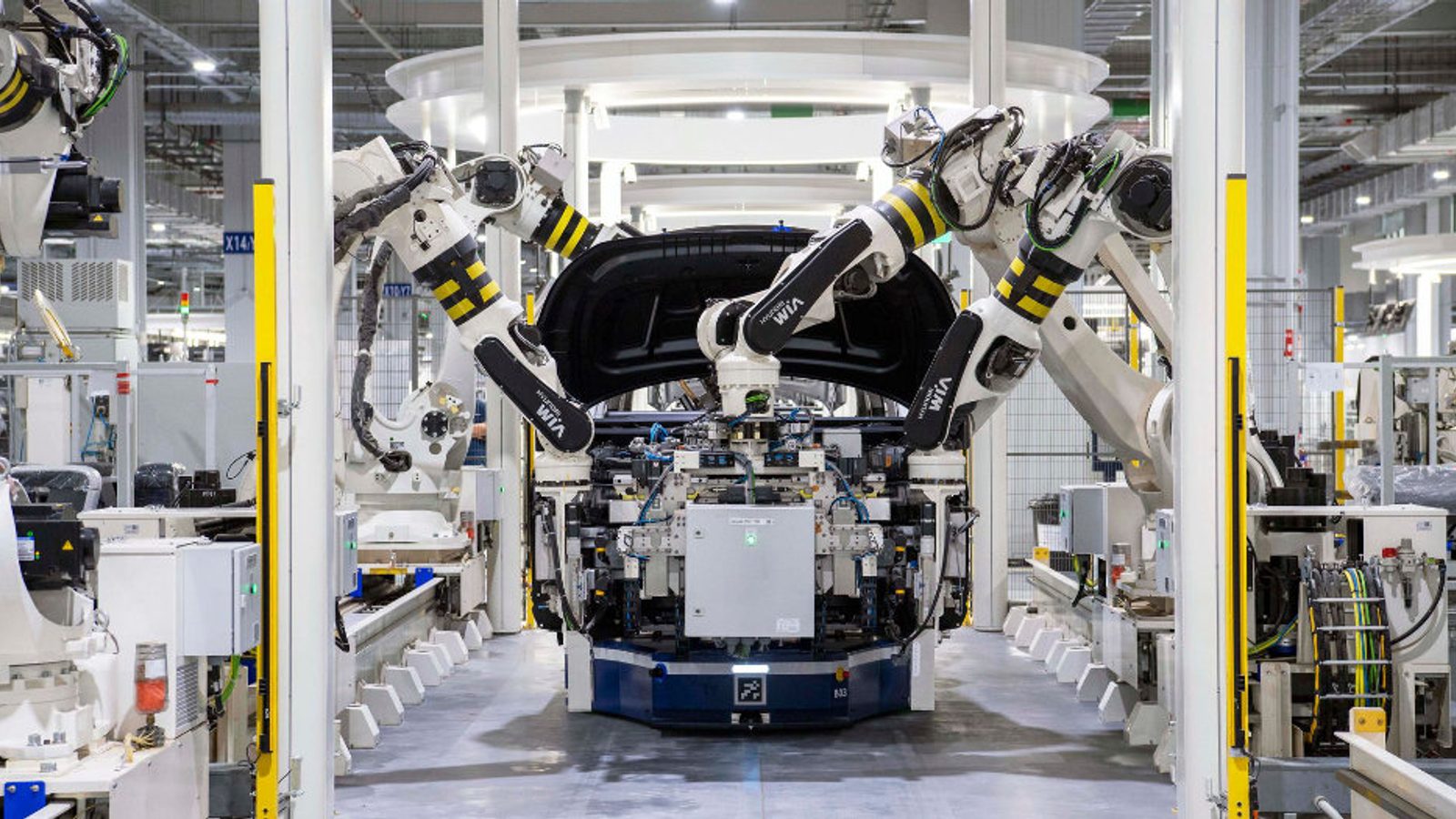
More than five million industrial robots are now operating in factories worldwide, marking a record high, according to the annual World Robotics report from the International Federation of Robotics (IFR). At the same time, the commercial rollout of humanoid robots remains limited and subject to regulatory and technical setbacks.
Key figures and regional trends
The IFR says the operational fleet of industrial robots grew by 9 percent last year to roughly 5.08 million units. Annual installations rose 11 percent, exceeding 600,000 for the first time and reaching 603,000 units.
Jane Hefner, president of the IFR, noted rapid progress in industrial automation and pointed out that the new milestone of five million operational robots is more than double the level seen seven years ago. Growth was strongest in Asia, followed by North and South America, while Europe lagged behind.
China expanded its lead further, installing 354,000 robots — a 20 percent increase that accounted for 59 percent of global installations. The United States overtook Japan as the world’s second-largest market, with almost 38,500 installations, a 12 percent rise.
By contrast, humanoid robots remain a marginal segment. In the IFR’s first separate survey of the category, it found roughly 7,000 humanoids were sold last year for industrial and professional uses. Many purchases were intended to gather data to train AI models, and vehicle manufacturers testing humanoids typically use fewer than ten machines. Bank of America nonetheless projects 90,000 humanoid deliveries this year and 1.2 million units by 2030.
Commercial expectations have collided with reality on the stock market. A senior Hyundai official said that Boston Dynamics, owned by Hyundai, is unlikely to list shares next year because its humanoid Atlas has not been deployed at scale and the company is operating at a loss. In China, informal guidance from regulators has slowed a wave of listings after Unitree’s shares climbed more than fivefold on their Shanghai debut on August 19 and later fell 55 percent from the high.
Elon Musk has also been candid about Tesla’s Optimus programme, warning investors that “it will be the hardest product to mass-produce that they have ever made” because almost everything on the robot is new and there is not yet a developed supply chain.
The IFR report warns many humanoid demonstrations are fake, computer-generated or staged; genuine presentations often rely on pre-recorded routines or remote human control. Structured environments such as factories and warehouses remain the most promising venues for rapid adoption, where mobile robots and fixed robot arms are cheaper and easier to adapt. Dave Grant, director of Picnic Robotics, questions why deployment should be constrained to a human shape when hurdles such as human-level precision, reliable autonomy outside controlled settings and the absence of a clear commercial application persist — along with unresolved issues around liability and insurance.
Photo: Hjundai)