Naim Qassem demands full Israeli withdrawal from southern Lebanon
Hezbollah’s top official calls for unconditional pullback and rejects external intervention, even as Israel links withdrawal to the group’s disarmament.
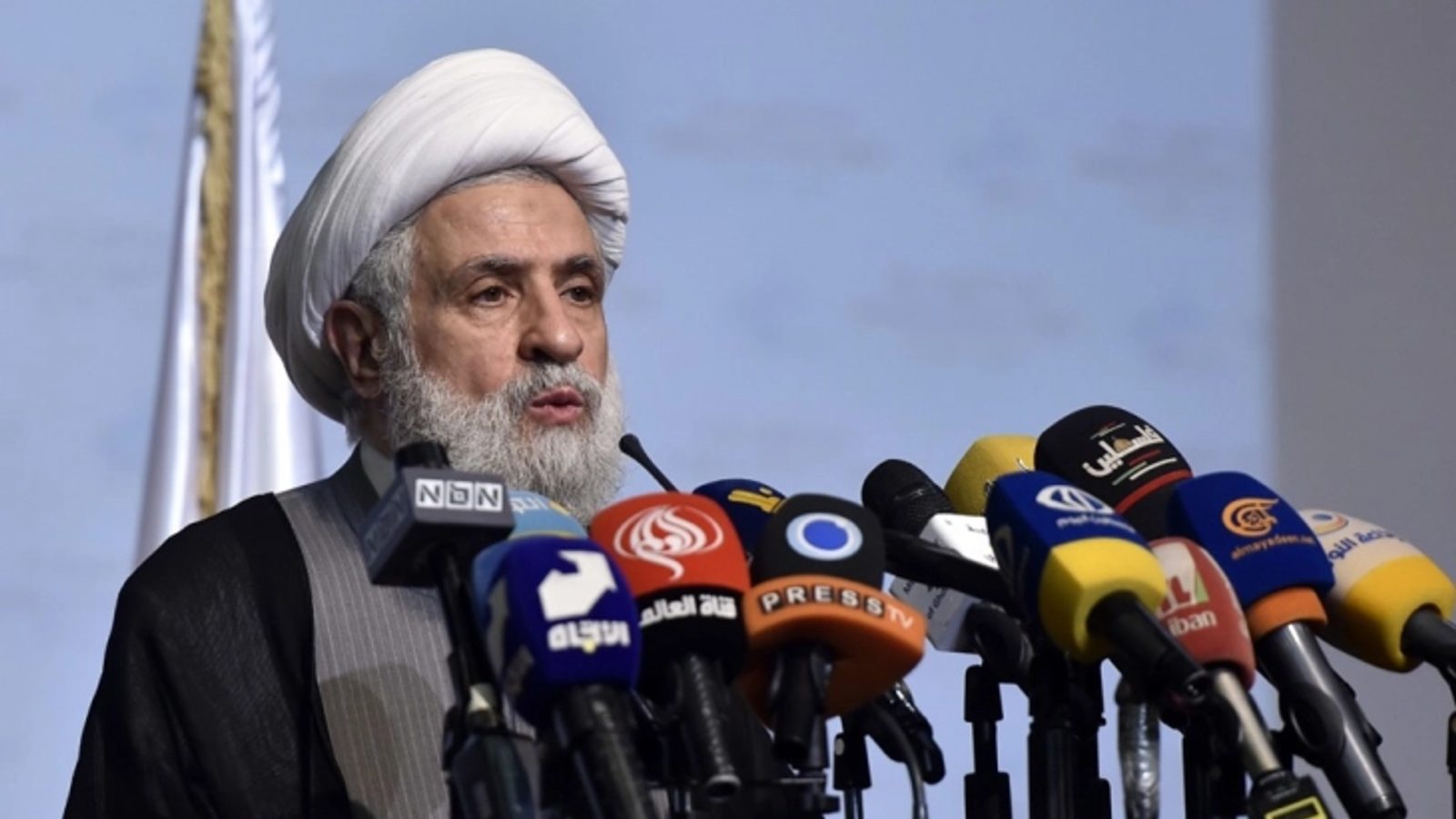
Hezbollah leader Naim Qassem on Tuesday renewed a demand for a full, unconditional withdrawal of Israeli forces from southern Lebanon, saying such a pullback is the only solution to the current flare-up along the border. The appeal was made in a recorded address broadcast on the group’s Al‑Manar television channel. ([aljazeera.com](https://www.aljazeera.com/news/2024/10/30/what-do-we-know-about-naim-qassem?utm_source=openai))
In his remarks Qassem insisted that any resolution “requires the complete withdrawal of Israel, without Hezbollah providing anything in return.” He reiterated that stance as he addressed both supporters and Lebanese political actors, framing the presence of Israeli troops in the south as the principal obstacle to peace. ([aljazeera.com](https://www.aljazeera.com/news/2024/10/30/what-do-we-know-about-naim-qassem?utm_source=openai))
Qassem also said Hezbollah would accept internal Lebanese reforms on issues such as weapons regulation and national economic policy, but he firmly rejected any external intervention by the United States or other foreign powers. His comments mirror long‑standing resistance inside the movement to foreign involvement in Lebanon’s internal affairs. ([investing.com](https://www.investing.com/news/world-news/israel-says-it-would-reduce-troops-in-lebanon-if-beirut-takes-steps-to-disarm-hezbollah-4208689?utm_source=openai))
Context and Israeli conditions
Israel has repeatedly linked any withdrawal from occupied positions in southern Lebanon to the disarmament of Hezbollah, saying the group’s weapons must be removed to eliminate threats of attacks like the October 7, 2023 assault that helped shape Israeli security policy. Negotiations over sequencing — withdrawal versus disarmament — remain a central sticking point in talks brokered by external mediators. ([washingtonpost.com](https://www.washingtonpost.com/world/2026/06/27/lebanon-israel-washington-deal-hezbollah/d8d3f0b4-7239-11f1-8730-e7fd0e2a6404_story.html?utm_source=openai))
Historically, Israel has maintained a security zone along parts of the border with Lebanon to reduce the risk of strikes on northern Israeli towns; the presence of Israeli forces in and near the Blue Line has been a recurring source of tension and is monitored by UNIFIL. Both Hezbollah and many Lebanese officials describe continued Israeli deployments in the area as an occupation that violates international law. ([unifil.unmissions.org](https://unifil.unmissions.org/en/background?utm_source=openai))
The renewed public demand from Hezbollah’s leadership underscores how fragile any de‑escalation process remains: Beirut, Jerusalem and mediators face hard choices over who disarms, who withdraws first and how to restore Lebanese state authority in the south without triggering new violence. ([aljazeera.com](https://www.aljazeera.com/news/2026/6/26/what-is-the-framework-agreement-signed-by-israel-and-lebanon?utm_source=openai))
Photo: press material from the event