Nobel Prize in Physiology or Medicine awarded to Karl Deisseroth, Peter Hegemann and Georg Nagel
The prize recognizes their work on light‑gated ion channels and the development of optogenetics; the award fund is 12 million Swedish kronor (about $1.2 million).
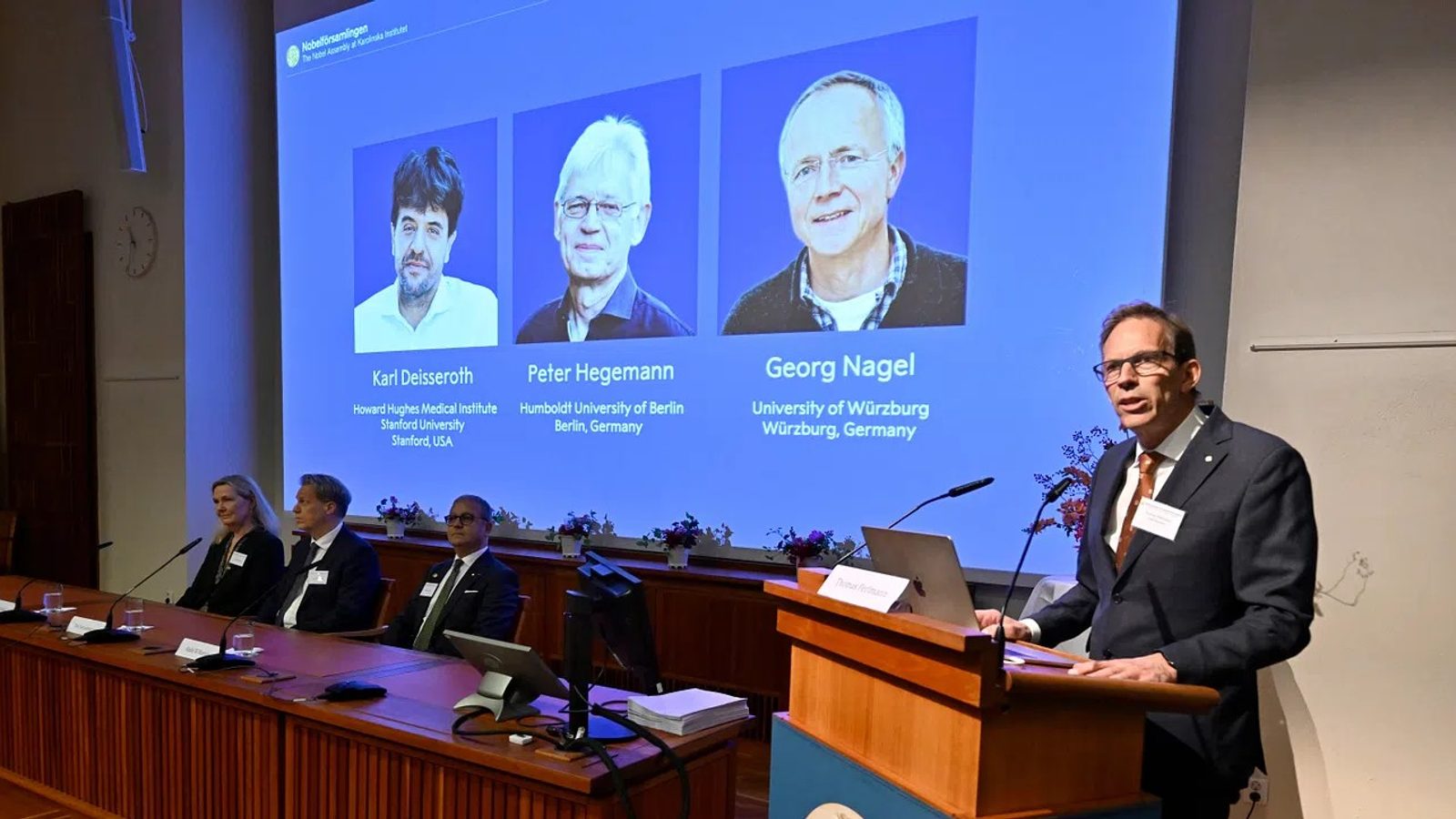
The Nobel Prize in Physiology or Medicine this year was awarded to Karl Deisseroth, Peter Hegemann and Georg Nagel for their research on light‑gated ion channels and the development of optogenetics.
The three scientists were recognized for creating tools that use light to control the activity of nerve cells, allowing researchers to stimulate or silence specific neurons with high precision.
What the work means
By combining genetic methods with light‑sensitive proteins, their techniques made it possible to map and manipulate neural circuits in living tissue. This approach has become a fundamental method in modern neuroscience, used to study brain function and disease mechanisms.
The monetary fund of the prize this year amounts to 12 million Swedish kronor (approximately $1.2 million).
The award highlights the rising role of molecular and optical tools in understanding how the brain works and in developing potential therapeutic strategies based on precise control of neural activity.
Researchers and institutions around the world have since applied optogenetic methods to investigate behavior, sensory processing and neurological disorders, making the field a central pillar of experimental neuroscience.
Photo: AP)