Norilsk: the Arctic industrial city where the sun does not rise for 45 days
A city of heavy industry and polar extremes — built on permafrost, shaped by gulag history and marked by severe pollution.
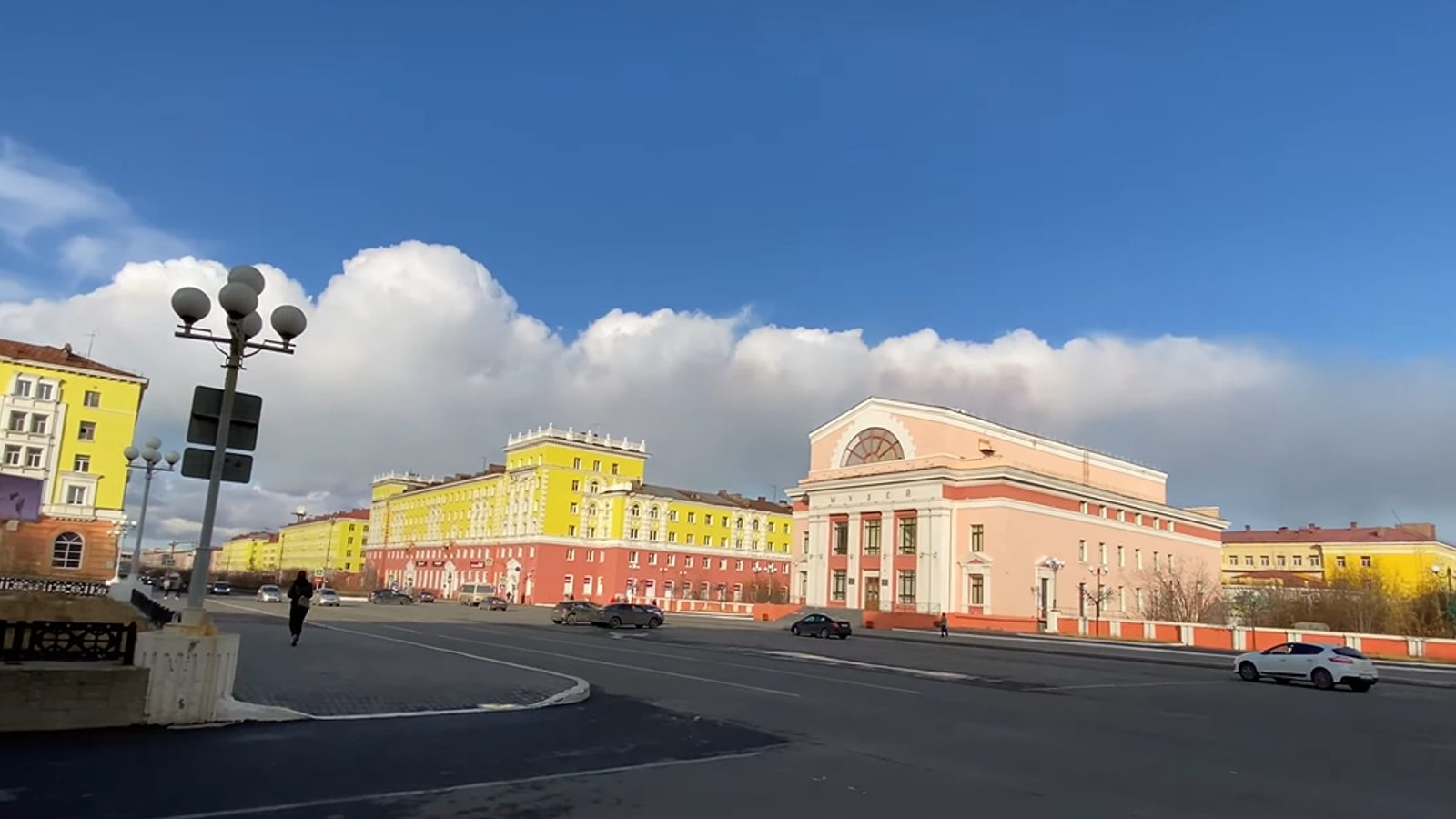
Norilsk is a remote Arctic city of about 176,000 people where winter brings a 45‑day polar night and industry shapes nearly every aspect of life.
Located well above the Arctic Circle in Krasnoyarsk Krai in eastern Siberia, Norilsk lies roughly 2,400 kilometres from the North Pole and about 3,000 kilometres from Moscow. With around 176,000 residents it is the second‑largest city inside the Arctic Circle after Murmansk and the world’s northernmost large city with more than 150,000 inhabitants.
The settlement was built on continuous permafrost to exploit one of the planet’s largest deposits of nickel, copper and palladium. In 1935 the Soviet leadership launched construction of a huge industrial complex known as the Norilsk combine; the adjacent forced‑labour camp (the Norilsk camp or gulag) was established to supply labour for the project. Over the following two decades roughly half a million prisoners worked in the area under brutal Arctic conditions.
At least 17,000 people are estimated to have died in those early years, mainly from starvation, exhaustion and hypothermia. After Joseph Stalin’s death in 1953 prisoners at Norilsk staged the Norilsk uprising, one of the earliest large‑scale revolts against the gulag system. The camps were finally closed in 1956, but the industrial complex remained.
Industry and its cost
From the 1960s onward Norilsk’s economy has revolved around nickel and copper extraction and processing. The major employer, Norilsk Nickel, still provides work for much of the town and is credited with generating nearly 2% of Russia’s GDP.
That economic weight comes at a high environmental and human price. Year after year the smelters release millions of tonnes of toxic emissions — sulphur dioxide, nitrogen oxides, phenols and heavy metals — that have devastated surrounding forests and left soils saturated with metals. Acid rain destroyed vast stands of trees, and contaminated ground layers now contain elevated concentrations of precious and toxic metals.
The pollution has measurable health consequences: the life expectancy of a worker in Norilsk is about 59 years, below the Russian average, and cancer rates are noticeably higher than elsewhere in the country. The city also remembers the major environmental emergency in 2020 when diesel fuel leaked into a nearby river, triggering a declared state of emergency.
Norilsk’s climate intensifies the hardship. Average January temperatures are around −30 degrees Celsius, snow covers the city for roughly two thirds of the year, and summer brings some 65 days of continuous daylight. There are no roads connecting Norilsk to the rest of Russia; access is possible only by air or by ship via the port of Dudinka on the Yenisei, though winter navigation is hampered when the river freezes. The city is officially classified as a closed town: foreign citizens must obtain a special state permit to enter. Its snow‑coated brutalist apartment blocks, towering chimneys and the surrounding tundra create a landscape that is at once forbidding and strangely magnetic.
Photo: press material from the event