German defence industry pivots to drones and AI, while tanks remain key
Startups and software are redrawing priorities in Germany’s defence sector, even as armoured vehicles and ammunition remain indispensable.
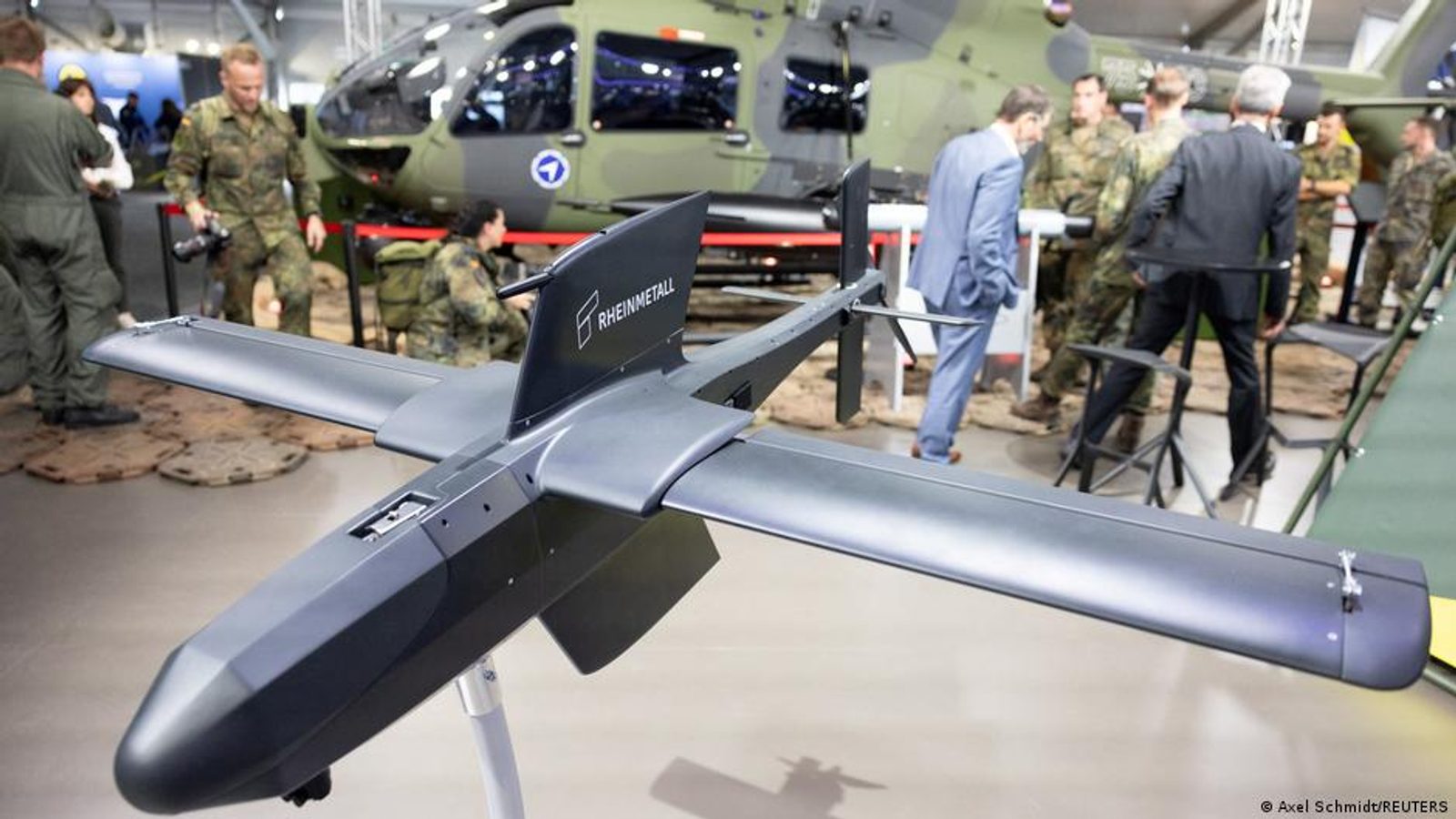
Germany's defence industry is undergoing a deep shift as drones, software and artificial intelligence reshape priorities across the sector. Established makers of heavy systems still dominate production lines, but new technology firms are changing where investors and militaries place their bets.
Until recently, companies such as Rheinmetall, Renk and Hensoldt were widely seen as clear beneficiaries of a European rearmament wave. Since autumn 2025, however, the picture has changed: shares in leading defence groups have fallen sharply — at one point Rheinmetall's stock had dropped by more than 50 percent from its record high.
"The valuation of defence companies due to investor enthusiasm reached too high a level," says Thomas Bukard. The market correction, he adds, is not only a routine recalibration after fast growth but reflects a structural transformation inside the industry.
Software, sensors and startups moving to the centre
"Software is becoming a weapon," Bukard warns, and drones are changing the cost structure of operations because they are far cheaper than crewed combat aircraft and therefore can be deployed in much larger numbers. Small, highly specialised startups can bring new systems to the field more quickly than traditional manufacturers, and that speed is altering the balance of power in the sector.
Investment into European defence-focused startups has surged. Consulting firm McKinsey estimates venture capital flowing into manufacturers of weapons and military equipment reached a record €2.6 billion in 2025, compared with about €200 million in 2021. In the United States the volume was almost three times larger.
Examples of the new players include the Munich startup Helsing, which is building an unmanned combat aircraft system called CA-1 Europe with AI support and sensor cooperation from Hensoldt. After a July funding round worth $1.8 billion, Helsing was valued at $18 billion. Other names gaining traction are Quantum-Systems (reconnaissance drones), Splenlab (AI-based software) and SE3 Labs (sensor-fusion platforms that render three-dimensional battlefield pictures).
Despite the drone boom, classical platforms remain indispensable. No country can defend itself with drones alone: armies still need tanks, aircraft, ships and ammunition. Fortune Business Insights projects the global armoured vehicle market to grow from $25.2 billion in 2025 to $41.5 billion by 2034.
One of the main headaches for large European defence contractors today is not lack of orders but limited production capacity and long delivery times. "Order books are full, but it takes time for that to feed through into margins and earnings," says Matthias Bail. McKinsey estimates outstanding orders at major Western European defence firms range between €20 billion and €100 billion, and in some cases delivery times exceed six years. The industry therefore faces the dual challenge of meeting demand for traditional hardware while integrating software, AI and unmanned systems that are transforming how wars are fought.
Photo: press material from the event