New generation of humanoid robots to communicate via eye contact, facial expressions and gestures
Robots with more lifelike faces and soft materials were presented in Beijing to improve human–machine interaction and prepare machines for cohabitation with people.
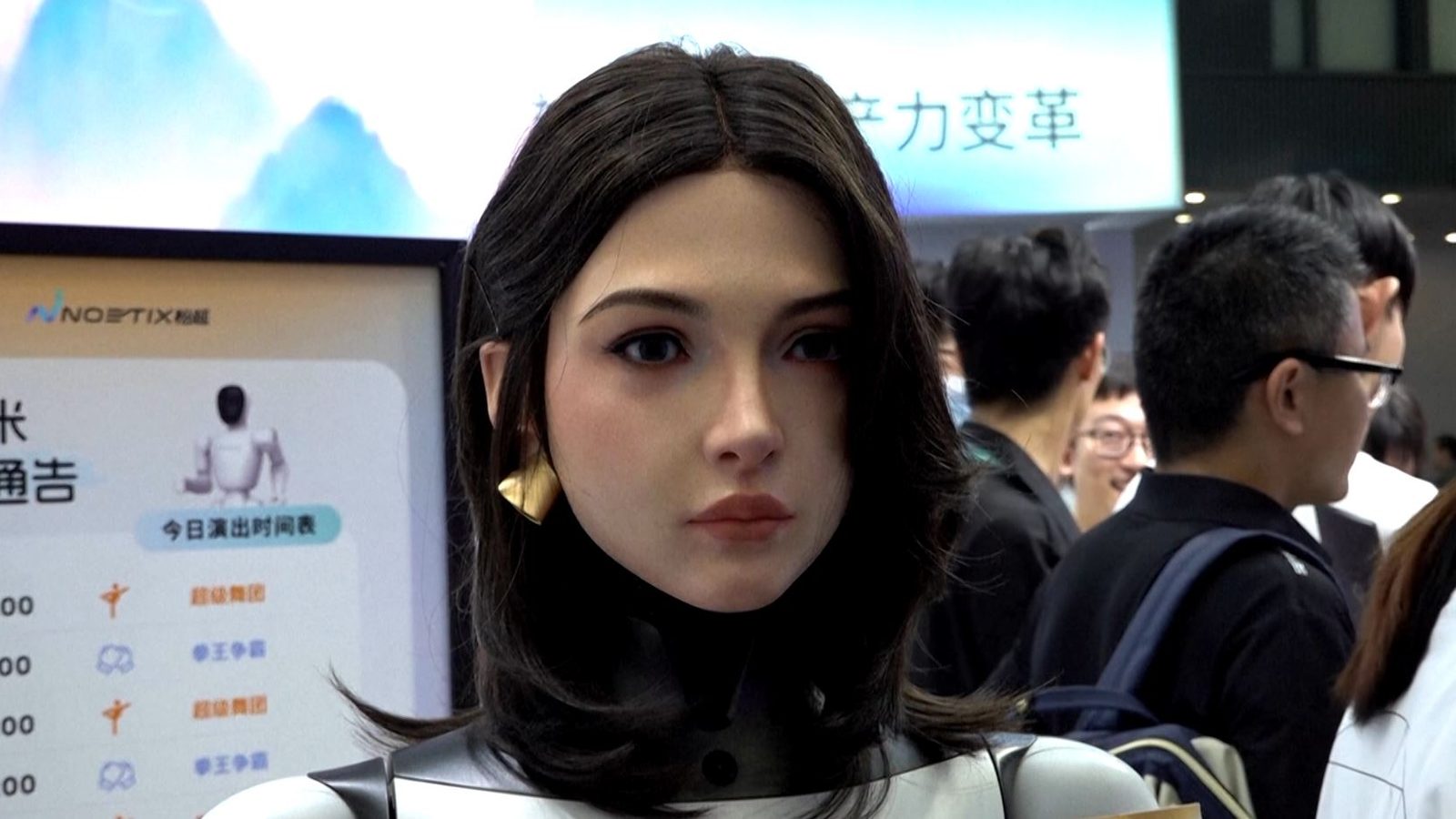
Organizers at the World Robotics Conference in Beijing showcased a new wave of humanoid machines designed to interact with people through eye contact, facial expression and gestures rather than only by performing industrial tasks.
Unlike warehouse and factory robots that sort packages, move goods and assemble parts, the latest models aim to behave and communicate in ways that feel more natural to humans. Developers say this requires advances not only in motion and control, but in the robots' faces and soft coverings.
Design focused on human interaction
AnyWit has built highly expressive robotic faces with a wide range of movements and soft, skin-like materials so the machines can live and work beside people and therefore must communicate through eye contact, facial expressions and gestures.
"Our robot focuses on interaction. To overcome the uncanny valley effect, we have invested substantial effort in algorithms, actuators, control and soft materials. This is systematic engineering that enables it to communicate freely with people, like people. We believe it is very important for robots to improve human-machine interaction in order to truly enter households. First, there is emotional value. Everyone needs companionship, and we believe coexistence and symbiosis between people and robots will be a trend in the future. We are sure we have a lot of work to do in this industry," Conor Hu, vice-president, AnyWit Robotics.
Researchers at the Beijing Institute for General Artificial Intelligence said the wider humanoid-robot industry has concentrated heavily on high-dynamic movement and grasping abilities, leaving gaps in how robots communicate, sustain dialogue and express themselves to humans. "We believe the current humanoid-robot industry has shortcomings in this area. Today, robots mainly focus on high-dynamic movement capabilities and various grasping abilities, and there are many gaps and deficiencies in communication, dialogue and expression between robots and humans. Therefore, we hope to develop more products in these fields," Li Hang, research engineer, Beijing Institute for General Artificial Intelligence.
Photo: press material from the event