Glacier collapse likely set off Nepal floods that left 157 dead and 579 tourists missing
Scientists say satellite images point to a glacier front collapse that unleashed a wave of water and debris; 157 dead and 579 tourists reported missing.
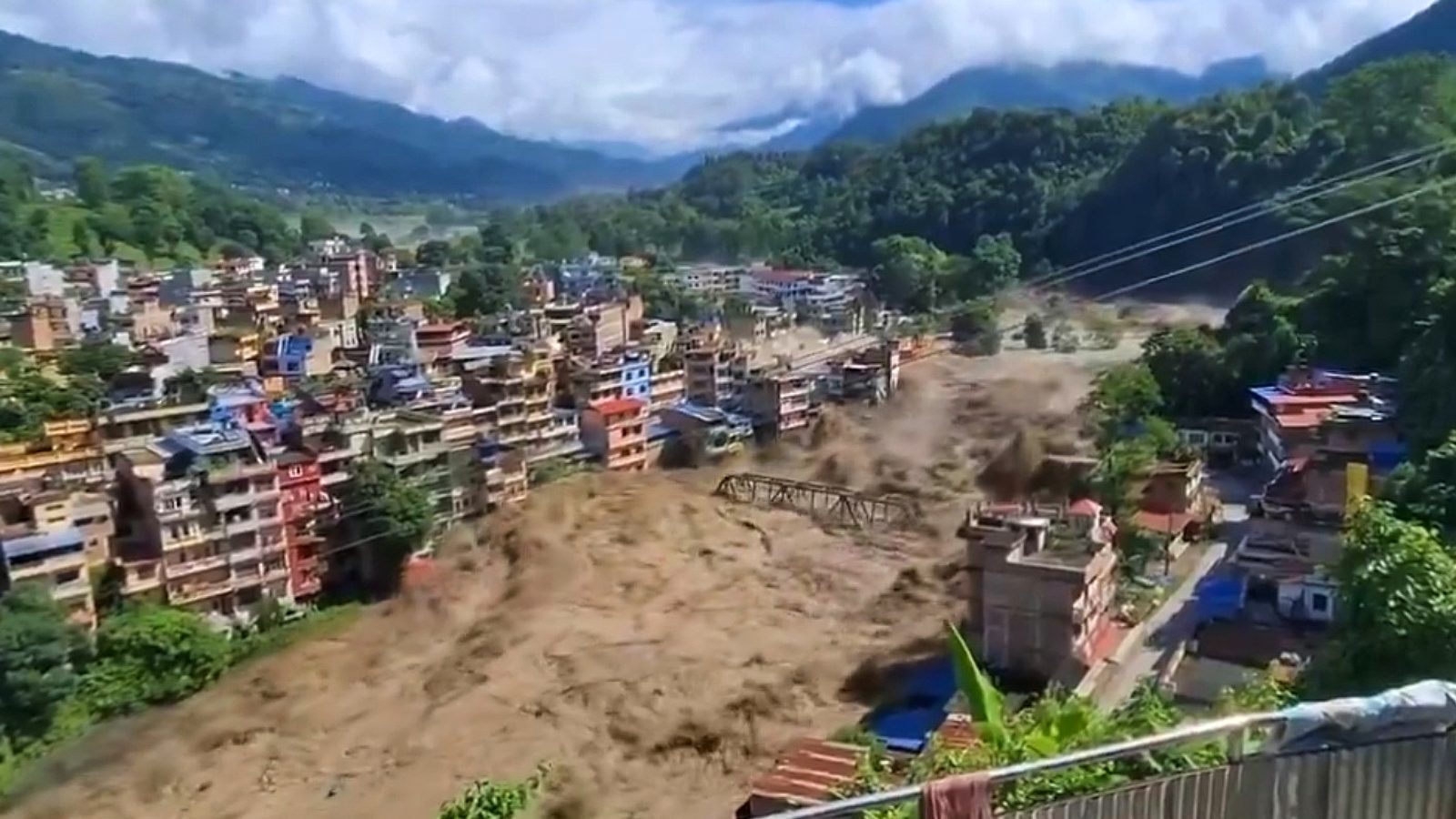
Scientists believe the sudden, deadly floods that swept a Nepal valley were likely triggered when the front section of a glacier broke off and plunged hundreds of metres downhill, carrying rock and sediment that turned into a violent surge of water and debris. At least 157 people have been confirmed dead, while Nepalese tourism authorities say 579 tourists are listed as missing — 466 of them foreign nationals.
Nepalese officials also pointed to a small earthquake that struck the region minutes before the disaster as a possible trigger, but investigators have not reached a final conclusion on what caused the glacier failure.
Satellite images and eyewitness video show the scale
Satellite imagery from Planet Labs taken before and after the event shows green mountain slopes buried under brown deposits and sediments. "It has been confirmed that a significant portion of the front of that glacier collapsed and thus triggered this event, probably carrying with it a considerable amount of rock and sediment," said Vikram Gupta, an expert in engineering geology and a professor at Sikkim University in India.
Video circulating from the Chinese side of the Nepal–China border — including CCTV footage — captures a massive flood wave rushing through settlements, giving a stark picture of how suddenly communities were hit.
Earth scientist Dan Shugar, an associate professor at the University of Calgary, said the images indicate a large amount of snow melted in the 24 hours before the catastrophe. "Some glaciers in the valley were covered with snow yesterday, but today they are mostly bare, only ice is visible. In other words, although I have not yet seen meteorological station data, it was probably warm," he said.
Environmental experts have warned for years that Himalayan mountains are losing ice: the United Nations reported in 2023 that the region had lost almost one third of its ice over roughly three decades. The International Centre for Integrated Mountain Development has said floods, landslides, avalanches and droughts are becoming more frequent and destructive across the Hindu Kush–Himalaya region, posing major risks to communities and infrastructure.
Photo: Printskrin od H / Surajit