Fall of the Berlin Wall — the desire for freedom and unity prevailed
On the night of 9 November 1989 crowds forced border crossings open and the events set the path to German reunification and the end of the Cold War.
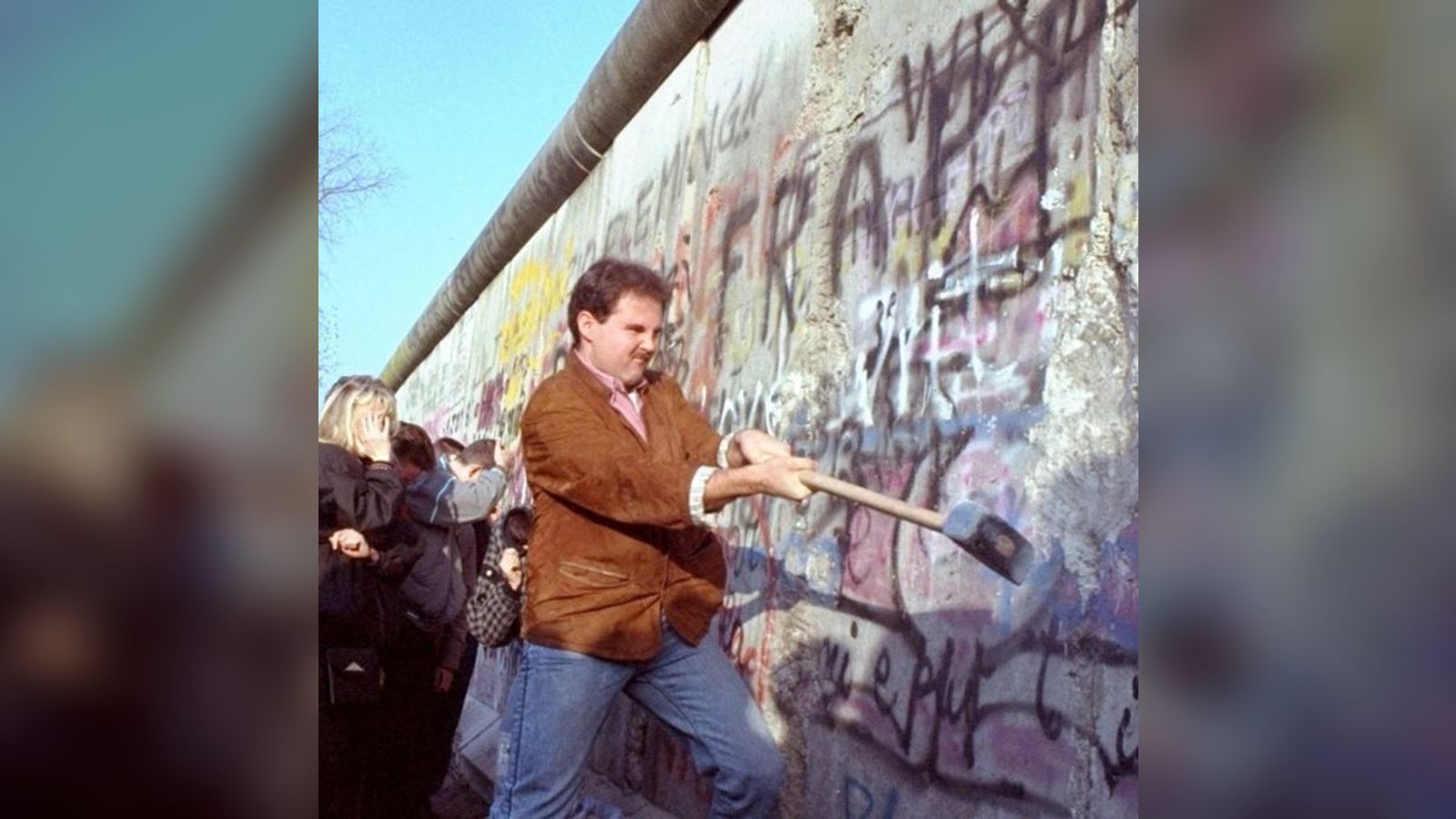
The Berlin Wall was more than a physical barrier of concrete and barbed wire; during the Cold War it stood as the strongest symbol of ideological, political and military division. Built in August 1961 by the East German regime, it separated families and friends for decades and turned the city into a focal point of East–West tensions.
The night of 9 November 1989 marked the beginning of the wall’s end. After weeks of large, peaceful protests across East Germany (GDR) and growing civic pressure, East German authorities announced a loosening of border restrictions. Thousands seized the moment and rushed to crossing points; facing unprecedented pressure from the crowds, border guards opened the gates without a single shot fired.
Scenes of people from both sides embracing, celebrating and using hammers to chip away at the wall spread around the world as a powerful image of popular will overcoming repression.
Consequences
Reunification of Germany: The event cleared the way for the diplomatic and political processes that culminated in the official reunification of Germany on 3 October 1990.
End of the Cold War: The fall of the wall was followed by the collapse of communist regimes across Eastern Europe and, ultimately, the dissolution of the Soviet Union.
Birth of a united Europe: The dismantling of the Iron Curtain opened the path for European integration and enlargement of the European Union toward the east, laying foundations for the contemporary democratic Europe.
Today, 9 November is remembered as a reminder that the desire for freedom and unity is stronger than any wall, and that bridges between peoples should be preferred over divisions.
Photo: press material from the event