Pensioners' homes nearly full, public facilities without day stay, private ones under suspicion
The state pensioners' homes are nearly full, and public institutions do not offer day or half-day stays.
Pensioners' homes across the country are nearly filled to capacity, public care institutions do not offer day or half-day stays, and private homes are often criticized for insufficient supervision — a situation growing in importance as the population ages.
Capacities, standards and oversight under scrutiny
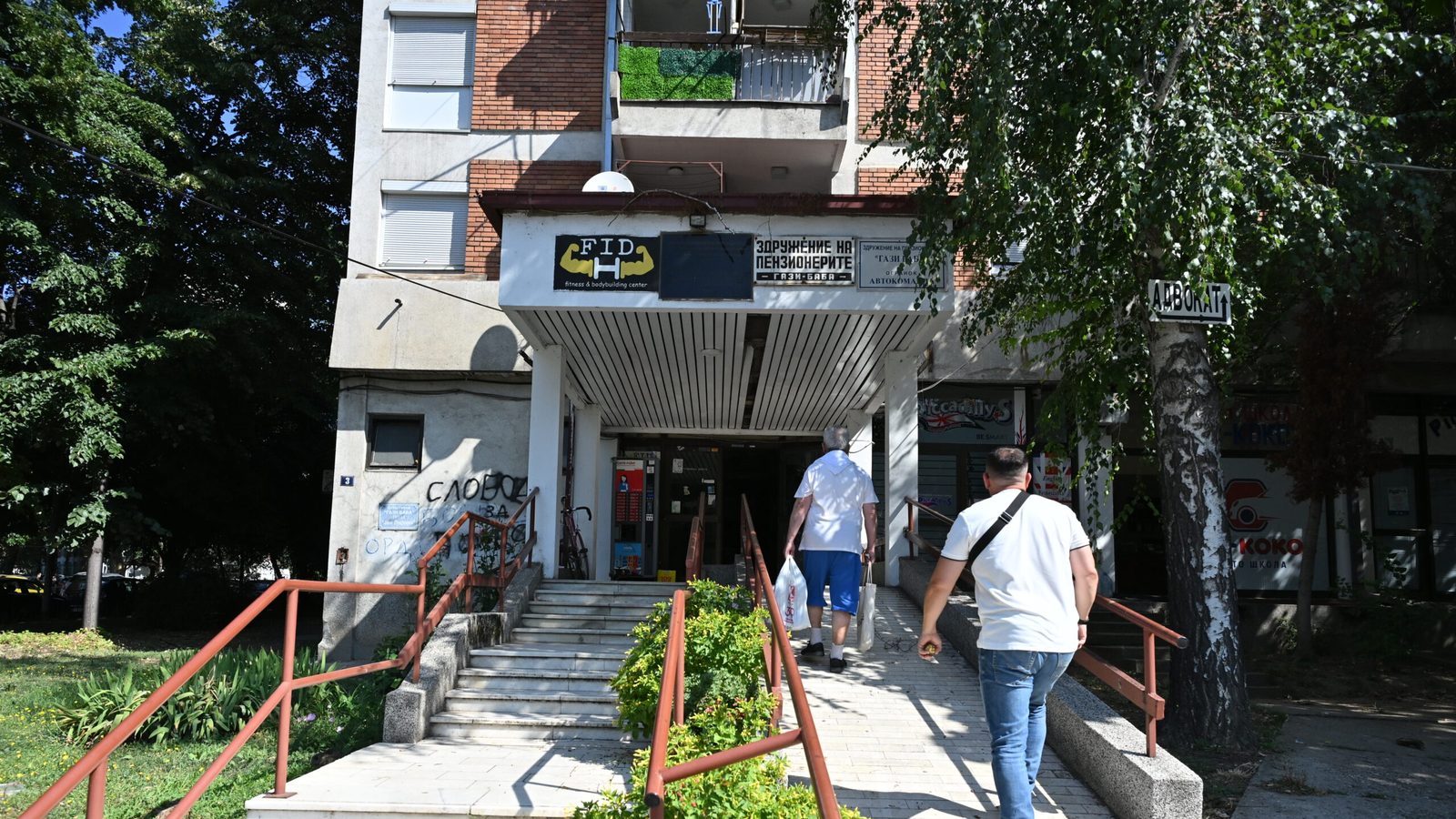
The Pension and Disability Insurance Fund says that state pensioners' homes are practically operating at full capacity. “The Pension and Disability Insurance Fund of North Macedonia manages 14 pensioners' homes with a total of 380 apartments. They are located in Delchevo, Vinica, Gevgelija, Gostivar (two homes), Kocani, Kriva Palanka, Kumanovo, Prilep, Sveti Nikole and four homes in Skopje – in Aerodrom, Avtokomanda, Gjorche Petrov and Cair,” the Fund says. At the moment 375 people live in these homes, which means only five accommodation units are free.
On the level of rents the Fund clarifies: “The rental price is set by the Fund's Board of Directors and ranges from 18 denars per square meter for accommodation in the pensioners' home in Sveti Nikole to 23 denars per square meter for accommodation in the homes in Skopje.” The institution adds that each year, depending on available financial resources, basic and larger construction interventions are carried out to improve conditions.
The president of the Party of Pensioners, Ilija Nikolovski, claims the situation on the ground is much worse: “The condition of pensioners' and elderly homes is catastrophic. They have not been properly renovated for years, the restaurants and pharmacies that used to be available to residents have been closed, and private elderly homes are not sufficiently controlled.” According to him, the state must not be satisfied only with maintaining existing facilities, but must invest significantly more in their modernization.
The Ministry of Social Policy, Demography and Youth says that five public institutions for out-of-family social protection of the elderly operate in the country: the Gerontological Institute “13 November” – “Mother Teresa” Department in Skopje, the homes “Zafir Sajto” in Kumanovo, “Kiro Krsteski Platnik” in Prilep, “Sue Ryder” in Bitola and “Dr. Ivan Vlashki” in Berovo. Furthermore, “an additional 37 private institutions licensed to provide accommodation and care for the elderly are registered,” the ministry states.
The Ministry acknowledges that public homes still do not provide services that are standard in many European countries: “At present, public institutions for out-of-family social protection of the elderly, in addition to their basic activity, do not provide additional services such as day or half-day stays.” As a measure to expand capacities, it adds, public calls for support to municipalities are announced every year; examples cited include the expansion of the “Dr. Ivan Vlashki” home in Berovo, adaptations in Probishtip and projects in Kavadarci and Kriva Palanka (the former student dormitory “Boro Menkov”).
On oversight the Ministry points out: “The Inspection Service continuously carries out regular, extraordinary and control inspections of institutions for social protection of the elderly, which include checks on working conditions in both public and private homes.” Still, pensioners' associations are calling for more frequent inspections and more transparent reports.
There are also discrepancies in the figures: while the Fund indicates 375 residents, other data say “368 people are accommodated in pensioners' homes, about fifty are still waiting.” This illustrates the challenge of tracking real-time demand. Long-term population ageing, youth emigration and the growth of single-person households increase pressure on the institutional care system — the question is not only whether there will be enough places, but whether their users will receive dignified living conditions.
Photo: press material from the event