Five years on, hundreds of Afghan local collaborators still wait for rescue to Germany
Hundreds of Afghan local staff who worked with German institutions are still waiting in Peshawar and Kabul; courts and NGOs are the main routes to relocation after Berlin halted new admissions in May 2025.
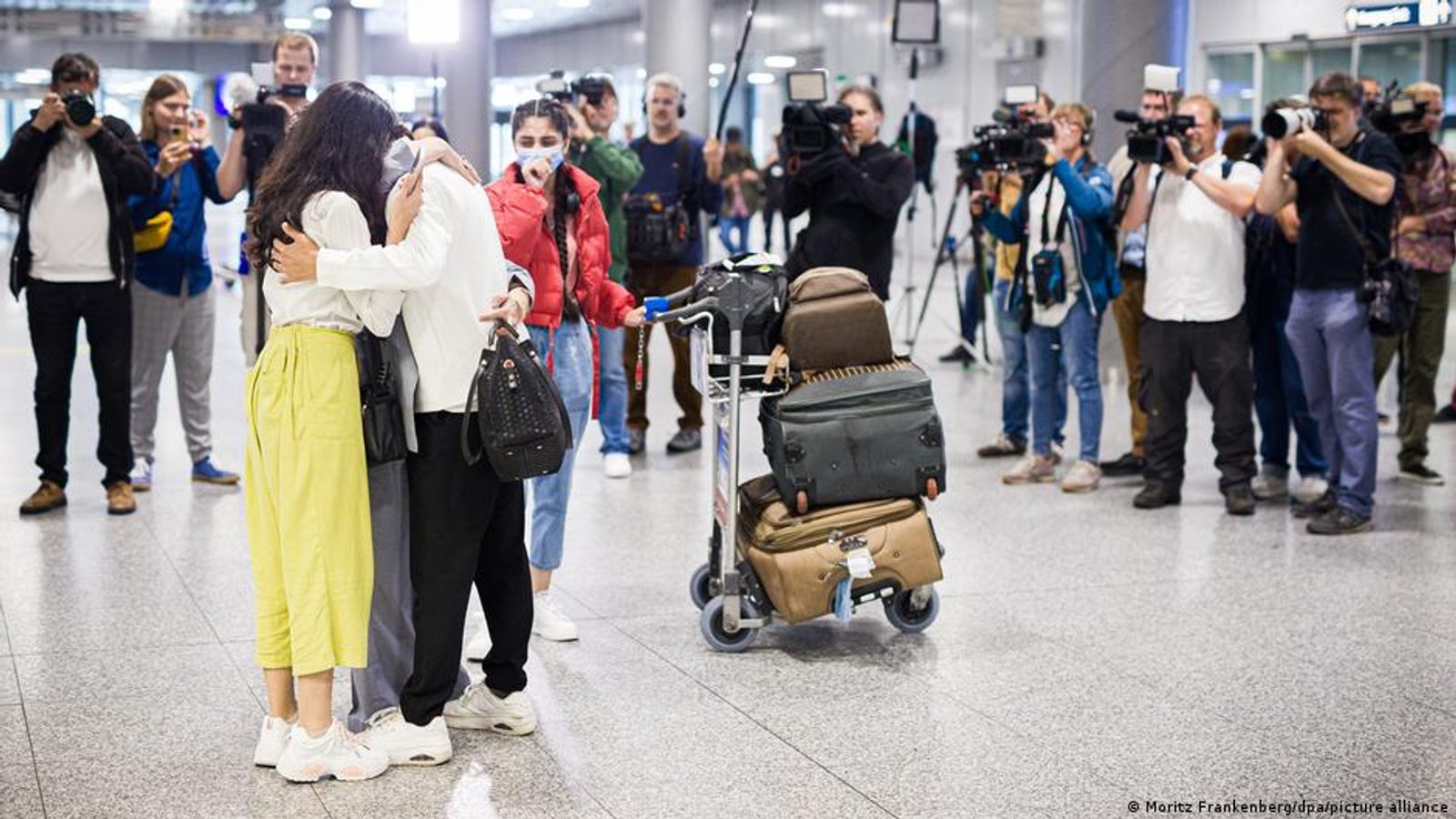
Five years after the Taliban returned to power on 15 August 2021, several hundred Afghan local staff who worked with German institutions and their families remain stranded in Pakistan and Afghanistan, waiting for relocation to Germany. Promises made by successive German officials have not produced a uniform outcome: some evacuees were brought to safety, while many others remain in legal limbo or under pressure on the ground.
Legal battles and political reversal
Initially Berlin pledged to take in Afghan local collaborators. German foreign minister Heiko Maas said on 26 August 2021: "Our work continues and will continue until everyone for whom Germany bears responsibility in Afghanistan is safe." Later assurances from Annalena Baerbock on 23 December 2021 — "You are not forgotten. We are working at full force to bring everyone to safety" — and Nancy Faeser in August 2022 — "We will not leave you behind!" — raised expectations among dozens of interpreters, technicians and other local staff and their families.
Those promises were only partly fulfilled. Some, like Ahmad Samim, a sound technician for the German Armed Forces (Bundeswehr), reached Germany and now works as a hotel receptionist in a large German city. Samim told reporters in fluent German: "I am very grateful to Germany. But if someone says they will help you, then they must stick to that. Promises must be kept." Others, such as Jawad Niyazi, who worked for the Federal Ministry for Economic Cooperation and Development (BMZ), remain stuck in Peshawar and describe life as confined and precarious.
The political turning point came after the formation of a new government led by Chancellor Friedrich Merz (CDU/CSU and SPD) in May 2025, which imposed a halt on the reception of new Afghan local collaborators. Six months later, desperate applicants sent a bilateral appeal directly to the chancellor, warning that many cannot return to Afghanistan without facing "brutal violence." The government has, however, maintained that it may cooperate with Taliban representatives at a technical level in Afghan diplomatic missions in Germany to facilitate returns and has carried out deportations.
In parallel, the Ministry of the Interior under Alexander Dobrindt offered financial incentives to Afghans who renounced plans to travel to Germany. Known informally among Afghans as "Dobrindt's money," the package offered up to €2,500 as a one‑off payment before departure and up to €10,000 for return to Afghanistan or a third country, plus temporary medical care, accommodation and food. About 300 people accepted the offer and abandoned their prospects of relocation to Germany.
For roughly 600 remaining applicants the courts now decide their fates. A Federal Constitutional Court ruling in July 2026 found that a blanket ban on admitting endangered Afghan nationals was incompatible with the constitutional prohibition of arbitrariness and required individual review. The case was sent back to the Higher Administrative Court Berlin‑Brandenburg for re‑examination. Meanwhile, the Interior Ministry maintains its position that reception decisions may be rescinded if the political interest changes, while also acknowledging that each case must be assessed on its specific circumstances.
Non‑governmental organisations have tried to fill the gap. The group Kabul Luftbrücke — created amid the evacuation chaos at Kabul airport in 2021 — chartered a plane that evacuated 18 people and, mostly via overland routes into Pakistan, has assisted 4,424 people to flee the Taliban. Founder Eva Baer recalls: "We rented the plane, flew to Kabul and managed to pull a few people out. But I quickly realized the real work was only beginning. From the planned four weeks, this turned into five years." Thanks to more than 200 legal actions supported by humanitarian groups, 1,018 people have travelled to Germany since 1 September 2025, but 568 people in Peshawar and 34 in Kabul still await resolution.
Activists warn that among the roughly 600 who remain, about 75 percent are women and children for whom access to schooling, work and independent life has been severely curtailed. Psychosocial strain and the fact that local names and documents are already recorded by the Taliban make the situation increasingly urgent, they say.
Photo: press material from the event