Peter Thiel expands influence through Palantir, tech investments and politics
The PayPal co‑founder and Palantir chair combines tech investments, political donations and international ties while stirring controversy over surveillance and AI.
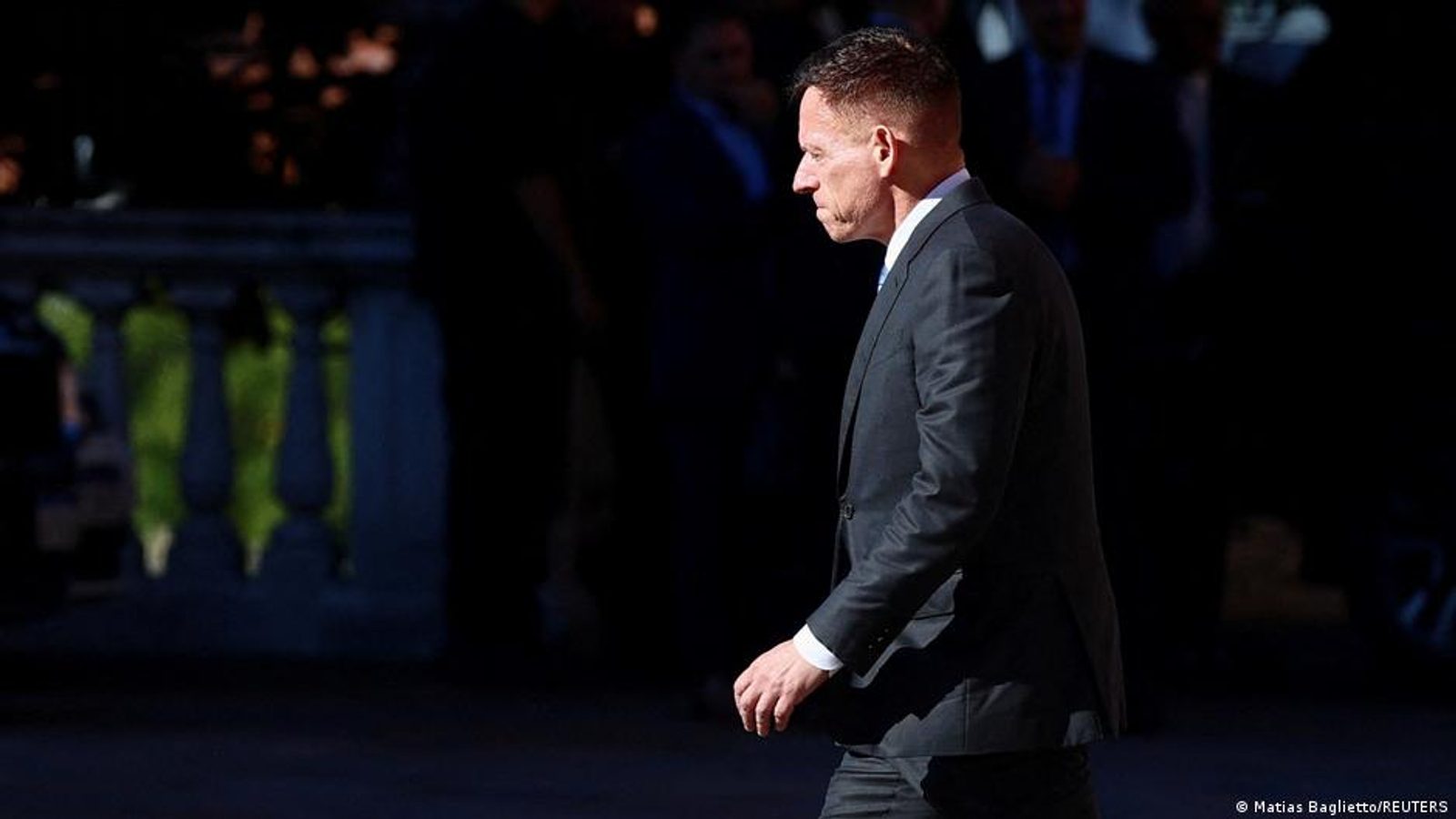
Peter Thiel, the co‑founder of Palantir and an early backer of Facebook, continues to expand his reach across technology, politics and artificial intelligence from a base that now includes Argentina. Born in 1967 in Frankfurt am Main and raised partly in South Africa and Namibia, Thiel made his name as a serial entrepreneur and investor — co‑founder and former CEO of PayPal and the first outside investor in Facebook — and today runs Founders Fund, whose portfolio has included SpaceX and OpenAI. Forbes currently values his personal fortune at about $35 billion (31 billion euros).
Beyond private markets, Thiel is best known for Palantir, the surveillance, AI and data‑analysis company he helped start and now chairs. Palantir holds multibillion‑dollar government contracts to build software for the Pentagon and for U.S. Immigration and Customs Enforcement (ICE). In April this year Palantir published a 22‑point manifesto that critics have described as having “techno‑fascist” elements, and several European governments including the Netherlands, France and Germany have begun to reassess or sever defence and public sector ties with the company for security reasons.
From Silicon Valley money to political bets
Thiel’s influence stretches well beyond business. He was one of the most prominent Silicon Valley backers of Donald Trump in 2016, donated $1.25 million to Trump’s campaign that year and later served as an informal adviser. He has since funded Republican candidates and committees, including major support for JD Vance, and remains active through large political donations: in 2022 he gave $15 million to the “Protect Ohio Values” committee backing Vance’s Senate run — at the time the largest single contribution recorded to support a Senate candidate.
Observers find Thiel’s political outlook hard to place. He has been described as a libertarian nationalist who treats technology as “an alternative to politics,” expresses deep mistrust of government and liberal elites, and is openly critical of what he sees as democratic decision‑making failures. Max Chafkin, who published a biography of Thiel in 2021, said that “it borders on fascism.” Chafkin added: “He says that a company is run better than a government because decisions are made by one person – essentially, a dictator. He is hostile to the idea of democracy. That’s pretty scary when you consider the role of the companies he has stakes in.”
Thiel has mixed personal beliefs and alliances: raised in a devout Christian family, he recently described himself as an “orthodox Christian with a small ‘o’,” yet he is openly gay and married to Matt Danzeisen. In public interventions he has shown sustained interest in apocalyptic themes, speaking about an Antichrist figure — a category he applies not only to biblical archetypes but to people and movements he believes steer society toward an authoritarian, fear‑driven order. He has singled out climate activist Greta Thunberg and governments pushing for stricter AI regulation as actors he sees as opposing scientific progress; in July he even called Pope Leo XIV “a Chinese communist agent” over the pope’s appeals for tighter AI rules.
Thiel relocated with his family to Argentina for a time and has developed ties to the libertarian president Javier Milei; Argentina’s government has discussed incentives for foreign firms and measures to promote investment in AI data centres. Equally important to Thiel are his private networks: he has longstanding friendships with figures such as Elon Musk, Donald Trump and JD Vance. As Thiel told the Washington Post in 2014, “Over the years I have built great friendships with people I have worked with,” and he added that “that is a really important aspect that allows a person to be successful in our society over the long term.”
Photo: press material from the event