Ratko Mladić dies in detention unit in Scheveningen
The former Bosnian Serb Army commander, convicted to life for genocide and other crimes, died aged 84 in Scheveningen.
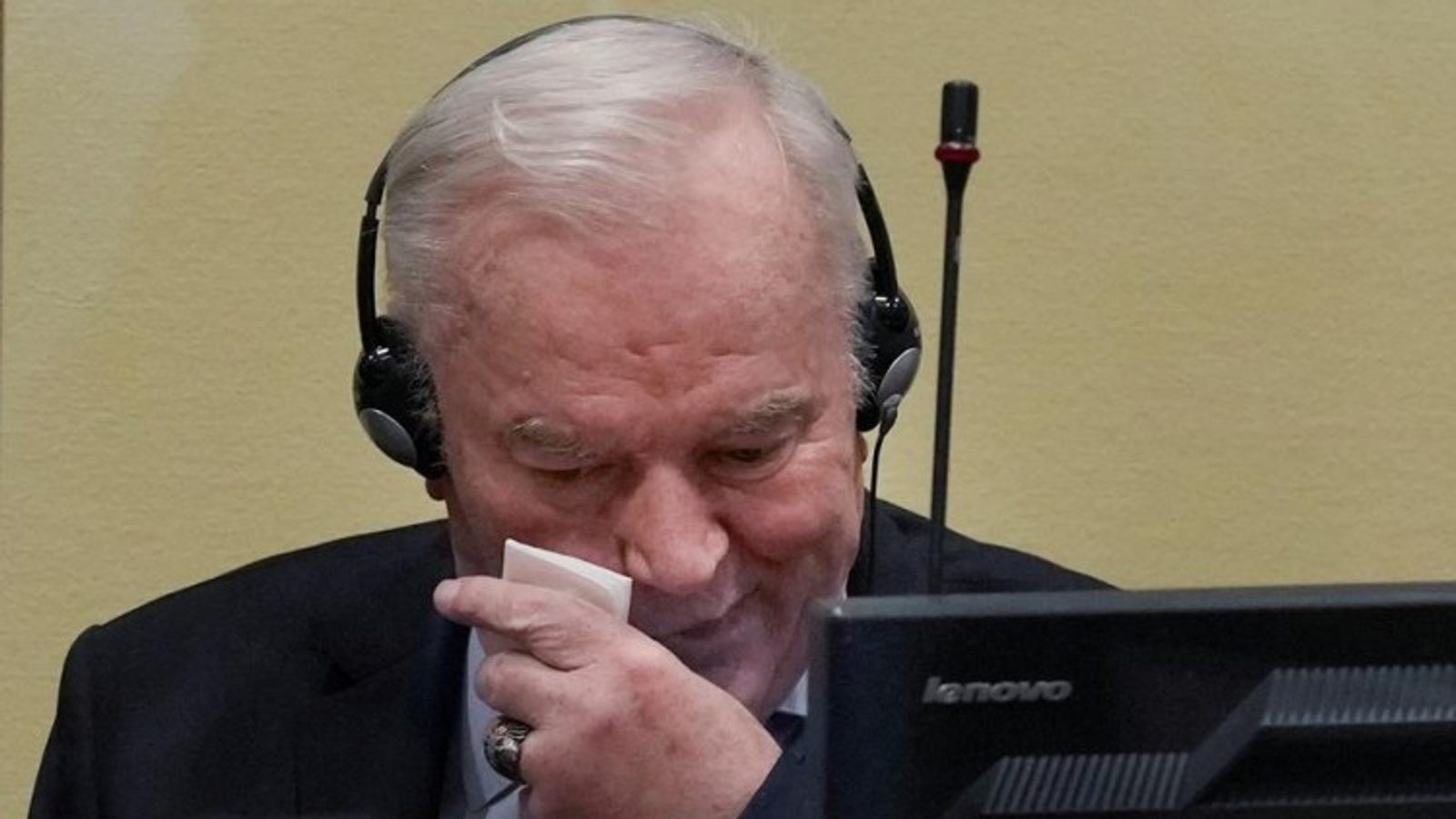
Ratko Mladić, the former supreme commander of the Main Staff of the Army of Republika Srpska, died on 27 August 2026 in the detention unit in Scheveningen. He was 84 years old.
Convictions and final judgment
Mladić had been sentenced to life imprisonment by the International Criminal Tribunal for the former Yugoslavia (ICTY). His trial began in May 2012 after his arrest following 14 years in hiding under a false name. The trial chamber delivered a first‑instance judgment on 22 November 2017: a 2,527‑page ruling that found him guilty on 10 of the 11 counts in the indictment.
The judgment became final and legally binding after the Judicial Council of the Mechanism for International Criminal Tribunals in The Hague issued its decision in early June 2021. The Appeals Chamber dismissed the appeals brought both by Mladić’s defence and by the Office of the Prosecutor, thereby confirming the life sentence; the Appeals Chamber’s ruling was not unanimous and contained a separate (dissenting) opinion by Presiding Judge Priska Matimba Nyambe of Zambia.
The court concluded that Mladić was a key participant in several joint criminal enterprises whose objective was the permanent removal of Bosniaks and Croats from territories sought by Bosnian Serbs. That finding underpinned the full range of convictions recorded against him.
On the count of genocide in Srebrenica (count 2), the court found Mladić legally responsible for genocide against the Bosnian Muslim population of Srebrenica. The judgment states that Mladić, together with other officials, formulated a common plan to eliminate the Muslim population in Srebrenica by killing men and boys and by forcibly displacing women, children and some older men. The court found that he signed Military Directive 7 in March 1995 and that the army entered Srebrenica in July; more than 8,000 men and boys were executed under his command and the chamber found that he had a clear and undisputed genocidal intent to destroy that population.
On counts 3–8, Mladić was found guilty of crimes against humanity and war crimes including persecution, extermination, murder, inhumane acts, forced transfer and deportation. These crimes were documented across Bosnia and Herzegovina in municipalities such as Banja Luka, Bijeljina, Foča, Ilidža, Kalinovik, Ključ, Kotor Varoš, Prijedor, Sanski Most and Vlasenica. The judgment describes appalling conditions in detention camps where detainees were beaten, raped, tortured and killed while populations were forcibly expelled from their homes.
For counts 9 and 10 the court convicted Mladić of terrorizing the civilian population in Sarajevo and of unlawful attacks on civilians. From May 1992 to November 1995 the city was systematically shelled and subjected to sniper fire, often at sites with no military objective. The chamber found that Mladić personally commanded units of the Sarajevo‑Romanija Corps, proposed shelling the city without regard for civilian lives and ordered interruptions to water and electricity supplies, exposing civilians to open sniper fire — conduct aimed at spreading terror that resulted in the deaths of thousands of civilians of all ages. On count 11 he was convicted for taking hostages — members of the UNPROFOR peacekeeping forces — whose use as human shields was documented in the judgment.
Photo: press material from the event