‘Rock of Starvation’ reappears as Danube plunges to historic lows in Hungary
Record low Danube levels in Hungary have exposed the historic 'Rock of Starvation' and are disrupting water supplies, agriculture and energy infrastructure.
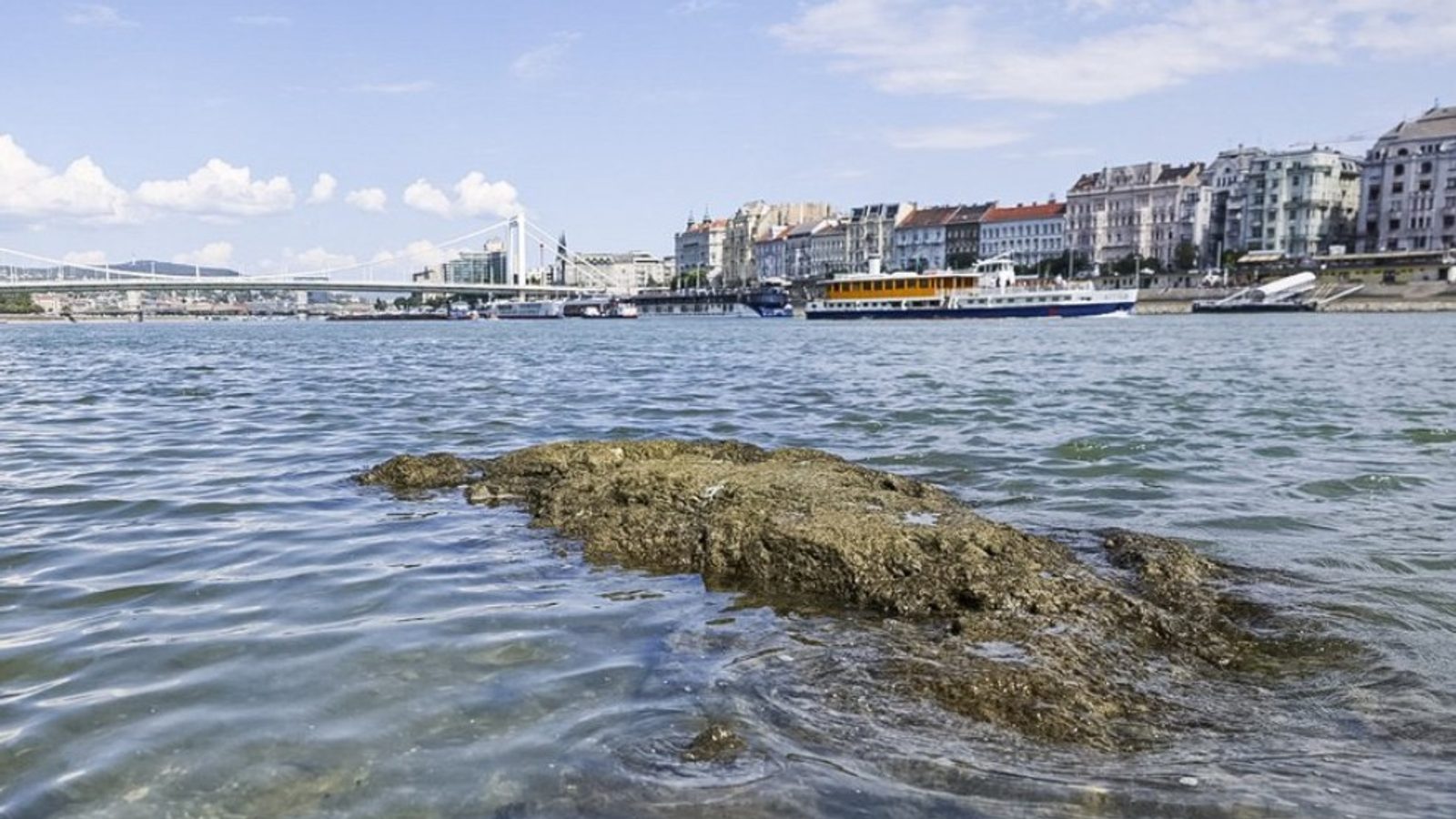
The Danube has fallen to record low levels across Hungary this summer, exposing large stretches of riverbed and revealing a boulder known locally as the "Rock of Starvation" — a historical marker that, when visible, has long signalled severe drought and food shortages.
Visible signs and immediate dangers
In Budapest the river has shrunk so dramatically that formerly submerged objects from decades and centuries have re-emerged: remains that experts describe as belonging to a woolly mammoth, fragments of a bridge destroyed in World War II, parts of a Nazi-era military vessel and an unexploded British bomb. In normal conditions the Danube in the city ranges between two and three metres and can rise as high as eight metres in floods; this summer it fell to about 14–19 centimetres.
Low water has forced authorities to take exceptional measures to protect critical infrastructure. Operators at the Paks nuclear power plant sank two 80‑metre barges near the site to temporarily raise river levels and keep two remaining turbines operating. For the first time in 44 years Hungary also had to suspend parts of its nuclear reactors that rely on Danube water for cooling.
Flooded quays and exposed shoals have attracted people seeking relief from the heat — families wading in ankle‑deep water and others walking or cycling along the newly exposed riverbed. Hungary’s cycling‑club president Gabor Kirti rode about 30 kilometres across the stripped river bottom; he later said the ride took roughly three hours and that it filled him with sorrow rather than triumph: "I wanted to show that if you can cycle 30 kilometres along the Danube bed, then because of this climate crisis we have literally hit rock bottom."
Beyond spectacle, the drought is inflicting wide social and economic harm. In the agricultural plain of Pest region farmer Istvan Somogyi reported heavy losses: "This year I lost almost half of the yield, and the loss may reach up to 70 percent." He added, "It's over. Everything is dried out. Since I started working this land after the fall of communism, I have never seen such a catastrophe." Scientists warn that repeated heatwaves and droughts linked to climate change make such crop failures more likely.
Municipal services in several towns have been strained. In Szentendre and neighbouring communities water deliveries and emergency measures are in place: local officials said between 4,000 and 5,000 households lack stable water access, about 25 tonnes of bottled water have been distributed and rescue lines receive roughly 100 urgent calls per day. Police also reported three people missing in the Danube over one weekend; one body was later recovered and searches continued downstream.
Authorities are reallocating resources to protect natural reserves and urban trees — teams worked through weekends to save more than 700 threatened trees — and have limited domestic irrigation. Temperatures in Budapest reached around 42 degrees Celsius during the heatwave, with night‑time lows staying near 28 degrees, and in many places the riverbed has cracked into hard clay and formed near‑desert islands. For residents and farmers the reappearance of the Rock of Starvation has become a bleak emblem of a crisis they fear will persist into the next year.
Photo: