Sergej Andreevski on Andros: the clash of red earth and blue sea
How the clash of red earth and blue water made the Macedonian artist return to the island.
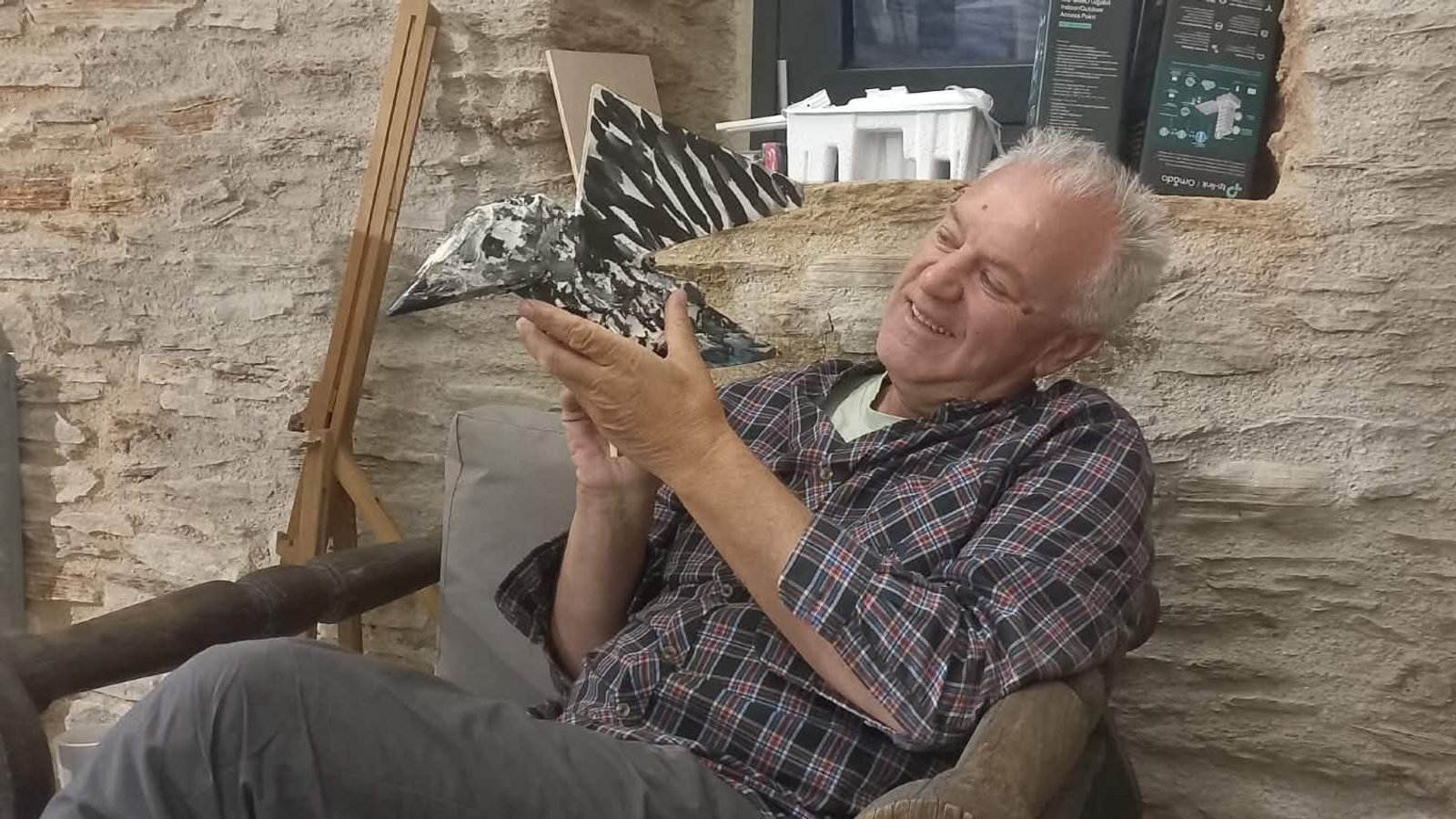
Sergej Andreevski describes the moment he steps off the ferry and in the first breath feels the island of Andros — the scents of the stone, the touch of the sea and the minute details of the hilly landscape that rearrange his creative gaze.
When the red meets the blue
In his testimony the landscape repeatedly sets the same visual play: terracotta-colored earth and the boundless blue of sea and sky. "That clash of red with blue is fascinating and wondrously attractive — magic," he explains, and he cites it as the reason why the island continually calls him.
Andros still holds mysterious beaches where the water penetrates into the womb of the land; sometimes the wind lifts red dust into the air that changes the weather's palette. The stone walls that string along the hills and the old olive trees — witnesses to former prosperity — give nature a sculptural mark that feeds the visual imagination.
"I first visited the island together with my wife in 2024." Our host was Haris Savides, an architect, photographer and aesthete of world caliber, who introduced and showed the secrets of his peaceful, creative refuge and shared the idea of creating an artists' village.
Andreevski adds that already the following year his Amalia Gardens began to radiate as an artistic residency. This year I was on Andros for the third time, and together with colleague Nikola Pijanmanov we crossed our works with the efforts of participants from Greece and around the world, leaving powerful works as testimony to our encounter with the place.
The text is not an ordinary travel description, but a field report from an artist: attentive to the textures, smells and sounds of rural life — bells, the voices of sheep and goats and the secret streams that appear and disappear among the rocks. For Andreevski, Andros has become a constant source of material and meaning.
Photo: private archive