Shkëndija drew nearly double the crowd of Vardar in Skopje
Attendance data show Vardar–Riga drew 2.700 fans while Shkëndija attracted 5.200 in Skopje, raising fresh doubts about Vardar's summer preparations.
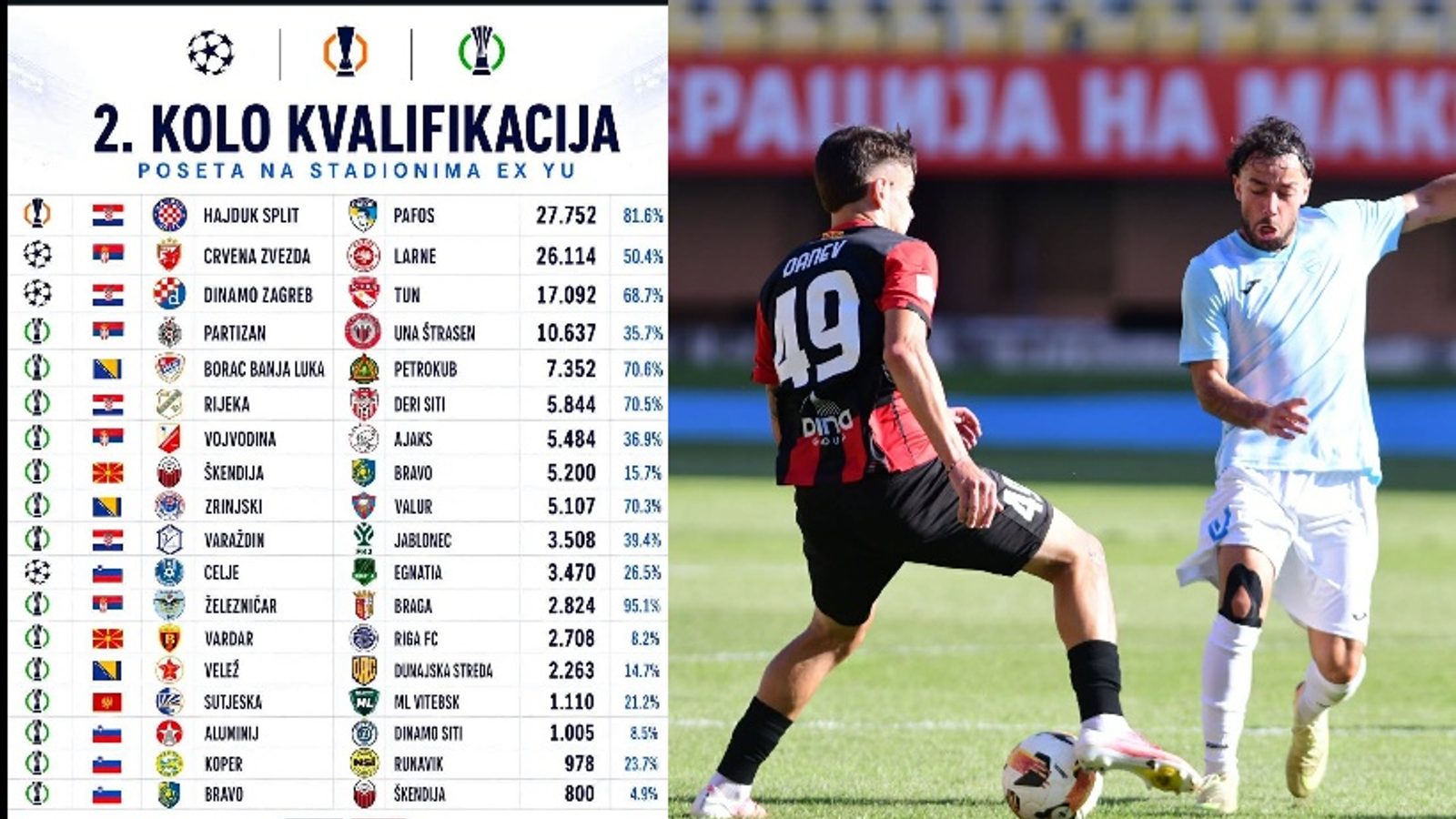
On 01.08.2026 Shkëndija's match in Skopje attracted almost twice as many spectators as Vardar's latest European game, underscoring the widening gap in fan support between the two clubs. The attendance figures published for the two fixtures put Vardar–Riga at 2.700 spectators, while Shkëndija pulled in 5.200 at the same venue.
The contrast comes amid mounting criticism of Vardar's short summer: a swift exit from European competition after ties with teams from Finland and Latvia (KUPS and RIGA) and growing questions about the club's preparations. Critics point to problems in the training process, scouting—especially for home matches—coaching under Kristijan Fabiani and a transfer market that failed to strengthen the squad.
Fans have noticed. The empty stands sent a clear signal to the club's executives led by Milenko Nedelkovski. Observers recall that even in past seasons Vardar could draw 4-5.000 supporters for second-tier encounters; now home fixtures look sparse.
Regional attendance highlights
Where supporters arrive, results often follow. In UEFA club competitions across the former Yugoslavia this round, Hajduk Split recorded the highest turnout with 27.752 spectators for the game against Pafos. Red Star Belgrade followed with 26.114 in a Champions League fixture, and Dinamo Zagreb drew 17.092 for its dramatic comeback versus Tun.
At the other end of the scale, the weakest crowd in the region belonged to Shkëndija's away trip in Ljubljana against Bravo, which was attended by only 800 spectators. The numbers deepen the question of return on investment: millions spent on travel and transfers produced disappointingly low gates—"2.000 in Europe and 200 at home against Bregalnica" in some cited comparisons—and fuel frustration among supporters.
For Vardar the short-term sporting failures now intersect with a longer-term branding problem across the region: a club once synonymous with packed stands and trophies is struggling to restore the crowd and the results that used to follow them.
Photo: press material from the event