Silvija Mitevska: "Women should not become 'better men' to be good leaders"
Director Silvija Mitevska says quotas open doors but culture and decision‑making must change for real equality in sport.
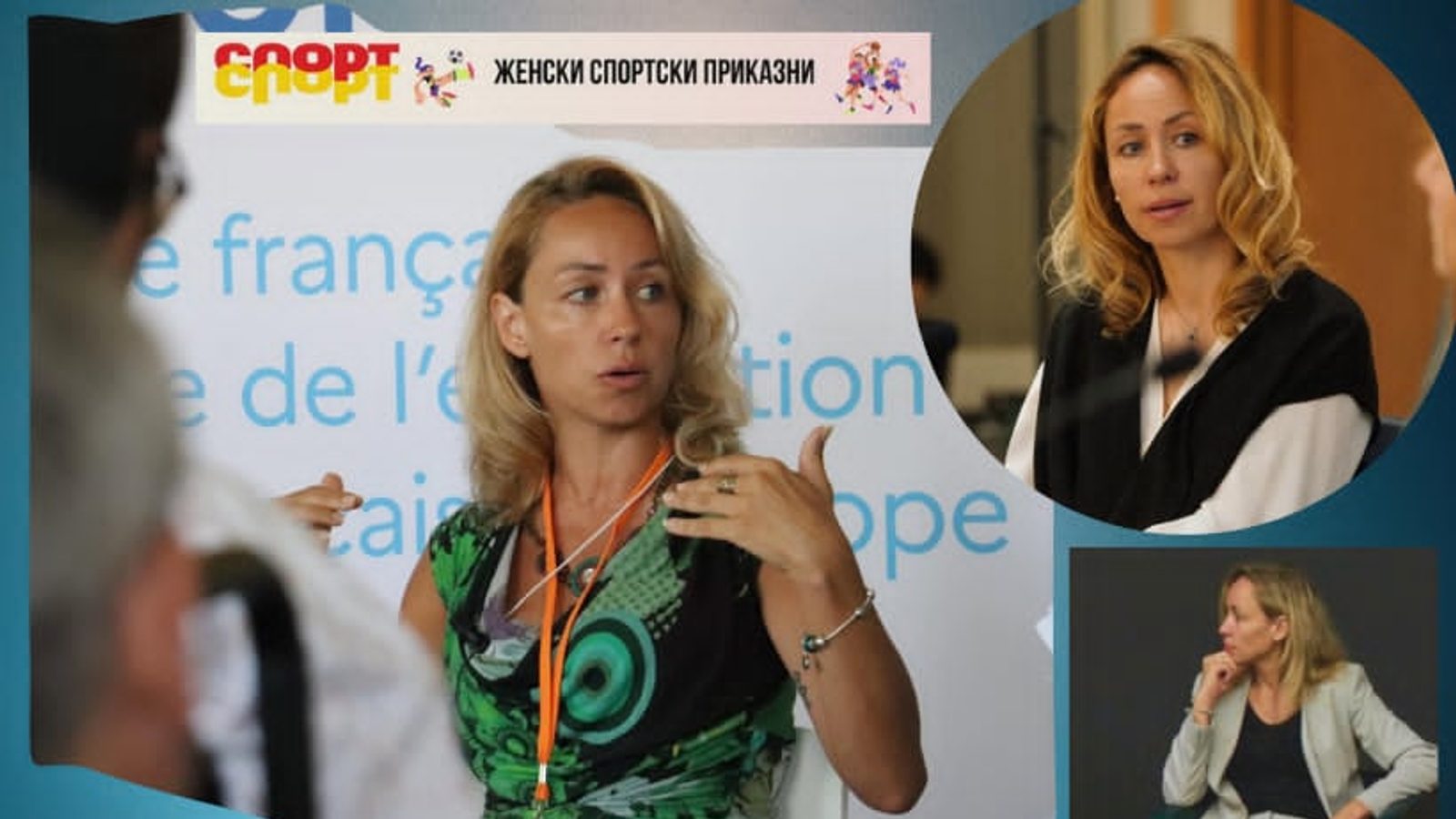
Silvija Mitevska, director of Sport Social Solutions and an expert in sports diplomacy, warns that progress in gender equality in sport in North Macedonia remains limited: female presence has increased in numbers, but the culture and decision-making structures often remain unchanged.
As Mitevska points out, the problem is not that women lack talent or will, but that organizations expect them to conform to an existing, male‑centred model of leadership. "Women should not become 'better men' to be good leaders. Women can be leaders with their own authenticity, with different communication styles, with cooperation, empathy, listening and consensus‑building – without that meaning they are less capable, less decisive or less authoritative," she says.
Historical barriers and hidden rules
Putting the issue into historical perspective, Mitevska traces the roots of the problem beyond sport. "Sport was historically created in a male‑dominated world – to a large extent by men and for men. Women for a long time did not have equal access to sporting activities, nor the right to participate in the Olympic Games. Even when they began to be included, they were first 'allowed' sports considered sufficiently graceful and feminine and that, by then‑existing notions, did not disrupt female aesthetics. That shows us that it is not only that someone today does not give women enough opportunities. It is about institutions that for decades have developed in an environment where male participation, the male body, male experiences and male models of leadership were taken as the norm. The very idea of what it means to be a good leader in sport was historically created in such an environment. Speed in decision‑making, authority, competitive spirit, strong self‑confidence, the ability to dominate space – these characteristics are often recognized as desirable leadership qualities. Of course, none of these abilities is inherently male. But the problem is that historically they were associated with masculinity and with the way men were expected to behave in the public space. Therefore, when a woman enters a sports organisation, she does not enter a neutral space. She enters an organisation whose rules, procedures, culture and notions of leadership developed over decades in an environment in which men were dominant."
Mitevska emphasises that opening access is only a first step. Quotas and higher female representation can change the appearance of a governing body but do not automatically alter how decisions are made or whose voice carries weight. "No. They are important, but not sufficient. Quotas can be an important tool to open the door. But if we only open the door and bring in more women while the organisation stays the same, we have not solved the problem. The quota can change the image of an organisation on paper, but it does not have to change the organisation itself," she warns.
Her prescription is systemic: laws, statutes and quotas must be matched by cultural change inside organisations. "Formal and informal structures must change. The formal part is important – laws, by‑laws, strategies, statutes, regulations, quotas. But organisations do not function only through what is written in the statute. They also operate through unwritten rules, habits, expectations, power relations and organisational culture. And precisely here I think we often bypass the essential problem. A woman can be loud, say her opinion and be confident. But if her opinion is not accepted, if it is belittled, ignored or even manipulatively used against her, then we again put the woman in a very difficult position. She knows she has the right to speak, but the institution she is in does not allow her voice to have real weight. Therefore, gender equality should be understood as a holistic process. We cannot only change the formal structure and leave culture, practices and relations untouched."
The interview with Mitevska is published in two parts. The second instalment, which will focus on gender‑based violence in sport, is scheduled to appear on 4 September 2026.
Photo: press material from the event