Belgrade's Student movement faces a crucial test: form a government and deliver justice
With a comfortable parliamentary majority, the Student List must quickly form a government and deliver reforms amid public pressure and unresolved crises.
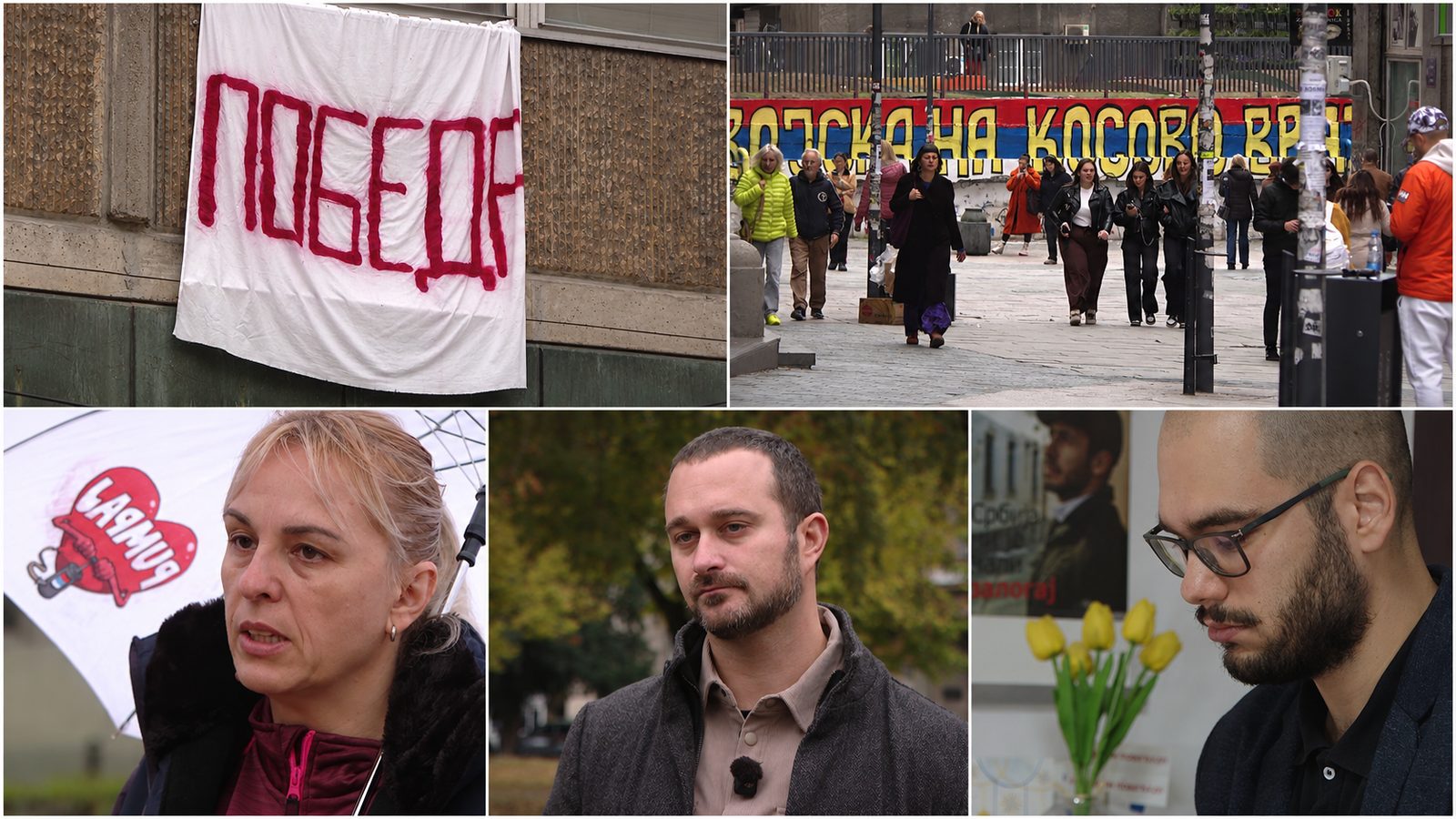
The fall of Slobodan Milošević 26 years ago sparked hopes for a different Serbia; today those hopes have been passed to a generation that in 2000 was not yet born. After the electoral defeat of Aleksandar Vučić, the Student List—built around campus activism at the Faculty of Philosophy in Belgrade—now carries public expectations for rapid change.
First hurdle: forming a government
The Faculty of Philosophy, known among students as the "General Staff," has returned to something like ordinary campus life: protests have given way to exam registrations. The difficult phase, analysts and activists say, begins now—turning electoral success into durable governance.
With roughly 140 MPs giving the Student List a comfortable majority, the immediate question is how that majority will work in practice. The movement contains people with differing convictions and many without prior political experience, so internal negotiations about ministerial portfolios are already under way.
"This will be the first test for the Student List — to form a new government and not to wait the full 90 days," Aleksandar Ivković of the Centre for Contemporary Politics told reporters. "I think that would not be good for them, because at the moment all sorts of things are happening in the country and it is important that the new authorities take responsibility as soon as possible. From what we hear, inside the student movement negotiations and agreements are ongoing about exactly who will compose the new government and who will get which portfolio. I think they are aware of the responsibility and the big expectations, and I think they will try to speed up so that, for example, by the end of this year a new government is elected in Serbia. And I think that government, at least at first, while there is still some feeling in the public that if they make a big mistake it could allow Vučić to return or to escape responsibility and so on, as long as there is that public pressure, I think they will strive to work efficiently and as well as possible."
Ivković adds that the Student List did publish a detailed program in the last week of the campaign with measures aimed at fighting corruption and reforming the judiciary, education, the economy and energy. "Those plans will likely become the program of the new government, i.e., the mandate-holder's exposé when the government is voted in," he said, but he warned the real challenge will be whether the newcomers have the political skill to push reforms through against resistance inside institutions.
Reforms are widely seen as essential to resume a stalled EU path—especially steps to strengthen the rule of law, and the independence of courts and the prosecution. Foreign-policy headaches also await: the issue of Kosovo, relations with Russia and the question of sanctions, and damaged ties with neighbours such as Croatia.
Meanwhile, the new authorities inherited immediate problems: the collapse of Alta Bank, whose Belgrade branch is closed and whose owner is in custody. The fallout is already felt in North Macedonia, where Alta Bank, which bought Stopanska Banka Bitola, has been placed under forced administration by the National Bank.
Another major task will be dismantling party networks within state institutions. Investigative journalist Saša Dragojlo, who published an interview with long-time SNS operative Momčilo Marjanović shortly before the vote, says that testimony exposed how clientelism and organised pressure were used to keep the party in power. "I think the interview with Momčilo Marjanović practically dismantled that entire party-state system of SNS; he spoke first-hand about what he personally did and with whom, and then he showed how money was siphoned from public enterprises, how votes were bought—which is a criminal offence—how people were forced by physical violence and threats to turn out on election day. He described practically all the tasks they had, including when he personally witnessed organised attacks on people against police, so that students and citizens who then protested in opposition could be accused and later spun in propaganda media," Dragojlo said.
Dragojlo believes the SNS machine is beginning to crumble but warns it will be a transition: arrests and criminal charges are appearing while some inside the system seek to ingratiate themselves with the incoming authorities and to clean up their records. "Given that the Serbian Progressive Party is a clientelistic network without a clear ideology, we see its system slowly collapsing. This is only the first week after the elections; it is still a transitional period, the new authorities have not yet taken control of the system, and we already see numerous arrests, numerous criminal charges being filed and that the prosecution is opening investigations. At this moment some people in the system feel liberated to initiate investigations, while others in the system are trying to ingratiate themselves with the new authorities and to clean their biographies," he said.
For families who lost loved ones in high-profile tragedies, the election overturn has a personal dimension. Diana Hrka, who lost her son in the collapse of the station canopy in Novi Sad and who has been protesting for accountability outside the national assembly, said she endured "hell" and is determined to pursue the case to the end. "I would go through hell again just to see this through to the end," Hrka said. She expects the new government to start by replacing prosecutors, judges and senior police. "We expect first the government to be formed and of course we will have to replace prosecutors, judges and the police; there is a lot, a lot of work. It will be very hard, this will not be easy at all, and the people who come now will have a very difficult time. I think those people will not know where to start; so much is ruined. It will go slowly, but I hope it will be fair and that we will see it through to the end," she added.
On campus the face of Zoran Đinđić remains a reminder of earlier hopes—and of the violent end that struck down a reformist premier two decades ago. Older generations ask whether this moment can finally translate into durable change that outlasts the cycle of disappointment. For many, the answer will depend on how quickly the Student List turns electoral momentum into accountable government and concrete reforms.
Photo: press material from the event