Drought in France: drinking water delivered by tankers
Summer shortages have exposed weak pipes and patchy links between local systems; France and the EU are scrambling to adapt.
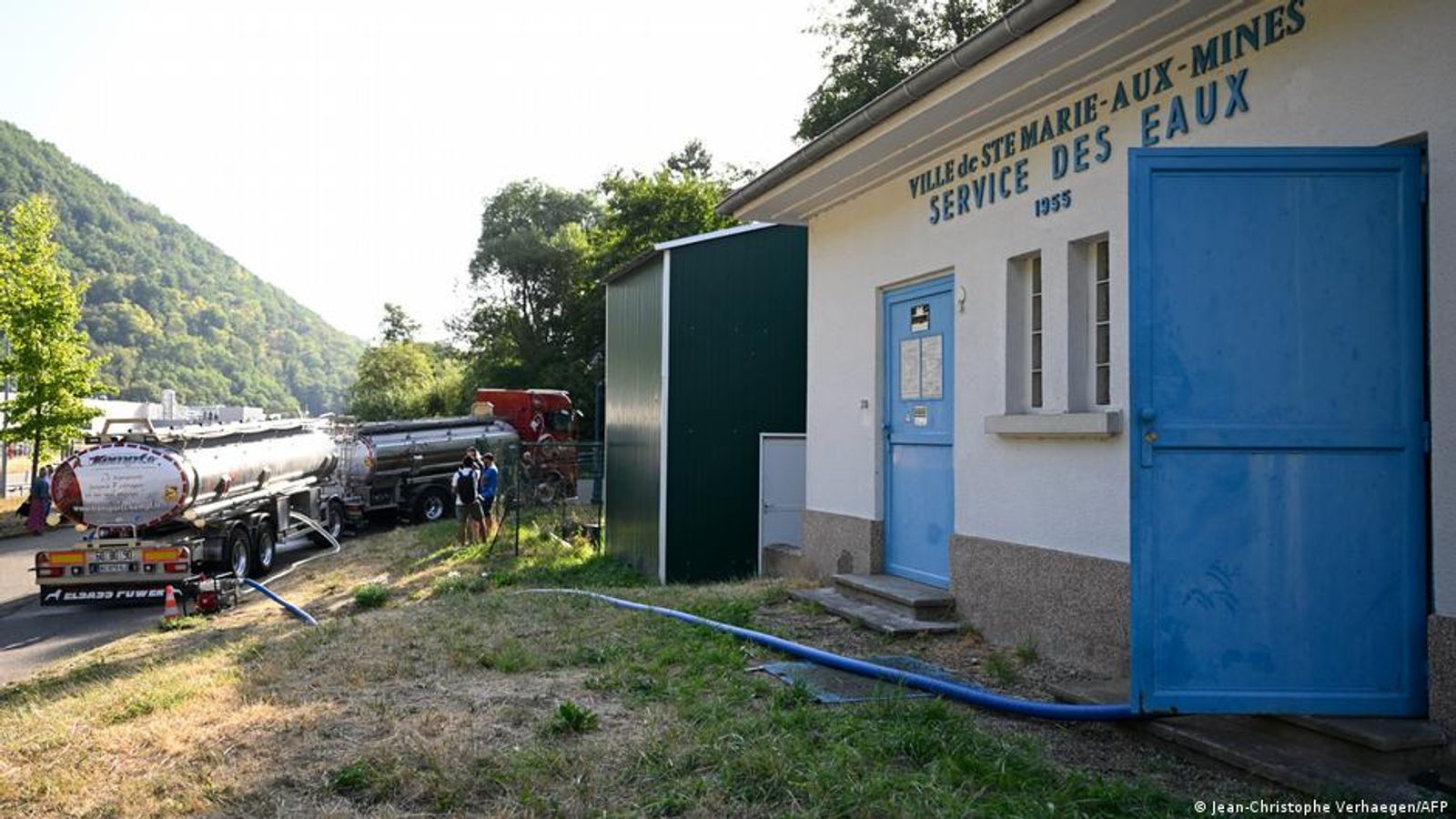
Since the beginning of August, water tankers have been making twice-weekly runs to Saint-Marie-aux-Mines in eastern France to deliver drinking water. The large silver trucks are not carrying fuel or milk for the town of roughly 5,000 inhabitants in the Vosges valley, but potable water taken from a neighbouring municipality, Lièvre.
The deliveries are necessary because several weeks of low rainfall and high temperatures have reduced the output of about twenty local springs that normally supply the town. Lièvre is connected to a broader supply network toward the Alsace plain and currently has available reserves; what is missing is a permanent pipe linking the two systems. As a result, tankers have become a makeshift mains system on wheels.
Not every community is in the same situation. By mid-August more than 40,000 people had already experienced interruptions or defects in regular drinking-water supply, and roughly 550,000 people were judged by the French government to have supply under pressure. Which places need tankers depends on where a municipality draws its water and whether it can tap alternative sources; in the Doubs department in the Jura range more than a dozen villages are currently being supplied by tankers.
h2>The weaknesses beneath the droughtShortage of rain does not explain all failures. Inspections have uncovered major leaks in some rural networks; in one village repairs cut daily consumption by about 40 cubic metres. On average in rural systems only about 79 percent of input water reaches consumers, while the national average is roughly 84 percent. Pipe replacement is moving slowly: only about 0.6 percent of mains are replaced each year.
Heatwaves and drought also carry heavy economic costs. Environment Minister Monique Barbu estimates the direct and indirect costs of this year’s heatwaves at between 10 and 15 billion euros. After the severe drought of 2022 President Emmanuel Macron declared water a national priority and presented the "Plan Eau" in spring 2023. The plan aims to cut national water consumption by ten percent by 2030 and to modernise ageing networks.
When the programme began the government identified 170 municipalities where more than half of the supplied water was being lost in the network; three years later 109 of those especially problematic systems had reduced their losses. Since 2023 French water agencies have invested about 1.4 billion euros in measures from the Plan Eau.
Europewide, the challenge is widespread. The European Environment Agency assesses that around 30 percent of EU territory and about one-third of its population face temporary water scarcity each year. In 2025 the European Commission set out a union-level strategy to increase water-resource resilience, aiming to improve water-use efficiency by at least ten percent by 2030 through both demand measures and more modern supply systems.
Responses vary by geography: the Netherlands can redistribute Rhine and Meuse water through dense canals and reservoirs, Spain relies on large reservoirs and long-distance pipelines and on desalination in the driest regions, while other areas—like parts of the Vosges—have water available but lack the infrastructure to move it where it’s needed. Technical fixes help, but they cannot remove the political and social conflicts that arise when competing users—from households to agriculture and industry—must be prioritised for a dwindling resource.
Photo: rekata Loara kaj Monzhan-sur-Loar)