Jovana Trenchevska: New price shock coming as government rejects higher wages
SDSM vice-president says MEPSO seeks higher transmission tariffs from January and accuses the government of refusing wage rises while households face rising costs.
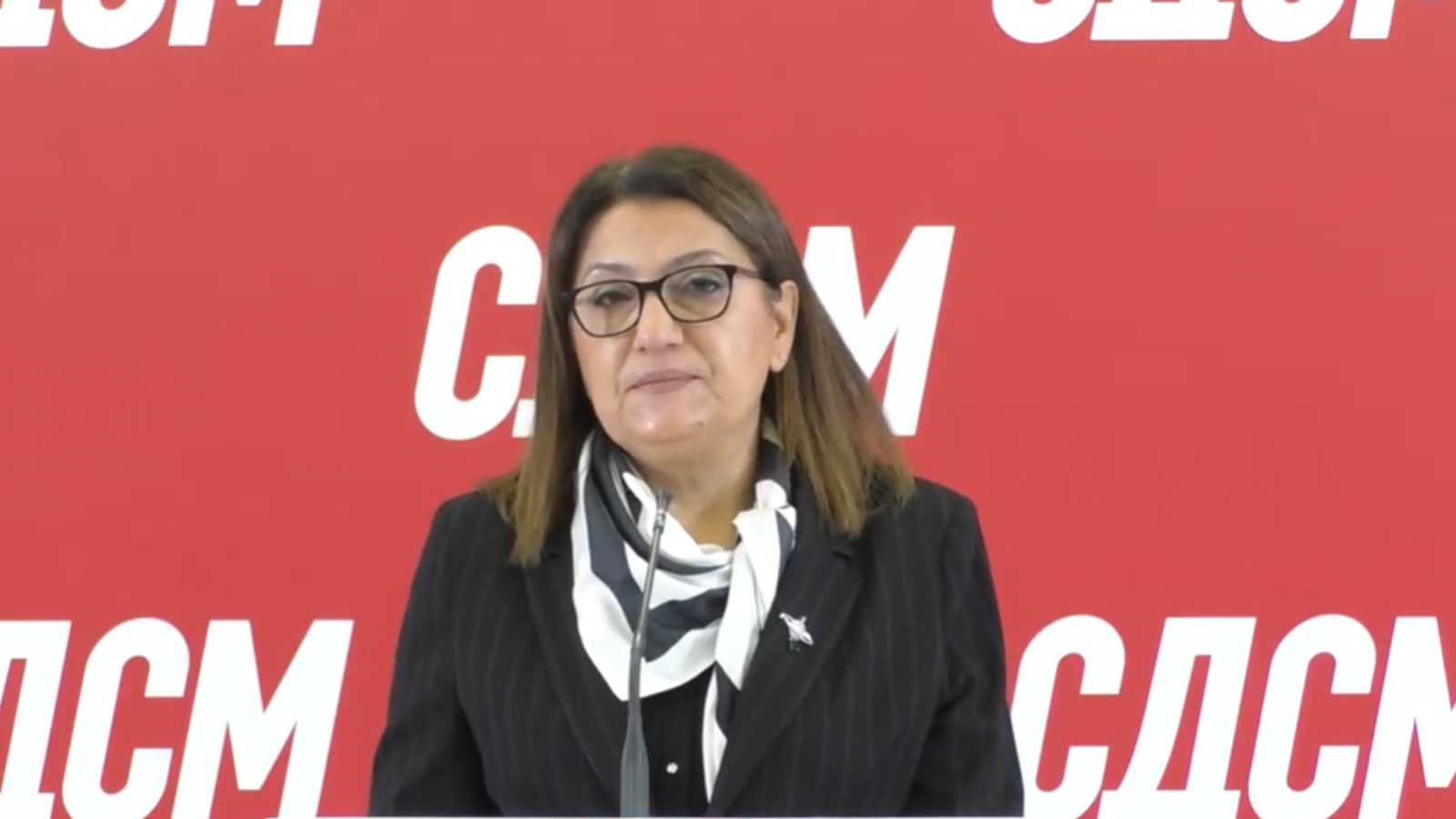
Jovana Trenchevska, vice president of the Social Democratic Union of Macedonia (SDSM), warned at a press briefing that households will face a fresh wave of price increases and higher utility bills from the start of the year, accusing the government of rejecting measures that would raise incomes.
Trenchevska said the transmission system operator MEPSO is already seeking a higher transmission tariff effective in January, and that district heating users are facing what would be the third price increase within a year. She added that living costs have climbed by 4,000 denars since the beginning of the year and that the consumer basket in October exceeded 70,000 denars — over 90,000 denars including rent.
On the social impact, Trenchevska stressed the pressure on wage-earners. "Not even three salaries are enough to cover basic living expenses. Workers in Macedonia barely make ends meet, with the lowest wages in Europe," she said.
Presenting employment and wage data, she noted that of some 540,000 employed persons in the country, about 180,000 earn less than 31,200 denars, while the statutory minimum wage remains at 26,000 denars. "Thirty-three percent of workers in Macedonia receive income below the poverty line," Trenchevska added.
Accusations against the government
Trenchevska accused Prime Minister Hristijan Mickoski of rejecting SDSM's proposal to raise the minimum wage to €600 and of dismissing other measures meant to cushion price shocks. She also criticised plans to recruit foreign workers rather than improving domestic pay and conditions.
"Instead of raising wages, Mickoski is considering importing economic workers as cheap labor. Nikolovski says 50,000 economic workers, and Mickoski increases that to over 100,000. This is a deliberate policy. And in the new rebalance there is no higher minimum wage, there is no €600 for workers, there are no measures, no help for farmers," she said. Trenchevska and SDSM reiterated that the current minimum wage cannot cover basic food and drink costs for a four-member household.
Photo: SDSM