Monument in Police, Poland, honors children from Aegean Macedonia
A memorial in the municipal cemetery in Police remembers children evacuated in 1948–1949 who never returned to their homes.
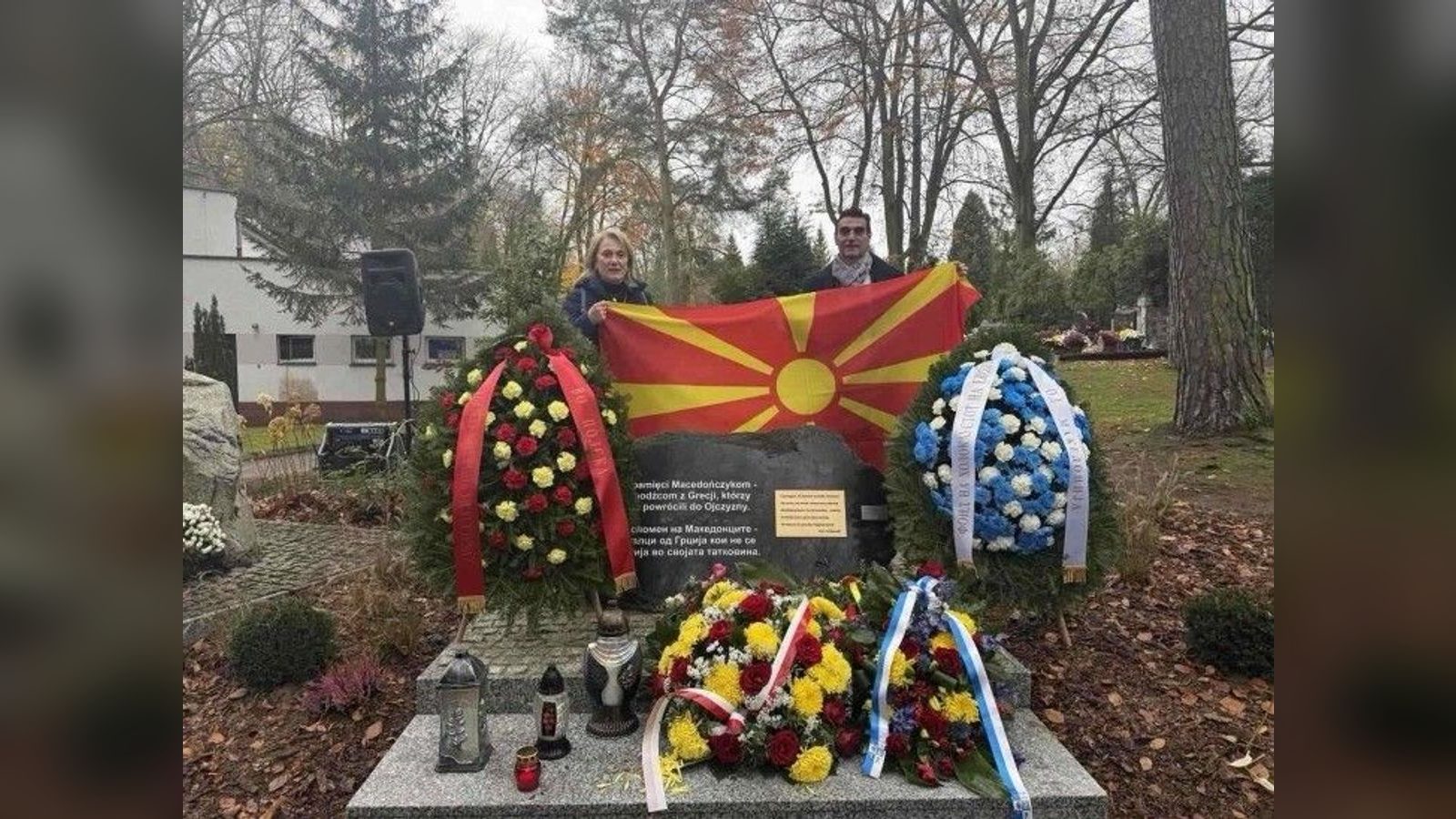
A new memorial was unveiled in the Polish town of Police to honor children from Aegean Macedonia who were forced to leave their homes during the Greek Civil War and who spent the rest of their lives in Poland without returning to their birthplaces.
The monument stands in the municipal cemetery in Police, where some of the Macedonians who arrived as children in 1948 and 1949 are buried. The Fund for the Holocaust of the Jews from Macedonia (FHEM) provided support for the memorial's construction.
Community, officials and descendants at the ceremony
The unveiling was attended by Police mayor Kristian Kovalevski, Macedonian ambassador Jasmin Qahil, local officials and descendants of the refugees. Ambassador Qahil noted the permanence of the loss: “Many of them never saw their native villages, family homes and the places where they took their first steps again.”
Qahil also praised the Polish people for caring for the children despite their own wartime suffering, saying Poland offered shelter, education and a chance for a new start. The public statement by Goran Sadikarijo, director of FHEM, linked the refugees' fate to broader histories of persecution and displacement and explained the fund's participation: "That is why it was natural for us to help."
The monument was co‑designed by filmmaker and documentarian Petro Aleksovski. Aleksovski’s father, Mito Klavchov, was one of the children who grew up in Poland and never returned to his native region. Mayor Kovalevski said the town takes pride in earlier generations who helped the children build a second home: "They passed the test, showing humanity."
According to the Polish Institute of National Remembrance, between 28,000 and 30,000 children were evacuated to Eastern Bloc countries during the Greek Civil War (1946–1949). Poland received roughly 3,500 of those children, and nearly half were Macedonians. Although the departures were intended to be temporary, contemporary Greek authorities forbade the Macedonians from returning after the war.
Upon arrival in Poland, the children were placed in specialised educational centres where they were schooled and learned Polish; for many, Poland became a permanent home.
Photo: press material from the event